
The tape measure is the honest broker in this whole conversation. Before you fall for a rack with eight attachment points and a matte powder coat, stand in the space you actually have and mark it out: how far the barbell sleeves reach past the uprights, how much room your hips need behind the bar on a good morning, whether the garage door track eats your ceiling at 88 inches instead of the 96 you assumed. Most “small space” complaints aren’t about the rack’s footprint at all — they’re about the two feet of clearance nobody accounted for on either end of a seven-foot bar.
What follows is a practical rating of squat rack styles and specific models that survive in tight rooms: fold-flat wall mounts that disappear to four or five inches of depth, short-footprint power racks that fit under a low basement joist, and independent squat stands you can shove into a closet between sessions. I’ve weighted them on stowed depth, ceiling demands, how much bar-loading room they need, and whether the thing still feels solid when you’re grinding a heavy single at eye level with a wall.
Our top picks
 SPORTSROYALS Power Rack
- 【Build with gym Quality】- Sportsroyals power cages are…
- 【Precision & Durable Pulley System】- Sportsroyals home gym…
- 【Train all your muscles with one machine】- Sportsroyals…
 ULTRA FUEGO Power Cage
- Warranty Description: 2 Year Manufacturer
- Tension Supported: 1000 pounds
- Handle Type: Fixed Handle
 DP01 Power Cage
- Warranty Description: 2 year
- Tension Supported: 2000 pounds
- Grip Size: Standard
| Product | Key specs | |
|---|---|---|
| SPORTSROYALS Power Rack | 【Build with gym Quality】- Sportsroyals power cages are… 【Precision & Durable Pulley System】- Sportsroyals home gym… 【Train all your muscles with one machine】- Sportsroyals… | Check price |
| ULTRA FUEGO Power Cage | Warranty Description: 2 Year Manufacturer Tension Supported: 1000 pounds Handle Type: Fixed Handle | Check price |
| DP01 Power Cage | Warranty Description: 2 year Tension Supported: 2000 pounds Grip Size: Standard | Check price |
 CAP Barbell Power Racks and Attachments CAP Barbell Power Racks and Attachments | Assembled dimensions are 46" wide x 50" deep… The 11- and 12- gauge steel tubing allows… Built-in bar and weight storage | Check price |
 FLYBIRD SR1 Squat Rack FLYBIRD SR1 Squat Rack | Check price | |
 FitinOne Adjustable Folding Weight Bench for Home FitinOne Adjustable Folding Weight Bench for Home | Check price | |
 SunHome Power Cage Squat Rack SunHome Power Cage Squat Rack | Check price | |
 MAJOR FITNESS F22 Power Rack MAJOR FITNESS F22 Power Rack | Check price |
As an Amazon Associate we earn from qualifying purchases at no extra cost to you.
As an Amazon Associate we earn from qualifying purchases.

Quick Comparison
| Rack | Type | Stowed / Standing Depth | Ceiling Needs | Best For |
|---|---|---|---|---|
| PRx Performance Profile PRO | Folding wall mount | Folds to roughly 4–6 in. of wall depth | Works with lower ceilings; short uprights available | Shared garages where the car comes back in |
| Rogue RML-3W Fold Back | Folding wall mount | Folds flat against the wall | Sized for standard and low ceilings by upright choice | Heavy lifting in a room that has to double as something else |
| Titan T-3 Folding Rack | Folding wall mount | Slim against-wall profile | Multiple upright heights offered | Budget builds that still want the fold-away trick |
| REP Fitness PR-1100 | Freestanding power rack | Compact four-post footprint, no wall needed | Fits many basements; check exact model height | Renters who can’t drill into studs |
| Force USA MyRack | Modular power rack | Full-time footprint, vertically dense | Taller; measure before committing | One-rack-does-everything setups in a spare room |
| Sunny Health & Fitness Squat Stands | Independent stands | Two small bases, movable by hand | Lowest ceiling requirement of the group | Apartments and truly minimal square footage |
How to Choose
- Measure the ceiling at its lowest point, not its average. Ductwork, joists, sprinkler heads, and garage door tracks decide your upright height. If you’re pressing overhead, you want the bar path clear at full extension while standing on the platform — add the platform thickness into the math.
- Budget for the barbell, not just the rack. A 7-foot Olympic bar is about 86 inches wide. Even a rack that’s 48 inches across needs roughly 18 inches of clear air on each side to load plates without scraping drywall. Short bars (5–6 foot) exist and change this equation completely.
- Decide whether you need a full cage or just uprights. A four-post power rack gives you enclosed safety and pull-up bars but permanently claims floor space. A two-post fold-away or a pair of stands gives the space back, at the cost of relying on spotter arms rather than a full cage.
- Check the steel and the hole pattern. Eleven-gauge tubing feels noticeably more planted than 14-gauge under a heavy squat. Westside spacing (1-inch holes through the bench press range) matters far more than the total number of holes marketing mentions.
- Confirm the anchoring situation before you buy. Wall mounts need real studs or solid masonry, and most benefit from being lagged into the floor too. If you can’t put holes in anything, you’re shopping freestanding — full stop.
Top Picks Reviewed
PRx Performance Profile PRO Squat Rack
This is the one that made fold-away racks mainstream, and the engineering shows in the details: the uprights swing down and in, so the whole assembly tucks tight enough that you can park a car or open a laundry door in front of it. The gas-assisted models take the wrestling out of raising the uprights. It’s not the cheapest route, and you’re paying partly for the hinge system, but if your gym has to vanish daily, that hinge is the entire product.
Rogue RML-3W Fold Back Wall Mount Rack
Rogue’s fold-back is the choice when you want a wall-mounted rack that doesn’t feel like a compromise. The 3×3 uprights and dense hole pattern make it behave like a full rack while it’s deployed, and the deploy-and-stow cycle is genuinely quick once the hardware is dialed in. Choose upright height carefully — the shorter versions exist specifically for garages with tracks and low headers, and going too tall is the most common regret here.
Titan T-3 Series Folding Power Rack
Titan’s folding rack delivers most of the space-saving concept at a lower price point. Expect finish quality and hardware tolerances a notch below the premium brands, and plan on some patient shimming during install. What you get in exchange is a rack that handles serious loads and still flattens against the wall, which is a rare combination anywhere near this budget.
REP Fitness PR-1100 Power Rack
The freestanding pick for people who can’t drill. It’s a compact four-post cage with a modest footprint, a pull-up bar, and enough upright height for most basements without cracking the joists. Because it isn’t anchored, treat it as you would any bolt-free rack: load plates evenly, don’t tip the frame with a band setup, and consider a platform to spread the load and stop it walking on slick floors.
Force USA MyRack Modular Power Rack
If your tight space is a spare bedroom rather than a shared garage, the MyRack argues for consolidation: one frame that accepts lat pulldowns, dip handles, storage pegs, and a chin-up array so you skip buying three more machines. The tradeoff is honest — it’s a permanent resident with real height. Measure twice, especially if your ceiling has any surprises.
Sunny Health & Fitness Squat Stands
The apartment answer. Two independent stands, adjustable in height, light enough to reposition alone and stash in a closet. Capacity is well below the racks above and there’s no cage to bail into, so pair them with conservative loading, a set of spotter arms if the model supports them, and a willingness to dump a failed rep safely. For a lifter in a lease with a strength goal, they beat not training.
Frequently Asked Questions
What’s the minimum ceiling height for a home squat rack?
For squats alone, most lifters manage with about 7.5 feet. Add overhead pressing or pull-ups and you want closer to 8 feet, since you need the bar clear above your locked-out arms plus a few inches of margin. Under 7.5 feet, look at short uprights, kneeling presses, and skipping pull-ups on the rack entirely.
Do I have to bolt the rack into the floor?
Wall-mounted folding racks require solid anchoring into studs or masonry — that’s not optional. Freestanding power racks with wide bases are generally usable unbolted for typical home loads, though bolting or mounting to a platform improves stability noticeably once you’re moving heavy weight.
Squat stands or a full power rack for a small room?
If you train alone at meaningful intensity, the enclosed rack is the safer instrument, because you can set the safeties and fail without consequence. Stands win on footprint and portability. The decision usually comes down to whether you’d rather have more floor space or more freedom to push close to failure.
Will a folding rack hold up long term?
Yes, with attention to the hardware. The hinge is the wear point, so check the bolts periodically and keep the mounting surface sound. Well-built folding racks from established manufacturers routinely handle loads far beyond what most home lifters produce; the failures you hear about are almost always installation shortcuts, not the steel.
Final Thoughts
Small-space lifting rewards subtraction. Pick the rack that matches the constraint you actually have — a shared garage points to a fold-away, a lease points to stands or an unbolted cage, a spare room with headroom points to a modular tower — then spend the leftover budget on a good bar and plates rather than attachments you’ll use twice. Mark the floor, check the ceiling at its worst point, verify the bar clearance on both sides, and buy once. The rack that fits your room and gets used beats the perfect rack that never quite works where you live.
8 Best Gym Mats for Home: Rubber vs Foam Picks for Any Floor
Best gym mat for home choices come down to material density and...
8 Best Rowers for Home Gym: Air, Magnetic and Water Compared
Best rowers for home gym shortlists usually collapse once someone measures the...
8 Best Weight Home Gyms: 6 All-in-One Machines for Small Rooms
Best weight home gym decisions come down to two numbers before brand...
8 Best Home Gym Equipment for Beginners: The Starter Setup
Best home gym equipment for beginners is not a machine – it...
Best Treadmills for Home Gym: 5 Picks by Deck and Motor
Best treadmills for home gym decisions come down to two specifications and...
8 Best Home Gym Compact Setups: 6 Space-Saving Picks Ranked
Best home gym compact claims usually quote a stored footprint and stay...
Best Adjustable Bench for Home Gym: 5 Picks Ranked by Use
Best adjustable bench for home gym decisions turn on three numbers most...
Best Cable Machine for Home Gym: 5 Picks and Pulley Ratios
Best cable machine for home gym shortlists collapse quickly once you convert...
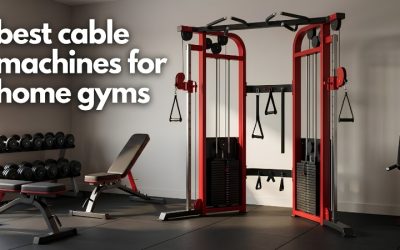
8 Best Cable Machines for Home Gym: 5 Types and Their Limits
Best cable machines for home gym use are not one product category...
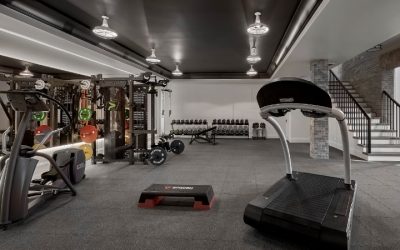
8 Best Home Gym Setups: Floors, Ceilings, Noise and Layout
Best home gym setup guides talk about equipment and skip the room,...
Write Your Review
No reviews yet. Be the first to share your experience!