
Key takeaways
- Item Dimensions D x W x H: 46"D x 16.7"W x 17.2"H
- Material: Superior Alloy Steel
Audit almost any home gym and the same holes appear. There will be something for chest and arms, probably something for abs, and nothing whatsoever that loads the posterior chain or the mid-back. That is not laziness; it is a consequence of buying equipment one item at a time based on what looked useful, rather than mapping which muscle groups have no way to be trained at all.
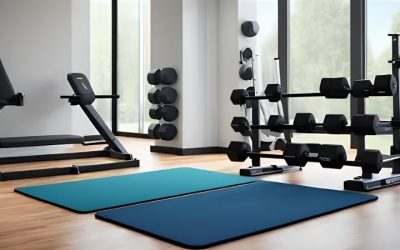
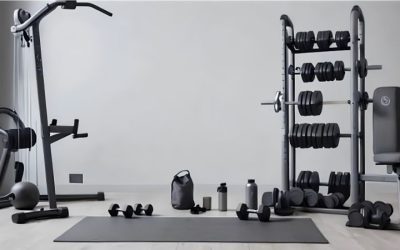
The complete map is shorter than people expect. You need a way to load a horizontal push, a horizontal pull, a hip extension, a knee-dominant movement, a trunk brace and something for conditioning. Six items can cover all six if each is chosen to fill a different gap. Choose badly and you end up with three things that all train chest and nothing that trains glutes. Below is how these six pieces of equipment divide up the body.
Our top picks
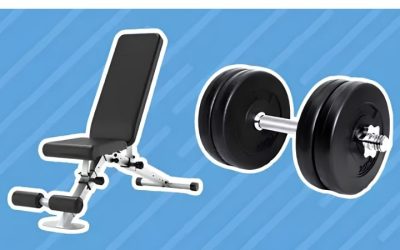
 NICEPEOPLE Adjustable Weight Bench for Home Gym
- Item Dimensions D x W x H: 46"D x 16.7"W x 17.2"H
- Material: Superior Alloy Steel
| Product | Key specs | |
|---|---|---|
 WIKDAY Resistance Bands for Working Out Exercise WIKDAY Resistance Bands for Working Out Exercise | Check price | |
| NICEPEOPLE Adjustable Weight Bench for Home Gym | Item Dimensions D x W x H: 46"D x 16.7"W x 17.2"H Material: Superior Alloy Steel | Check price |
 Push Up Bars Strength Training Push Up Bars Strength Training | Check price | |
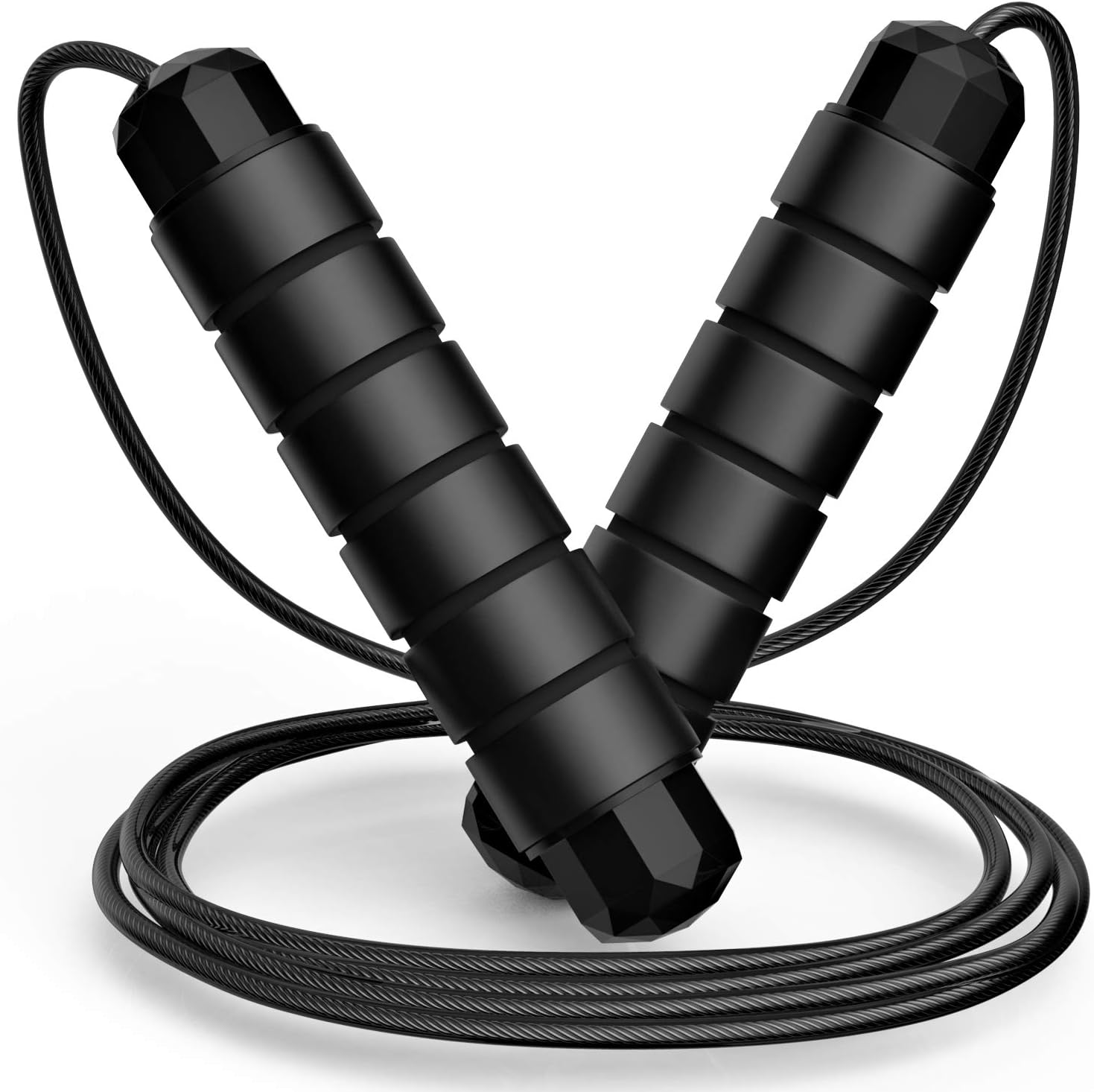 Jump Rope Jump Rope | Target Audience: Adult Recommended Uses For Product: Endurance, Exercise and Fitness, Speed Item Length: 280 Centimeters | Check price |
 Hip Thrust Belt Hip Thrust Belt | Material: Neoprene Closure Type: Hook and Loop | Check price |
 VINSGUIR Ab Roller Wheel VINSGUIR Ab Roller Wheel | Item Dimensions L x W x H: 6.5"L x 12"W x 6.5"H Maximum Weight Recommendation: 440 Pounds Material: Plastic, Rubber, Stainless Steel | Check price |
 MQRW Push Up Board MQRW Push Up Board | Maximum Weight Recommendation: 600 Pounds Warranty Type: Push up board Assembly Instructions Description: No assembly required | Check price |
 HOXWC Ankle Resistance Bands with Cuffs HOXWC Ankle Resistance Bands with Cuffs | Tension Supported: 10LB, 20LB, 30LB Number of Resistance Levels: 3 Material Type: Neoprene | Check price |
As an Amazon Associate we earn from qualifying purchases at no extra cost to you.
Quick Comparison
| Product | Best For | Standout Feature | Watch Out For |
|---|---|---|---|
| NICEPEOPLE Adjustable Bench | Chest, shoulders and back | Eight angles cover multiple groups | Needs dumbbells to be useful |
| WIKDAY Resistance Band Set | Mid-back and shoulders | Fills the pulling gap cheaply | Tension is hard to quantify |
| Balency Hip Thrust Belt | Glutes and hamstrings | Loads hip extension without a rack | Only works with heavy dumbbells |
| Ergonomic Push-Up Bars | Chest, triceps and shoulders | Fuller range than floor push-ups | Bodyweight resistance only |
| VINSGUIR Ab Roller Wheel | Trunk and anterior core | Loads the core under tension | Demanding for untrained cores |
| Tangle-Free Speed Jump Rope | Calves and conditioning | Trains the one area weights miss | Requires height and hard flooring |
How to Choose
- Map your gaps before buying anything: Write down the six patterns — push, pull, hinge, squat, brace, conditioning — and mark which you can already train. Buy for the blanks, not for what looks appealing.
- Recognise that pulling is the usual hole: Almost every home setup can press and almost none can row without bands or a bench. Prioritise the pulling gap, since it is also the one that affects posture most.
- Do not confuse core training with abs: Bracing under load, which is what an ab wheel or a heavy carry produces, transfers to every other lift. Crunches largely do not.
- Include something for the calves and heart: Weights rarely train either well. A rope covers both, and it is the cheapest way to add a conditioning stimulus to a strength-focused setup.
- Check dependencies before ordering: A bench and a hip thrust belt both assume dumbbells. If you have none, those two items sit idle while cheaper purchases would have been trainable immediately.
Top Picks Reviewed
Covers the Most Muscle Groups: NICEPEOPLE Adjustable Bench
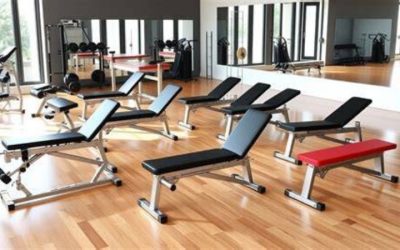
Eight back positions is what makes this more than a flat platform. Incline pressing hits the upper chest and shoulders, the flat position covers chest and triceps, and lying prone on an incline enables chest-supported rows that load the mid-back without any spinal strain. A 660 lb capacity means it will never be the limiting factor.
It does nothing on its own. Without dumbbells the bench is furniture, so it belongs in a setup that already has weights rather than as a first purchase.
Best for the Pulling Gap: WIKDAY Resistance Band Set
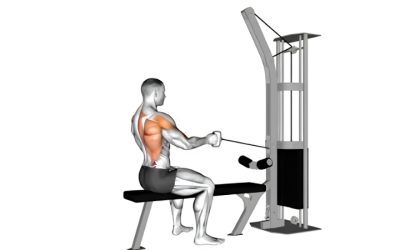
Rows, face pulls and band pull-aparts are the movements missing from nearly every home gym, and this set provides all of them for very little money. The mid-back and rear shoulders are the areas most affected by desk work and least addressed by typical equipment.
Band tension is difficult to quantify, so progression relies on switching to a heavier band or changing your distance from the anchor rather than adding a known amount of load. That imprecision frustrates people who like measurable progress.
Best for the Posterior Chain: Balency Hip Thrust Belt
Hip extension is the pattern home gyms most often cannot load at all. A padded belt holding dumbbells across the hips makes properly loaded hip thrusts possible without a barbell, which brings glutes and hamstrings into the programme.
You need dumbbells substantial enough to challenge the strongest muscle group in the body. With a light pair, the exercise remains a warm-up rather than a training stimulus.
Best Pressing Without Weights: Ergonomic Push-Up Bars
Elevating the hands lets the chest travel below the hands, which increases the range and the stimulus compared with floor push-ups, and the neutral wrist position removes the joint discomfort that stops many people mid-set.
Progression is capped by your bodyweight. Once twenty clean reps are easy, you are into tempo manipulation and feet elevation rather than adding resistance.
Best Core Loading: VINSGUIR Ab Roller Wheel
The rollout is a genuine anti-extension exercise, meaning the trunk works to resist the spine arching under load. That transfers directly to keeping a solid position in presses, rows and hinges, which crunches do not.
It is difficult and easy to overreach on. Begin with short partial rollouts from the knees, and stop the moment the lower back starts to arch, since that is where the risk lies.
Best Conditioning: Tangle-Free Speed Jump Rope
Skipping trains the calves, ankles and cardiovascular system at once, all of which strength equipment neglects. Ball-bearing handles keep the rotation smooth enough that longer intervals stay manageable.
It requires roughly nine feet of ceiling and a hard flat floor. In a carpeted room or a low basement it is far more frustrating than the price suggests.
Frequently Asked Questions
What muscle groups do most home gyms miss?
The mid-back and the glutes, almost universally. Both require either a pulling anchor or a way to load hip extension, neither of which comes with a basic dumbbell collection.
Do I need separate equipment for every muscle group?
No. A bench plus dumbbells covers several groups at once, and bands cover several more. Six well-chosen items is enough for a genuinely complete programme.
Are push-up bars better than regular push-ups?
They allow a deeper range and a neutral wrist position, which makes them more effective and more comfortable for most people. The muscles worked are the same.
How do I train my back without a pull-up bar?
Banded rows and face pulls cover it, and chest-supported dumbbell rows on an incline bench cover it better still. Neither requires an overhead anchor of any kind.
Final Thoughts
To cover every major muscle group, the NICEPEOPLE Adjustable Bench does the most work if you already own dumbbells, with the WIKDAY Resistance Band Set filling the pulling gap that almost every home setup leaves open. Add the Balency Hip Thrust Belt to bring glutes and hamstrings into the programme, and the map is genuinely complete.
Write Your Review
No reviews yet. Be the first to share your experience!