
Key takeaways
- Recommended Uses For Product: Indoor & Home Gym
- Material: Alloy Steel
- Power Source: Battery Powered
A home gym cycle earns or loses its place in your house within about three weeks. The bikes that survive are the ones that fit the room, fit the rider, and start pedaling in under ten seconds — no app login, no calibration ritual, no dragging it away from a doorway. The bikes that end up under a laundry pile usually failed on something mundane: the saddle didn’t slide back far enough, the resistance knob went from “easy” to “impossible” with no useful middle, or the tablet holder blocked the water bottle. Those are the details worth checking before you spend anything.
The six bikes below cover four genuinely different machines that all get called “exercise bikes”: road-style indoor cycles with a heavy flywheel, screen-first connected bikes, mechanical incline trainers, and recumbents with a backrest. I’ve grouped them by fit, resistance type, and floor space rather than by price, because a 5’2″ rider with a bad lower back and a 6’4″ former racer should not be shopping the same list. Specs shift between production runs, so confirm dimensions and weight limits on the listing before you order.
Our top picks
 Exercise Bike
- Recommended Uses For Product: Indoor & Home Gym
- Material: Alloy Steel
- Power Source: Battery Powered
 YOSUDA Exercise Bike
- Recommended Uses For Product: Indoor
- Material: Metal
- Handle Material: Aluminum
| Product | Key specs | |
|---|---|---|
| Exercise Bike | Recommended Uses For Product: Indoor & Home Gym Material: Alloy Steel Power Source: Battery Powered | Check price |
 MERACH Exercise Bike MERACH Exercise Bike | Check price | |
| YOSUDA Exercise Bike | Recommended Uses For Product: Indoor Material: Metal Handle Material: Aluminum | Check price |
 MERACH Exercise Bike MERACH Exercise Bike | Recommended Uses For Product: Body Shaping, Indoor, Weight Loss Material: Alloy Steel Handle Material: Rubber | Check price |
 pooboo Folding Exercise Bike pooboo Folding Exercise Bike | 【4-IN-1 Folding Exercise Bike for Home Workouts】Upright mode… 【Bottle Holder】A bottle holder is included with this… 【Compact Design & Easy to Move】This folding exercise… | Check price |
 YOSUDA Exercise Bike YOSUDA Exercise Bike | Check price | |
 Exercise Bikes Stationary Exercise Bikes Stationary | Check price | |
 NEWBULIG Exercise Bike with APP NEWBULIG Exercise Bike with APP | Recommended Uses For Product: Indoor Power Source: Battery Powered Resistance Mechanism: Magnetic | Check price |
As an Amazon Associate we earn from qualifying purchases at no extra cost to you.
As an Amazon Associate we earn from qualifying purchases.

Quick Comparison
| Bike | Type | Resistance | Approx. Footprint | Best Suited To |
|---|---|---|---|---|
| Schwinn IC4 | Indoor cycle | Magnetic, 100 micro-levels | ~49″ x 21″ | App-flexible riders who want dual pedals |
| Peloton Bike+ | Connected indoor cycle | Magnetic, auto-adjusting | ~59″ x 22″ | Class-driven riders who want zero setup |
| Sunny Health & Fitness SF-B1805 | Belt-drive indoor cycle | Magnetic, knob-controlled | ~46″ x 20″ | Quiet, low-cost training in shared walls |
| NordicTrack Commercial S22i | Incline studio cycle | Magnetic + powered incline/decline | ~55″ x 22″ | Climbers and hill-focused programming |
| Echelon Connect EX-5s | Connected indoor cycle | Magnetic, 32 levels | ~54″ x 20″ | Big-screen classes at a mid-tier price |
| Schwinn 270 Recumbent | Recumbent | Magnetic, 25 levels | ~64″ x 27″ | Back, hip, or knee-sensitive riders |
How to Choose
- Measure the standover and the seat rails, not just the box. Manufacturers publish rider height ranges; treat the extremes with suspicion. If you’re near the bottom or top of the stated range, look for four-way adjustable saddles and handlebars that move fore-aft as well as up-down.
- Decide whether resistance should be automatic. Auto-resistance follows an instructor’s cue for you, which is excellent for structured classes and irritating if you prefer to ride by feel. Knob-controlled magnetic resistance gives you total control but no repeatability between sessions unless the levels are numbered.
- Add 24 inches of clearance behind the bike. Most listed footprints assume nobody needs to walk past. Recumbents in particular need rear space for the seat carriage and a straight path for getting in and out.
- Check pedal and shoe compatibility before you buy cleats. Dual-sided pedals with a toe cage on one face and SPD clips on the other save you from committing to cycling shoes on day one. Delta-only platforms lock you into one shoe ecosystem.
- Separate the hardware cost from the subscription cost. A screen-first bike with a canceled subscription can lose most of its metrics. If you might ride with a third-party app or no app at all, prioritize Bluetooth cadence and resistance broadcasting over screen size.
Top Picks Reviewed
Schwinn IC4 — Best All-Around Fit
The IC4 is the most adaptable bike here because it refuses to lock you into anything. Dual-sided pedals accept sneakers or SPD cleats, the 100-step magnetic knob gives you far finer control than a 20-level system, and it broadcasts cadence and heart rate over Bluetooth to whatever app you like. The included tablet shelf and small LCD console cover the basics without a monthly fee. Downsides are honest ones: the console is dim, and the stock saddle is firm enough that many riders swap it within a month. Mechanically, it’s the safest recommendation on this list.
Peloton Bike+ — Best for Guided Classes
What the Bike+ actually sells is friction removal. The rotating touchscreen, auto-resistance that matches instructor targets, and near-silent belt drive mean the gap between “thinking about riding” and “riding” is about fifteen seconds. Build quality is genuinely stiff under out-of-the-saddle efforts. It is also the least useful bike here without an active subscription, and the Delta-compatible pedals push most owners toward dedicated shoes. Buy it for the class library and the habit it builds, not for the hardware alone.
Sunny Health & Fitness SF-B1805 — Best Compact Budget Pick
This is the bike for apartments with thin floors and tight corners. The belt drive and magnetic resistance produce almost no audible noise, the frame is short enough to tuck into a closet alcove, and transport wheels make repositioning trivial. You get a simple monitor, a knob without numbered detents, and no ecosystem whatsoever — which is exactly right if you already ride with Zwift on a tablet or just want steady-state cardio while watching something. Assembly runs about 45 minutes and the hardware is basic but adequate.
NordicTrack Commercial S22i — Best for Hill Training
The S22i’s distinguishing feature is mechanical: the frame tilts through a wide incline and decline range, so a climb changes your body position instead of just tightening the flywheel. That shifts load between quads, glutes, and calves in a way flat riding never does, and it makes long simulated ascents far more interesting. The tradeoff is complexity — more moving parts, a heavier assembly, and a large screen that dominates the room. It’s the most engaging bike here if you actually use the incline.
Echelon Connect EX-5s — Best Mid-Tier Connected Bike
The EX-5s slots between the IC4 and the premium connected bikes: you get a large integrated display and live class access for meaningfully less than the flagships. Resistance runs through 32 clearly indexed magnetic levels, which is enough granularity for interval work, and the competitive leaderboard is the main draw for riders who need a nudge. Handlebar adjustment is up-down only on some configurations, so taller riders should verify reach before ordering. Subscription dependency applies here too.
Schwinn 270 Recumbent — Best for Back and Joint Comfort
A recumbent isn’t a lesser bike; it’s a different one. The ventilated backrest supports your lumbar spine, the step-through frame removes the balance and flexibility demands of mounting an upright, and the horizontal pedal path takes pressure off the knees. Twenty-five resistance levels and a bank of preset programs cover real training, not just gentle spinning. It is the longest bike here by a wide margin, so measure carefully. For rehab, arthritis, or anyone who abandoned an upright over saddle pain, this is the answer.
Frequently Asked Questions
Is a heavier flywheel actually better?
Only up to a point, and only for feel. A heavier flywheel smooths the dead spot at the top and bottom of the pedal stroke, which makes standing efforts feel more like road riding. Beyond roughly 35–40 pounds on a magnetic bike, added mass mostly adds shipping weight. Resistance quality and frame stiffness matter more than the flywheel number.
Can I use one of these bikes without paying for a subscription?
Yes, with caveats. Bikes like the IC4 and SF-B1805 function completely as standalone machines, and Bluetooth-broadcasting models pair with free or low-cost third-party apps. Screen-first bikes typically fall back to a stripped “just ride” mode that shows limited metrics. If you’re subscription-averse, choose hardware that exposes cadence and heart rate over open Bluetooth.
How much space do I really need?
Budget the bike’s footprint plus about two feet behind it and a foot on either side. For an upright indoor cycle that means roughly a 4′ x 6′ zone; recumbents need closer to 6′ x 5′. Also check ceiling height if you plan to ride out of the saddle — standing adds eight to twelve inches above your seated head position.
Do I need cycling shoes?
Not to start. Stiff-soled sneakers work f
8 Best Gym Mats for Home: Rubber vs Foam Picks for Any Floor
Best gym mat for home choices come down to material density and...
8 Best Rowers for Home Gym: Air, Magnetic and Water Compared
Best rowers for home gym shortlists usually collapse once someone measures the...
8 Best Weight Home Gyms: 6 All-in-One Machines for Small Rooms
Best weight home gym decisions come down to two numbers before brand...
8 Best Home Gym Equipment for Beginners: The Starter Setup
Best home gym equipment for beginners is not a machine – it...
Best Treadmills for Home Gym: 5 Picks by Deck and Motor
Best treadmills for home gym decisions come down to two specifications and...
8 Best Home Gym Compact Setups: 6 Space-Saving Picks Ranked
Best home gym compact claims usually quote a stored footprint and stay...
Best Adjustable Bench for Home Gym: 5 Picks Ranked by Use
Best adjustable bench for home gym decisions turn on three numbers most...
Best Cable Machine for Home Gym: 5 Picks and Pulley Ratios
Best cable machine for home gym shortlists collapse quickly once you convert...
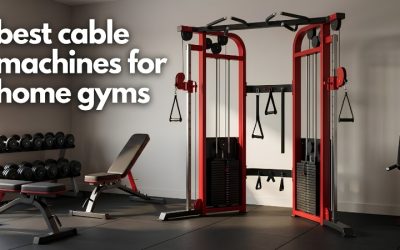
8 Best Cable Machines for Home Gym: 5 Types and Their Limits
Best cable machines for home gym use are not one product category...
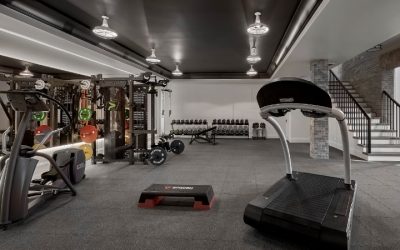
8 Best Home Gym Setups: Floors, Ceilings, Noise and Layout
Best home gym setup guides talk about equipment and skip the room,...
Write Your Review
No reviews yet. Be the first to share your experience!