Key takeaways
- Measure ceiling clearance before anything else: Most canopy posts run 70–80 inches. Subtract your mattress height plus the frame deck, then leave at least 12 inches of visual air above the posts, or the bed will read as oppressive rather than enveloping.
- Prioritize noise engineering over weight capacity: A high load rating tells you the bed won’t collapse; it tells you nothing about whether it creaks. Look for felt or EVA sponge padding at slat contact points, locking hardware, and welded rather than purely bolted joints.
- Confirm the foundation requirement: Platform-style canopies with closely spaced steel slats support foam and hybrid mattresses directly. Frames that specify a box spring add four to nine inches of unplanned height, which changes both post proportions and how easily you get in and out.
- Match the headboard to your evening routine: Upholstered and tufted headboards are meaningfully more comfortable for pre-sleep reading than bare metal, and integrated USB outlets keep chargers off the floor — a small friction reduction that helps a consistent wind-down stick.
- Decide whether the canopy needs to be permanent: Removable posts let you test the enclosed look without committing, which matters if you share the room with someone who finds overhead structure claustrophobic rather than calming.
What's inside
Most people shopping for a canopy bed are chasing a feeling first and a specification second. They’ve seen the draped four-poster in a hotel suite or a design magazine and want that sense of enclosure at home. What they usually don’t anticipate is the gap between the photograph and the reality: a frame that racks and squeaks with every turn, posts that tower into a low ceiling and make the room feel compressed, or a canopy that turns out to require a box spring nobody budgeted for. From a sleep-wellness perspective, those are not cosmetic problems. Perceived enclosure genuinely helps some sleepers downshift at night, but only if the bed is mechanically silent, dimensionally appropriate for the room, and stable enough that your nervous system stops monitoring it.
This guide approaches canopy beds the way I’d approach any piece of sleep architecture: as a support system that either protects continuous sleep or quietly erodes it. I’ve weighed post height against typical ceiling clearance, slat spacing and gauge against mattress longevity, joint design against long-term noise, and headboard construction against the way people actually use their beds at night — reading, scrolling, charging devices. Below you’ll find the frames worth considering in 2026, a short buying framework, and answers to the questions that come up most often once the boxes are open.
As an Amazon Associate we earn from qualifying purchases.




🛒 Best Price Today on Amazon
Prime members get fast, free shipping on everything above, plus member-only deals. New members get a 30-day free trial — cancel anytime.
How to Choose a/an Canopy Bed (2026)
- Measure ceiling clearance before anything else: Most canopy posts run 70–80 inches. Subtract your mattress height plus the frame deck, then leave at least 12 inches of visual air above the posts, or the bed will read as oppressive rather than enveloping.
- Prioritize noise engineering over weight capacity: A high load rating tells you the bed won’t collapse; it tells you nothing about whether it creaks. Look for felt or EVA sponge padding at slat contact points, locking hardware, and welded rather than purely bolted joints.
- Confirm the foundation requirement: Platform-style canopies with closely spaced steel slats support foam and hybrid mattresses directly. Frames that specify a box spring add four to nine inches of unplanned height, which changes both post proportions and how easily you get in and out.
- Match the headboard to your evening routine: Upholstered and tufted headboards are meaningfully more comfortable for pre-sleep reading than bare metal, and integrated USB outlets keep chargers off the floor — a small friction reduction that helps a consistent wind-down stick.
- Decide whether the canopy needs to be permanent: Removable posts let you test the enclosed look without committing, which matters if you share the room with someone who finds overhead structure claustrophobic rather than calming.
The Best Canopy Bed (2026)s Reviewed
SHA CERLIN Queen Canopy Bed Frame
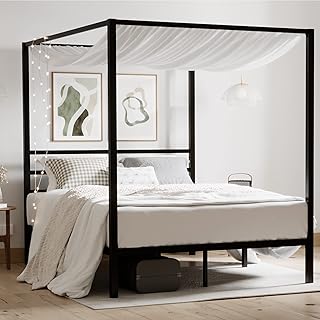
A restrained black four-poster whose real strength is the heavy-duty metal slat deck, which spreads load evenly enough to keep a foam mattress from developing the sag that shows up at year three on wide-spaced systems. The generous under-bed clearance is a practical bonus in small bedrooms where storage displacement is the difference between a calm room and a cluttered one.
Zinus Patricia Gold Canopy Platform Bed
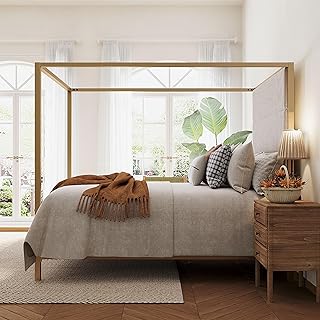
Zinus has spent years refining steel slat support, and the Patricia benefits from it: a slim gold profile that looks far more delicate than it behaves under load. It’s the pick for anyone who wants canopy geometry without visual bulk, and it forgoes a box spring entirely.
ikalido Queen Metal Canopy Bed
The standout detail here is the EVA noise sponge at the slat interfaces — an unglamorous feature that directly addresses the most common complaint about metal canopies. If you’re a light or restless sleeper sharing a bed, this is the frame I’d point you toward first.
Merax Queen Gold Canopy Bed
At 76.5 inches with a linen upholstered headboard, the Merax delivers the most hotel-suite presence of the group and an 800-pound capacity to back it up. Note the box spring requirement and plan your total stack height accordingly, especially under nine-foot ceilings.
Jocisland King Canopy Bed
A cream velvet, deep-tufted king with a 51.2-inch headboard and both USB-A and USB-C outlets built in — genuinely thoughtful for couples who read or wind down with devices in bed. Roughly 45 minutes to assemble, no box spring needed, and the tall posts make a large room feel intentional rather than empty.
Frequently Asked Questions
Do canopy beds actually improve sleep?
Indirectly. Enclosure and light reduction can support faster sleep onset for some people, and adding curtains improves both. The larger benefit is mechanical: a rigid, silent frame prevents the micro-arousals that fragment sleep without waking you fully.
What ceiling height do I need?
Eight-foot ceilings work with most 70- to 76-inch frames, though the result feels snug. If you want a 76-inch-plus post with visible breathing room, nine feet is more comfortable.
Will a metal canopy bed squeak over time?
It can, but squeaking is almost always a hardware issue rather than a design flaw. Retorque every bolt after the first month, then twice yearly, and choose frames with padded slat contact points.
Can I skip the box spring?
With most platform canopies, yes — closely spaced steel slats are a valid foundation for foam, latex, and hybrid mattresses. Only add one when the manufacturer explicitly requires it.
Final Thoughts
For most buyers, the ikalido Queen is the smartest all-around choice: quiet by design, no box spring, and priced for real bedrooms rather than showrooms. If your priority is presence, the Jocisland King brings velvet tufting and integrated charging to a genuinely luxurious footprint, while the Zinus Patricia remains the best option for anyone who wants canopy structure without visually crowding a smaller room.