Key takeaways
- Calculate centered flat-sheet side drop from actual width and mattress height, then check your preferred coverage with a physical trial.
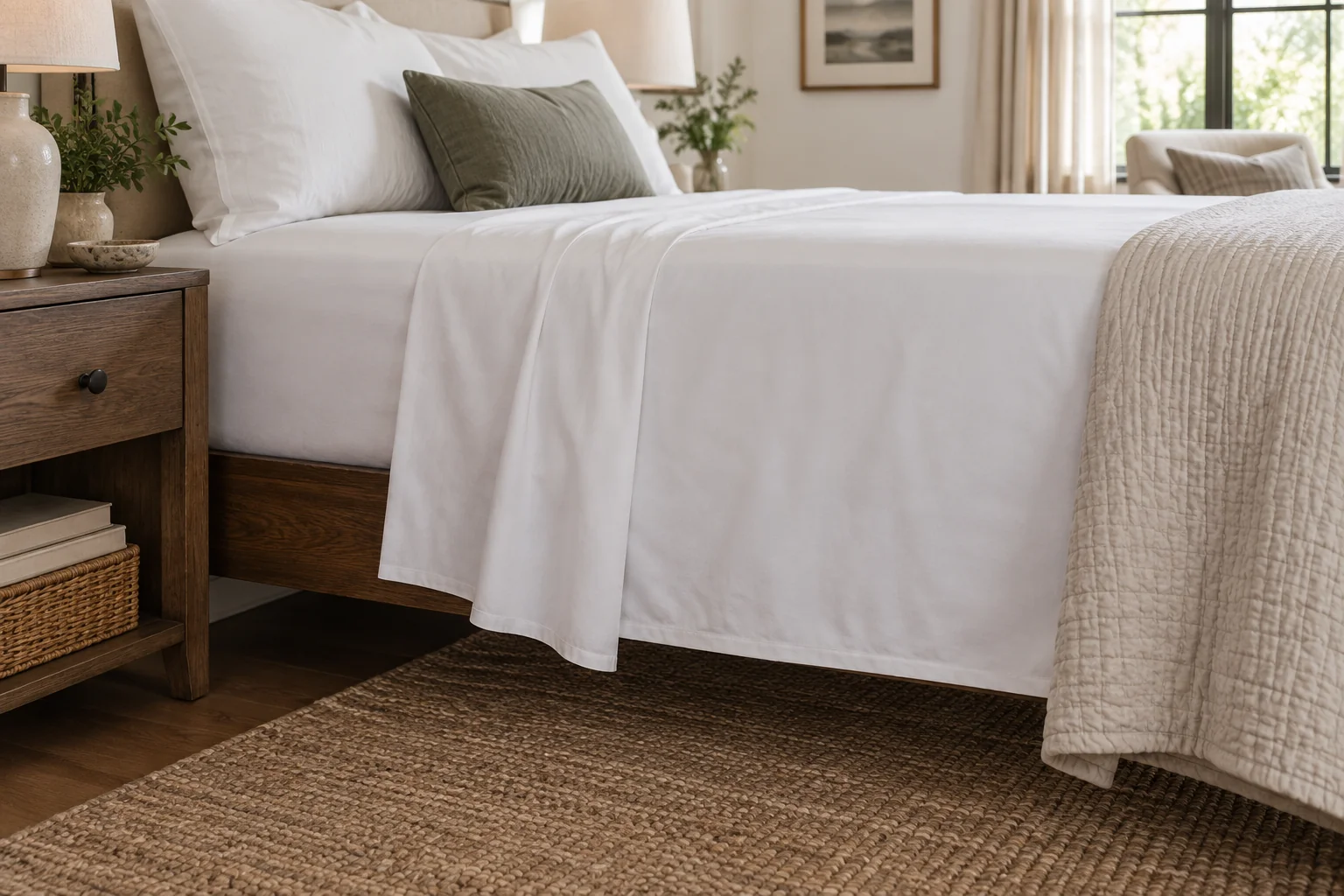
To estimate a flat sheet’s side drop, subtract the mattress’s top width from the sheet’s measured width and divide the remaining fabric between the two sides. Then compare that drop with the mattress height and the amount you want below its lower edge. A bed’s size name alone does not show whether a particular flat sheet will provide your preferred coverage.
This guide concerns a flat sheet on an ordinary rectangular bed in its flat position. It does not establish fitted-sheet pocket depth, adjustable-base compatibility or a universal amount of fabric everyone needs tucked beneath the mattress.
Measure the bed as it is actually made
Record the top width of the mattress and any layer that changes the outside profile under the sheet. Measure the vertical distance from the top surface to the mattress’s lower edge, then note the frame, rails or storage that might affect hanging fabric.
Keep the mattress height separate from the total bed height above the floor. A tall platform raises the whole bed but does not add to the sheet width needed merely to cover the mattress side. If you want the sheet to hang toward the floor, that is a different target and should be recorded explicitly.
Decide whether you want equal side drops, more fabric on one accessible side, or material available for a preferred tuck. Write that preference before comparing sheet sizes. Otherwise, the same measurements can produce different conclusions because the intended result keeps changing.
Use the actual flat-sheet dimensions
Check the exact product’s size chart and identify which dimension is width and which is length. For an owned sheet, measure it dry and laid flat without stretching, noting its current condition. Do not assume a fitted sheet and flat sheet in one set share the same dimensions.
Brooklinen’s bedding size chart lists, for example, a queen flat sheet at 92 by 104 inches and a king flat sheet at 110 by 104 inches. Those are that chart’s product dimensions, not universal definitions of queen and king flat sheets. Confirm the current chart for the exact item you are considering.
Keep laundering changes and manufacturing tolerances in mind without inventing a shrinkage allowance. If the desired fit has very little margin, ask the seller what its listed measurement represents and use your own measured sheet for a trial when available.
Calculate the centered side drop
For an untucked, centered sheet on a simple rectangular profile, estimated side drop equals (sheet width minus mattress top width) divided by two. If the result is negative, the sheet is narrower than the top surface. If positive, it describes the fabric available on each side before any tuck or uneven placement.
Subtract the mattress-side height from that result to estimate fabric extending below its lower edge. A negative result means the estimated drop does not cover the full side. This is a planning calculation; rounded edges, drape and the actual way the bed is made should be checked physically.
| Measurement | Symbol | Your record | Purpose |
|---|---|---|---|
| Sheet width | S | Use actual product or measured value | Fabric available across the bed |
| Mattress top width | M | Measure current setup | Top surface to cover |
| Side drop | (S − M) ÷ 2 | Calculate | Centered untucked estimate per side |
| Mattress-side height | H | Measure separately from floor height | Vertical side to cover |
| Below-edge remainder | ((S − M) ÷ 2) − H | Calculate and then trial | Shows remaining fabric before a preferred tuck |
Worked example: the same width on two mattress heights
In this illustrative calculation, a 92-inch-wide flat sheet is centered on a 60-inch-wide mattress. The difference is 32 inches, giving an estimated 16-inch drop on each side. With a 12-inch mattress-side height, about 4 inches remains below the lower edge before a tuck.
On an otherwise identical 16-inch-high mattress profile, the same estimate reaches approximately the lower edge with no remainder. The size name has not changed, but the side coverage relative to the mattress has. These are hypothetical bed measurements, not a product fit guarantee.
If the household prefers an additional 3 inches below the lower edge on the taller profile, the planning width would be 60 + 2 × (16 + 3) = 98 inches. That figure expresses this household’s chosen target; it is not a standard minimum or an instruction to buy a specific size.
Check the length independently
Width cannot solve insufficient length. Decide where the sheet’s top edge belongs and how much material you want at the foot, then compare that requirement with the actual length. A wider sheet may have the same length as a narrower one, as the named chart example illustrates.
For an asymmetrical side arrangement, do not divide by two. Allocate the available width explicitly and test it on the bed. Keep hanging fabric away from moving mechanisms and follow the bed’s instructions. Do not transfer a flat-bed calculation to an articulated position without checking the actual use.
Make a final physical trial
Lay the sheet in the intended orientation, center or offset it deliberately, and compare both sides. Check doors, drawers, floor contact and the way you normally tuck or fold it. A neat arithmetic result can still produce an inconvenient hanging edge in the room.
Save the successful dimensions and placement with your bedding record. When replacing the sheet or adding a topper, recalculate from the changed measurement instead of relying on the old size name. The aim is predictable coverage that matches your preference, supported by a simple calculation and an ordinary fit check.