Key takeaways
- Record repeatable dry bedding measurements, the permitted care method and separate width and length changes with a fictional calculation.
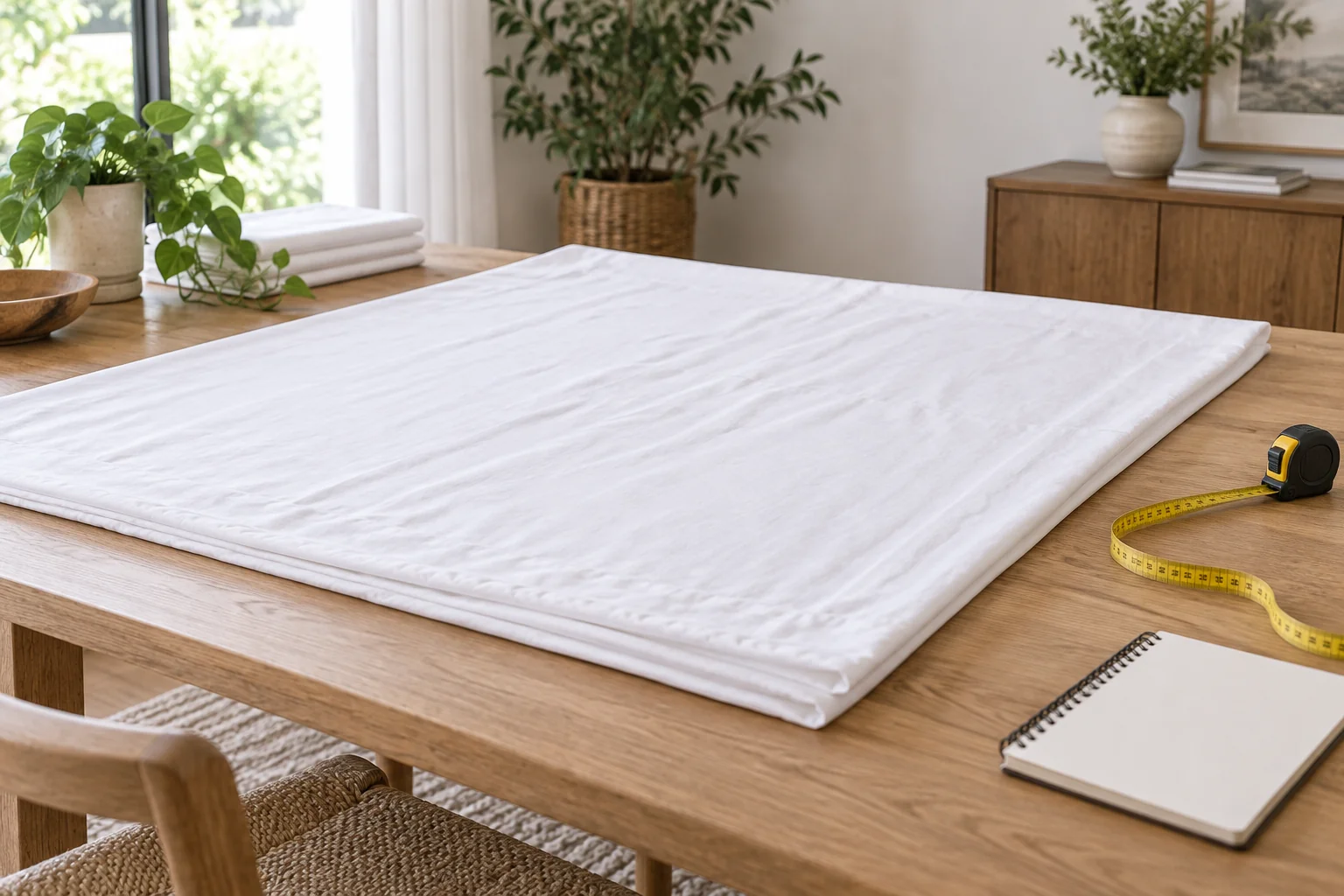
Compare bedding sizes after washing by measuring the same item at the same reference points, fully dry and without stretching it. Keep the original measurement, care method and later measurement together. A remembered fit or a size name on the package is not a reliable before-and-after record.
This is a household measurement worksheet, not a standardized textile test. It can help you describe a change to a seller or decide whether an item still fits its intended use. It cannot establish a defect, predict future shrinkage or prove that one fabric performs better than another.
Choose a measurable item and record its identity
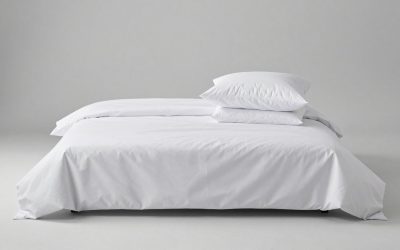
A flat sheet, pillowcase or duvet cover is easier to compare as a laid-flat object than an elasticized fitted sheet. Begin with one item and identify the exact product, size, material statement and purchase record. Do not combine measurements from two similar-looking pieces.
For a fitted sheet, distinguish the maker’s stated mattress-fit range from a loose, unstretched measurement of the fabric. Elastic changes the outline, so those numbers are not interchangeable. If the concern involves a fitted corner or split section, ask the maker which reference points it uses before presenting a home measurement as equivalent.
Photograph the care label and save the applicable product instructions. The comparison should observe the result of permitted care, not deliberately use excessive heat to force a change.
Follow the product’s care method
Brooklinen’s care guide, for example, directs cold washing with like colors and low tumble drying with prompt removal for its Luxe Sateen and Classic Percale sheets. Those are named product instructions, not a universal routine for every sheet, filled comforter or mattress cover.
Record the actual cycle and drying method used, including whether the item was ironed under its instructions. Do not change the preparation between measurements without noting it. Comparing a heavily creased item with a differently prepared one can obscure what the dimensions mean.
Wait until the item is fully dry and no longer warm from drying or ironing before taking the comparison measurement. Use the same ordinary room and surface where possible. This consistency improves your personal record without turning it into laboratory conditioning.
Set reference points that can be repeated
Lay the item on a clean, sufficiently large surface. Smooth folds gently without pulling the fabric taut. Choose a clear edge-to-edge width and length, and note where hems, openings or decorative borders begin. Keep the measuring tape straight and use the same unit each time.
If the surface is too small to support the item, do not let a large portion hang and pull the measurement out of shape. Find another suitable clean surface or ask the maker for a practical measurement method. Folding the item can be useful for storage but adds ambiguity to a precise before-and-after comparison.
Repeat each reading after repositioning the tape. If two readings disagree, inspect the setup rather than averaging away a clear mistake. Record the difference you can actually resolve; a soft textile and household tape do not justify excessive decimal precision.
Use a before-and-after worksheet
| Field | Before care | After care | Keep consistent |
|---|---|---|---|
| Item identity | Exact product and piece | Same piece | Do not substitute its matching partner |
| Width | Measured value and units | Measured value and units | Same edges and tape placement |
| Length | Measured value and units | Measured value and units | Same treatment of hems |
| Condition | Dry, preparation noted | Dry, preparation noted | No stretching or unsupported overhang |
| Care record | Instructions saved | Actual cycle and drying method | Record any deviation honestly |
Keep the manufacturer’s listed dimensions in a separate column if you need them. A listed size and your measured starting size answer different questions. Without your own baseline, you can report a current measurement, but you cannot confidently calculate how much your particular item changed in washing.
Worked example: calculate change in each direction
Consider a fictional flat textile measured at 100 inches wide and 110 inches long before care. After its permitted care routine and consistent preparation, it measures 98 inches wide and 108 inches long. The width change is 2 inches; the length change is also 2 inches.
Relative to the starting dimensions, the width reduction is 2 ÷ 100 × 100 = 2%. The length reduction is 2 ÷ 110 × 100, approximately 1.8%. Equal inch changes do not produce equal percentages when the starting dimensions differ. These values are invented arithmetic, not expected shrinkage for any brand.
Record both directions rather than summarizing the item as “two percent smaller.” Do not multiply the percentages or use an area calculation unless that is the specific question being investigated. For fit, the width and length often need separate attention.
Describe the practical effect separately
After measuring, check the intended use without forcing the item. Note whether a flat sheet still provides the desired side coverage or a duvet cover still accommodates its specified insert. Keep that fit observation separate from the numerical record: a change can be measurable without making an item unusable.
If contacting the seller, provide the product identity, care instructions followed, original and current measurements, units and photographs showing the reference points. Do not promise yourself a particular claim outcome. The record’s value is clarity about what was measured and how, especially when memory and size labels are insufficient.