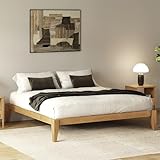
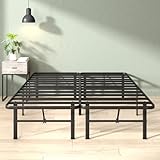
Key takeaways
- Measure the narrowest doorway, stair turn, and elevator opening before ordering. A completed bunk or loft may be wider than the room’s entrance even when its boxed parts fit.
- Expect flat-packed solid-wood storage beds to have the heaviest boxes. Two adults may be needed to carry long side rails safely.
- Retighten fasteners after the first week and periodically afterward, particularly on bunk ladders, guardrails, and metal joints.
- Do not modify a guardrail, drill new ladder holes, remove structural slats, or use an unapproved mattress.
- Inspect the frame whenever it is moved. A bed that was stable on a level floor can wobble if one foot sits on a rug edge.
The best kids beds depend on the room and the child: choose a twin for the simplest safe setup, a bunk for two sleepers, a loft for maximum floor space, a trundle for occasional guests, or a storage bed when drawers can replace a separate dresser.
Our top picks
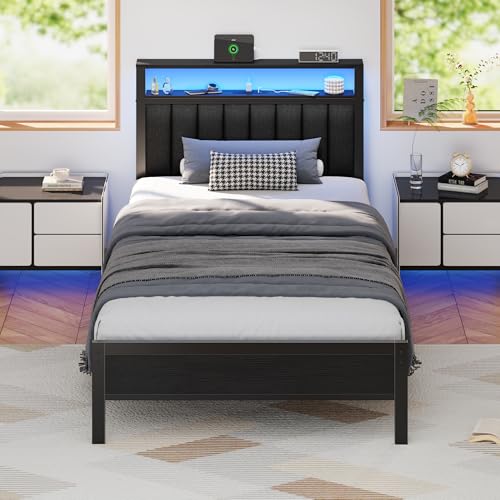


As an Amazon Associate we earn from qualifying purchases at no extra cost to you. Ratings are shown as listed on Amazon.
Quick picks by bedroom situation
| Situation | Best bed type | Why it fits | Main compromise |
|---|---|---|---|
| Small apartment or shared bedroom | Low loft or bunk bed | Uses vertical space and leaves more floor area | Requires careful fall protection and ceiling clearance |
| Child and pets sharing a room | Low twin or storage twin | Less fall height and fewer openings for climbing pets | Uses more floor space than a loft |
| Renters who may move soon | Basic twin or metal bunk | Usually lighter, simpler, and easier to disassemble | Less built-in storage and sometimes more vibration |
| Two children in one room | Bunk bed, if both are ready | One footprint provides two sleeping surfaces | Top bunks are not suitable for young children |
| Child who needs a desk | Loft with a desk underneath | Combines sleeping and study zones | Higher assembly complexity and more difficult bed-making |
| Frequent sleepovers | Twin trundle bed | Stores a second mattress without a permanent second bed | Requires open floor space each time the trundle is pulled out |
Kids beds compared: safety, space, and practicality
Twin beds: the safest all-purpose starting point
A standard twin mattress is 38 by 75 inches. With a typical frame, plan on roughly 40 to 44 inches of width and 78 to 82 inches of length. That makes a twin the easiest choice for most children, particularly when you want low fall risk, uncomplicated bedding, and a frame that can be moved through a narrow doorway.
Choose a low-profile frame for younger children. A removable guardrail can add protection, but it should be firmly attached to the frame and designed for the specific mattress thickness. Avoid gaps between the mattress, guardrail, and headboard where a child could become trapped. A twin also works well against a wall, but leave enough space to change sheets and inspect the wall-side edge.
Typical weight capacities range from 250 to 400 pounds, including the sleeper and mattress. Confirm the manufacturer’s limit rather than assuming a sturdy-looking frame can support adults. A basic twin is usually the easiest design to assemble and often costs about $150–$500, depending on its materials and storage.
Bunk beds: the smallest footprint for two sleepers
Bunk beds put two twin mattresses in approximately one 40-by-80-inch footprint, although ladders and guardrails can add 3 to 8 inches to the width. They are efficient in a shared room, but safety details matter more than decorative features.
For children under 6, use the lower bunk only; top-bunk sleeping is not recommended. A compliant upper bunk should have guardrails on both sides, with the wall-side rail continuous along the length of the bed. The guardrail should extend above the mattress as required by the applicable safety standard, and the mattress must not be thicker than the model’s stated maximum. A thick replacement mattress can reduce effective guardrail height.
Look for a fixed ladder with broad, slip-resistant steps and strong connections. A bunk should not rock when a child climbs it. Check whether the design must be anchored to the wall, especially on smooth floors or when children are active. Allow at least 30 inches of open space in front of the ladder and keep ceiling fans, windows, cords, and light fixtures away from the upper bunk.
Many bunk beds support about 200–300 pounds per sleeping level, while heavier-duty metal or solid-wood models may support more. Assembly is usually moderate to difficult: two adults may need several hours, and the finished unit can be awkward to move through a doorway.
Loft beds: best when the floor below has a real purpose
A loft raises one mattress and leaves the area underneath for a desk, drawers, reading nook, or play space. A low loft may stand 45–55 inches high; a taller loft can approach 65–75 inches. Measure from the top of the mattress, not merely the platform, to the ceiling. For comfortable sitting, aim for around 30–36 inches between the mattress top and ceiling, though children’s needs vary.
In a 10-by-12-foot room, a loft can preserve a useful walkway and create space for a desk approximately 20–30 inches deep. Leave at least 24–30 inches for the chair to pull out, and keep a clear path to the ladder. A desk under the loft may be too dark unless it has task lighting; do not route electrical cords where they can become climbing hazards.
Lofts need full-length guardrails and a secure ladder. They are not automatically suitable for younger children simply because the bed is sold for children. Check the stated age guidance, mattress height limit, and maximum sleeper weight. Expect more hardware and more alignment work than with a standard twin. Typical prices are about $250–$900.
Trundle beds: flexible, but not always easy to use
A trundle is usually a twin bed with a second mattress platform stored underneath. It is a strong choice for occasional guests, but it needs a clear pull-out zone. A standard trundle can require 75–80 inches of open space in front of the main bed, plus 24–30 inches for a comfortable walkway around the extended mattress.
Check whether the lower platform is a roll-out trundle or a pop-up trundle. Roll-out versions are often lower and may require a thinner mattress. Pop-up versions can rise to near the height of the main mattress, but they need more clearance and may not work under beds with drawers. Casters should roll smoothly without sharp exposed hardware, and the platform should stop securely rather than sliding unexpectedly.
Trundles are not always intended for daily adult use. Verify the lower platform’s weight limit separately from the main frame. Expect moderate assembly, with extra attention needed for caster alignment and drawer clearances.
Storage beds: useful when drawers replace furniture
A storage twin or full bed can include drawers, lift-up compartments, or open cubbies. Drawers are usually easier for children to operate than a heavy lift-up platform, and they keep clothing off the floor without taking additional wall space.
Measure the drawer extension, not just the mattress footprint. A bed that is 42 inches wide may need another 18–24 inches on one side for a drawer to open. Keep drawers away from heating vents and do not overload them; excessive weight can bend runners or make the frame difficult to move.
Storage beds are often made from solid wood, engineered wood, or a combination. Solid wood is repairable and durable but heavier. Engineered wood provides stable large panels at a lower price, though damaged edges and screw holes can be harder to repair. Metal frames are generally lighter and easy to disassemble, but they can transmit more movement and may develop squeaks if fasteners loosen.
| Construction | Typical advantages | Typical limitations | Good choice for |
|---|---|---|---|
| Solid wood | Strong joints, repairable surfaces, long service life | Heavy; often more expensive; can be difficult to move | Long-term use and children who are hard on furniture |
| Engineered wood | Consistent panels, lower cost, many storage options | Edges can chip; repeated assembly may weaken screw holes | Budget storage beds and fixed-room layouts |
| Metal | Light relative to strength, easy to wipe clean, often easy to disassemble | May squeak or transmit movement; inspect welds and joints | Renters and frequent movers |
Mattress compatibility and weight limits
Start with the bed’s required mattress size and thickness. A twin mattress is 38 by 75 inches, while a twin XL is 38 by 80 inches; they are not interchangeable. Bunks, lofts, and trundles commonly require a low-profile mattress, sometimes 6–8 inches thick. Never exceed the stated thickness because it reduces guardrail coverage and can prevent a trundle from closing.
For platform beds, slat spacing matters. Closely spaced slats support foam mattresses better than widely spaced slats, and some mattress warranties require a particular spacing. Slats should be secured so they cannot shift apart during normal use. Add the child’s weight and mattress weight when comparing the total to the frame capacity.
Assembly and moving realities
- Measure the narrowest doorway, stair turn, and elevator opening before ordering. A completed bunk or loft may be wider than the room’s entrance even when its boxed parts fit.
- Expect flat-packed solid-wood storage beds to have the heaviest boxes. Two adults may be needed to carry long side rails safely.
- Retighten fasteners after the first week and periodically afterward, particularly on bunk ladders, guardrails, and metal joints.
- Do not modify a guardrail, drill new ladder holes, remove structural slats, or use an unapproved mattress.
- Inspect the frame whenever it is moved. A bed that was stable on a level floor can wobble if one foot sits on a rug edge.
How to choose the best kids bed
- Measure the room, including door swings, closet access, windows, radiators, and the clearance needed to pull out drawers or a trundle.
- Decide whether the priority is lower fall risk, a second sleeping surface, a desk, guest capacity, or clothing storage.
- Set the mattress first. Confirm its dimensions, thickness, type, and weight before choosing a bunk, loft, or trundle.
- Compare guardrail coverage, ladder design, age guidance, and weight limits—not just the advertised footprint.
- Choose the simplest frame that solves the problem. Fewer moving parts usually mean easier assembly, quieter use, and simpler repairs.
For most families, a low twin is the safest starting point, a bunk is the most space-efficient for two children, a loft is the best way to add a desk, a trundle is best for occasional guests, and a storage bed is worthwhile when its drawers can eliminate another piece of furniture.