Key takeaways
- Minimum clearance: ceiling height ≥ post height + 2 inches, or you physically cannot tilt the assembled frame upright during setup.
- Comfortable clearance: post height + 6 inches or more, so the top rails don’t visually collide with the ceiling and curtains can drape without bunching.
- Under a ceiling fan: keep at least 18 inches between the top canopy rail and the fan blades, or center the fan over the foot of the bed rather than directly above the frame.
The best canopy bed with headboard for most bedrooms is a queen-size frame with posts 78–84 inches tall and either an upholstered headboard (comfort) or solid panel headboard (durability) — but that pick only works if your ceiling clears the post height by at least a few inches and the room leaves 24–36 inches of walkway around the footprint. Everything else is refinement. Below is how the specs, materials and room math actually shake out.
Our top picks

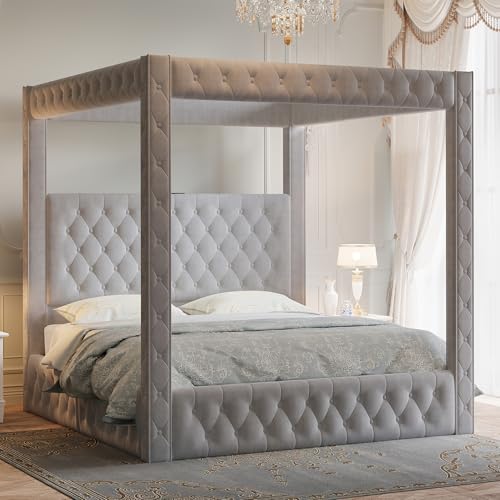

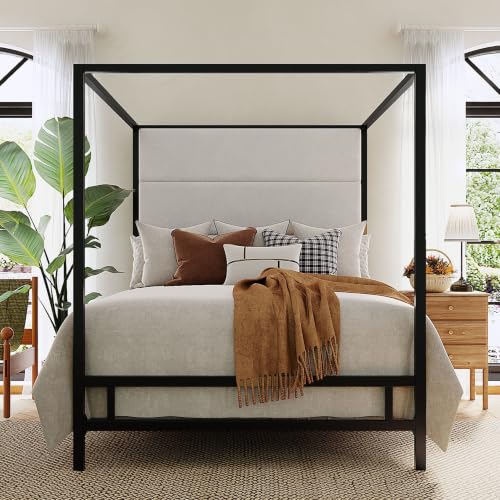
As an Amazon Associate we earn from qualifying purchases at no extra cost to you. Ratings are shown as listed on Amazon.
Measure Your Ceiling First — It Eliminates Half the Options
Canopy posts range from about 65 inches on low-profile frames to 96+ inches on estate-style beds. The working rule:
- Minimum clearance: ceiling height ≥ post height + 2 inches, or you physically cannot tilt the assembled frame upright during setup.
- Comfortable clearance: post height + 6 inches or more, so the top rails don’t visually collide with the ceiling and curtains can drape without bunching.
- Under a ceiling fan: keep at least 18 inches between the top canopy rail and the fan blades, or center the fan over the foot of the bed rather than directly above the frame.
An 8-ft (96-in) ceiling — the most common in US bedrooms — works with posts up to about 80–84 inches. Nine-foot ceilings open up the full 84–90 inch range, and 10-ft rooms can carry dramatic 96-inch posts without the bed looking stuffed in.
Size Footprints and What Actually Fits Your Room
The mattress size understates the real footprint: posts add 2–3 inches per side and a headboard adds 3–6 inches of depth. Plan around these numbers:
| Size | Mattress (in) | Typical frame footprint (in) | Minimum room | Comfortable room |
|---|---|---|---|---|
| Twin | 38 × 75 | ~42 × 80 | 8 × 8 ft | 9 × 10 ft |
| Full | 54 × 75 | ~58 × 80 | 9 × 10 ft | 10 × 10 ft |
| Queen | 60 × 80 | ~66 × 88 | 10 × 10 ft | 10 × 12 ft or larger |
| King | 76 × 80 | ~82 × 88 | 11 × 12 ft | 12 × 12 ft or larger |
Worked example: in a 10 × 12 ft room, a queen canopy (66 × 88 in) centered on the short wall leaves about 27 inches of walkway per side and roughly 56 inches at the foot — workable, but only just. Budget 24 inches as the bare-minimum walkway, 30–36 inches for comfort, and an extra 18–24 inches of pull-out space wherever drawers or a trundle will open. Don’t forget the door swing arc (~30–36 in) when choosing which wall gets the headboard.
Metal vs. Wood Canopy Frames: The Real Trade-Offs
Material affects weight, noise, longevity and how the frame survives a move more than it affects looks.
| Frame type | Typical queen price (2026) | Assembled weight | Typical weight limit | What wears first |
|---|---|---|---|---|
| Powder-coated steel tube | $250–$600 | 70–110 lbs | 500–800 lbs | Bolt joints loosen (squeak); plastic finial caps crack; chips expose bare metal |
| Engineered wood / veneer | $400–$800 | 100–160 lbs | 600–800 lbs | Veneer chips at post corners; cam-lock joints fatigue after 2–3 disassemblies |
| Solid wood (oak, pine, rubberwood) | $600–$1,500+ | 120–200 lbs | 800–1,000+ lbs | Dents and scratches — but can be sanded and refinished, so it ages instead of failing |
Finish notes: A black canopy bed with headboard is the most widely stocked configuration in 2026 — matte black powder coat hides dust and fingerprints better than gloss, and chips touch up easily with enamel pens. A gold canopy bed with headboard is almost always gold-tone plated or powder-coated steel; verify it’s electroplated or powder-coated rather than spray-painted, especially in humid or coastal climates where cheap finishes tarnish within a year.
Metal wins for renters and frequent movers — it ships flat, weighs less and reassembles cleanly. Solid wood wins on noise (a bolted mortise-and-tenon frame stays silent for years) and on sheer service life. Engineered wood sits between on price but is the least forgiving of repeated disassembly.
Headboard Types: Upholstered, Solid, Storage — and the Sparkly Ones
Upholstered headboards are the comfort pick if you sit up to read or work. Look for foam density of at least 1.8 lb/ft³ (2.0–2.5 is better) — cheaper foam pancakes within two years of nightly leaning. Velvet photographs best, linen weaves breathe better in warm climates, and boucle hides wear but traps pet hair.
A bed with diamonds in the headboard — the crystal-tufted style — uses acrylic or glass buttons pulled through the foam. It delivers the glam look, but the button prongs snag pet claws and small fingers, and buttons do pop off over time; check whether the frame ships with spares. Households with cats should treat deep tufting as a scratching-post invitation.
Solid panel headboards in matching wood wipe clean, never stain and outlast the fabric options by decades — the trade-off is zero cushion for sitting up.
Bed with headboard and drawers means two different products: bookcase headboards with small drawers and cubbies built into the panel, or captain’s-style under-bed drawer bases. Both add real storage in small rooms, but under-bed drawers are typically only 5–7 inches deep, and on a canopy frame you must confirm the drawer fronts open clear of the posts — on some frames the post legs sit directly in the drawer path.
If you’re actually shopping a headboard for a floating bed rather than a full canopy: floating and platform bases usually pair with wall-mounted headboards, not frame-attached ones. On canopy beds, check whether the headboard is bolt-on (replaceable later) or welded/integrated (permanent) — it matters if your taste changes.
Assembly and Moving Realities Listings Don’t Mention
- Shipping: a queen canopy arrives in 2–3 flat boxes totaling 90–160 lbs. The longest box runs ~82–86 inches — it will not turn a tight stairwell landing, so measure the stair geometry, not just the doorway. You need a 30-inch minimum clear door width.
- Build time: two adults, 60–90 minutes with the included hex keys; build it in the destination room. Retighten all bolts after two weeks and again seasonally — this is what prevents the metal-frame squeak people complain about.
- Slats: for memory foam or hybrid mattresses, slats should be spaced no more than 3 inches apart, and queen/king frames need a center support rail with legs touching the floor.
- Curtains: if you plan to hang drapes, confirm the top rails are load-rated — many decorative rails handle only about 10–15 lbs, which rules out heavy lined fabric.
Pick by Your Situation
| Your situation | Frame pick | Headboard pick | Why |
|---|---|---|---|
| Small apartment, ~10 × 10 ft room | Low-profile black steel, 72–76 in posts | Slim upholstered, ~36 in tall | Open sightlines and light weight keep the room feeling larger |
| Kids and/or pets | Solid wood or matte black steel | Solid panel or performance fabric | Crystal buttons and veneer don’t survive claws and toy impacts |
| Renter, moves every 1–2 years | Bolt-together steel under ~120 lbs | Bolt-on upholstered | Disassembles flat, fits stairwells, joints tolerate repeat builds |
| Back pain / reads in bed | Any rigid frame | Tall upholstered (48 in+), foam ≥2.0 lb/ft³ | Full lumbar-to-shoulder support when sitting upright |
| Budget under $400 | Engineered wood or basic steel | Panel | Put the savings into the mattress — it affects sleep more |
| Statement / glam room | Gold-tone steel or carved solid wood | Velvet or crystal-tufted | The bed is the focal point; invest in finish quality |
FAQ
What is a bed headboard in Spanish?
Cabecero (most common in Spain) or cabecera de cama (common in Latin America). Searching “cabecero tapizado” will surface upholstered styles on international catalogs — useful for comparing prices or finding designs not yet stocked locally.
Do canopy beds need a box spring?
Almost never. Modern canopy frames are platform bases with slat systems designed for a mattress alone. A box spring only adds height you don’t need — and pushes the mattress closer to the top rails.
Can a canopy bed go under a sloped or vaulted ceiling?
Yes — measure the ceiling height at the tallest post position, not the room’s peak. Keep every post at least 2 inches below the slope at its location.
Will a king canopy bed fit through a standard bedroom door?
Disassembled, yes — everything arrives flat-packed. The constraint is the longest box (~86 in) turning corners in hallways and stairwells. Measure the route, not the doorway.