Key takeaways
- Dye transfer from denim or dark cushions: address it within days. Fresh transfer often lifts with leather cleaner and repeated gentle passes; aged transfer usually doesn’t.
- Ink: blot only, never rub. A dedicated leather ink remover is worth buying rather than reaching for alcohol, which strips finish and leaves a dull halo.
- Body oils on the headrest: the most common yellowing culprit. Wipe weekly and consider a washable throw where heads rest.
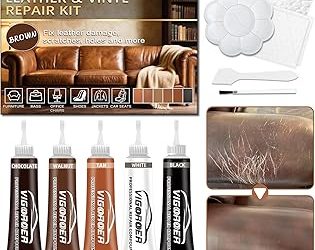
- Scuffs, scratches, and faded patches: a Leather Recoloring Balm white leather repair kit can blend minor damage back into the surrounding color surprisingly well. Test the shade first — “white” varies enormously between manufacturers, and off-white balm on a bright white sofa is more noticeable than the original scuff.
What's inside
As a sleep-wellness consultant, I spend most of my time talking about bedrooms — but the room where you actually unwind before bed matters just as much. A white leather sofa is often the centerpiece of that space, and it does quiet work on your nervous system: pale surfaces reflect lamplight softly instead of bouncing it around, and a clean, uncluttered seat signals to your brain that the day’s tasks are finished. When that same sofa goes grey along the armrests and tacky in the seat cushions, the room stops reading as restful. You notice the grime instead of the calm.
The good news is that white leather is far less fragile than its reputation suggests — it simply shows everything, which means small maintenance habits pay outsized dividends. Below I’ll walk you through identifying what kind of leather you actually own, the wipe-down method I recommend to clients who want results without bleaching or cracking their upholstery, how to handle the stains that genuinely panic people (denim transfer, hair oil, red wine), and how to build a rhythm of care that fits into a wind-down routine rather than fighting it.
As an Amazon Associate we earn from qualifying purchases.




🛒 Best Price Today on Amazon
Prime members get fast, free shipping on everything above, plus member-only deals. New members get a 30-day free trial — cancel anytime.
First, Identify What You’re Actually Cleaning
Nearly every cleaning disaster I hear about starts with a misidentified material. Most modern white sofas are finished (pigmented) leather with a protective topcoat, which is durable and forgiving. Some are aniline or semi-aniline leather, which absorbs liquid instantly and stains permanently. Others are bonded leather or polyurethane faux leather, which cannot tolerate oil-heavy conditioners. Find the manufacturer’s tag under a cushion and look for a cleaning code: W means water-based cleaners, S means solvent only, WS means either, and X means vacuum only. No tag? Put a single drop of water on a hidden section. If it beads, you have finished leather and can proceed confidently. If it darkens and soaks in, stop and call an upholstery specialist before applying anything.
The Weekly Maintenance Wipe
This is the step that actually keeps white leather white, and it takes four minutes. Vacuum the seams and crevices with a soft brush attachment first — grit trapped in stitching acts like sandpaper every time someone sits down. Then dampen a microfiber cloth with distilled water (tap water leaves mineral spotting on pale surfaces), wring it until it’s barely moist, and wipe every surface you touch: armrests, headrest area, front edge of the seat cushions. Dry immediately with a second clean cloth. That’s it. No product needed. This removes the skin oils and airborne dust that oxidize into yellowing before they have a chance to bond with the finish.
The Deep Clean: Product, Technique, Patience
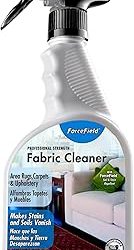
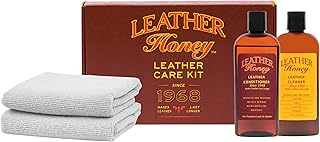
Once a season, step up to a dedicated leather cleaner. Leather Honey Leather Cleaner is my usual recommendation for white upholstery — it’s a concentrate you dilute yourself, it’s non-toxic, and it’s explicitly formulated to be safe on any color including white, which matters because some cleaners contain dyes or brighteners that tint pale hides. Weiman Leather Cleaner & Conditioner is a solid one-step alternative when you want cleaning and conditioning in a single pass, with the added benefit of UV protection for sofas that sit near a window. For a full seasonal reset, the Leather Honey Complete Leather Care Kit bundles cleaner, conditioner, and application cloths so you’re not improvising with kitchen rags.
Technique matters more than product choice. Always test on a hidden panel and wait an hour. Apply cleaner to the cloth, never directly to the leather. Work one cushion at a time in overlapping circles, using light pressure — scrubbing drives soil deeper into the grain. Wipe away residue with a barely-damp cloth, then let the piece air-dry completely away from heaters and direct sun before conditioning.
Conditioning: The Step Most People Skip
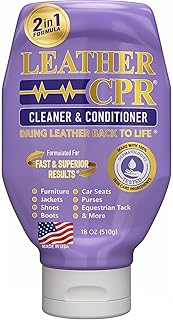
Cleaning strips a small amount of the natural oils that keep leather flexible. Skip conditioning and you’ll see fine cracking along the seat front within a few years, which is far harder to fix than any stain. Apply a thin, even coat of conditioner two to four times a year — thin is the operative word, since excess product attracts dust and leaves a shine that looks plasticky on white. Leather CPR Cleaner and Conditioner works well as an all-in-one for lightly used pieces and restores suppleness to leather that’s already stiffening. Buff off any residue with a dry cloth after fifteen minutes.
Stains and Damage That Need Special Handling
- Dye transfer from denim or dark cushions: address it within days. Fresh transfer often lifts with leather cleaner and repeated gentle passes; aged transfer usually doesn’t.
- Ink: blot only, never rub. A dedicated leather ink remover is worth buying rather than reaching for alcohol, which strips finish and leaves a dull halo.
- Body oils on the headrest: the most common yellowing culprit. Wipe weekly and consider a washable throw where heads rest.
- Scuffs, scratches, and faded patches: a Leather Recoloring Balm white leather repair kit can blend minor damage back into the surrounding color surprisingly well. Test the shade first — “white” varies enormously between manufacturers, and off-white balm on a bright white sofa is more noticeable than the original scuff.
Tips
- Keep the sofa at least a foot from radiators, vents, and sunny windows. Heat and UV cause more white-leather damage than dirt does.
- Fold a washable cotton or linen throw over the seat where you actually sit. It absorbs oils and washes clean, and layered texture makes an evening room feel warmer.
- Blot spills immediately with a dry white cloth — colored towels can transfer dye into damp leather.
- Never use baby wipes, magic erasers, saddle soap, bleach, or all-purpose spray. All four either abrade the finish or leave residue that yellows over time.
Frequently Asked Questions
Can I use vinegar and water on a white leather sofa?
I’d advise against it. Vinegar is acidic and, used repeatedly, degrades the protective topcoat and dries out the hide. It occasionally works as a one-off emergency measure on finished leather, but a pH-appropriate leather cleaner costs little and carries none of the risk.
How often does a white sofa really need deep cleaning?
For a lightly used living room, twice a year is plenty. Households with children, pets, or daily heavy use benefit from quarterly deep cleaning plus the weekly wipe-down. Frequency of light maintenance matters far more than intensity of occasional cleaning.
Why is my white leather turning yellow rather than dirty-looking?
Yellowing is usually oxidation from UV exposure and accumulated skin oils rather than surface soil, which is why scrubbing doesn’t help. Prevention through weekly wiping, UV-protective conditioner, and sun avoidance is the real answer; established yellowing typically requires professional recoloring or a repair balm.
Is faux leather cleaned the same way?
Cleaning is similar — mild cleaner, soft cloth, no abrasives — but skip oil-rich conditioners, which sit on the surface and can break down polyurethane coatings. Look for products explicitly labeled safe for faux leather and vinyl.
Conclusion
A white leather sofa rewards consistency rather than effort: a four-minute weekly wipe with distilled water, a seasonal clean with a color-safe product like Leather Honey or Weiman, conditioning a few times a year, and prompt attention to spills will keep it looking deliberate for a decade or more. That’s worth doing for the furniture’s sake, but the real payoff is the room. A space that reads as clean and calm makes it genuinely easier to put the day down, and that transition — the hour before bed spent somewhere that doesn’t demand anything of you — is one of the most underrated tools in sleep health.