Key takeaways
- Recline angle over recline count: A seat that stops at roughly 130–140 degrees supports genuine decompression; anything shallower is just a tilted chair. Test whether your knees end up above heart level, which is what makes legs feel lighter after a long day.
- Headrest independence: Your cervical spine needs its own support point. Padded or adjustable headrests prevent the chin-to-chest slump that produces morning neck stiffness and, in some people, mild snoring or airway restriction during accidental naps.
- Manual versus power mechanism: Manual levers require a small core engagement to operate, which some people prefer as a cue that they’re transitioning to rest. Power seats are gentler on knees, hips, and anyone with limited grip strength, and they let you fine-tune position without breaking a relaxed state.
- Cushion density and depth: High-resilience foam that rebounds within a second or two will still hold your pelvis in neutral alignment a year from now. Deep seats feel luxurious in the showroom but leave shorter users with unsupported thighs and dangling feet.
- Lighting and stimulation: If a model includes LED accents, look for warm, dimmable output. Cool blue-toned light in the final hour before bed suppresses melatonin and delays sleep onset — a genuine consideration, not a marketing footnote.
What's inside
Most people shopping for a reclining sectional are quietly shopping for better rest. They just don’t frame it that way. The complaint usually arrives as “my back hurts by nine,” or “I fall asleep in front of the TV and wake up wrecked at 2 a.m.” As someone who spends most days talking to people about their sleep architecture, I can tell you the living room is an underrated variable. Evening recovery posture — how your spine, hips, and neck are supported during the two or three hours before bed — shapes how quickly you drift off once you finally get horizontal. A sofa that forces you to crane forward or slump sideways keeps your nervous system mildly braced, and a braced body does not transition smoothly into sleep.
The trouble is that reclining sectionals are sold on seat count and cup holders, not on ergonomics. Below I’ve assessed six of the strongest options available in 2026 through a rest-quality lens: recline geometry, headrest support, cushion resilience over months of nightly use, and whether the built-in features actually reduce evening friction or just add clutter. You’ll also find a short buyer’s framework and answers to the questions I hear most often from clients redesigning their wind-down routine.
As an Amazon Associate we earn from qualifying purchases.


🛒 Best Price Today on Amazon
Prime members get fast, free shipping on everything above, plus member-only deals. New members get a 30-day free trial — cancel anytime.
How to Choose a Sectional Reclining Sofa (2026)
- Recline angle over recline count: A seat that stops at roughly 130–140 degrees supports genuine decompression; anything shallower is just a tilted chair. Test whether your knees end up above heart level, which is what makes legs feel lighter after a long day.
- Headrest independence: Your cervical spine needs its own support point. Padded or adjustable headrests prevent the chin-to-chest slump that produces morning neck stiffness and, in some people, mild snoring or airway restriction during accidental naps.
- Manual versus power mechanism: Manual levers require a small core engagement to operate, which some people prefer as a cue that they’re transitioning to rest. Power seats are gentler on knees, hips, and anyone with limited grip strength, and they let you fine-tune position without breaking a relaxed state.
- Cushion density and depth: High-resilience foam that rebounds within a second or two will still hold your pelvis in neutral alignment a year from now. Deep seats feel luxurious in the showroom but leave shorter users with unsupported thighs and dangling feet.
- Lighting and stimulation: If a model includes LED accents, look for warm, dimmable output. Cool blue-toned light in the final hour before bed suppresses melatonin and delays sleep onset — a genuine consideration, not a marketing footnote.
The Best Sectional Reclining Sofas (2026) Reviewed
Manual Reclining L-Shaped Sectional with Center Console (Brown)
This is the most straightforward recovery seat of the group: a deep, generous recline with a corner configuration that lets one person stretch fully horizontal while others sit upright. The hidden storage is quietly useful for keeping a sleep mask, book, or magnesium supplement within reach instead of scattered across the coffee table.
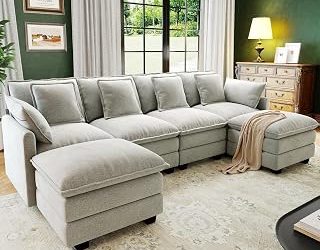
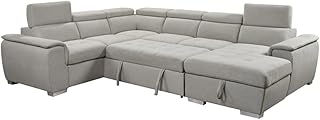
Fabric L-Shaped Manual Recliner, 5-Seater (Grey)
The padded headrest is the standout here, holding the neck in a neutral line rather than letting it fold forward — the single biggest predictor of whether an evening on the sofa leaves you refreshed or stiff. Breathable fabric also runs cooler than leather alternatives, which matters if you tend to overheat while relaxing.
Power Recliner Sectional with LED Lighting (Beige)
Motorized adjustment lets you settle into position without tensing a single muscle, which is exactly what you want in the last hour before bed. Keep the LED strip on its warmest setting or switched off entirely after dark, and this becomes a genuinely restorative home-theater seat.
Dresegmt Manual Recliner Sectional with Flip Middle Backrest (Grey & Chocolate)
The flip-down backrest converts the middle seat into a surface or a chaise extension, making this the most adaptable layout for households where one person reads while another reclines. USB ports are a practical touch, though I’d encourage charging your phone here and leaving it here overnight.
Power Reclining Sectional with LED Light, Faux Leather (Brown)
Two dedicated power recliner seats deliver smooth, precise positioning, and the wipeable faux leather is forgiving in busy family rooms. Faux leather does retain warmth, so it suits cooler homes better than warm-climate living rooms.
Frequently Asked Questions
Is sleeping on a reclining sectional bad for you?
Occasional nights in a reclined position are fine and can even help people with reflux or nasal congestion. Habitual sofa sleeping is a different matter: it typically fragments sleep, encourages awkward spinal rotation, and disconnects the bedroom from its role as a sleep cue.
Manual or power recliners for evening relaxation?
Power models win for anyone with joint pain, limited strength, or a desire to make micro-adjustments without disrupting a settled state. Manual mechanisms are more affordable, have fewer failure points, and don’t depend on a nearby outlet.
Do the LED lights interfere with sleep?
They can, if they’re bright and cool-toned. Use warm settings, keep intensity low, and switch them off roughly ninety minutes before bed to protect your natural melatonin rise.
How firm should the cushions be?
Firm enough that your hips don’t sink below your knees. If you sit down and feel yourself rolling backward into a C-shaped spine, the cushion is too soft for sustained comfort.
Final Thoughts
For most households, the Fabric L-Shaped Manual Recliner in grey offers the best balance of headrest support, breathability, and value, while the Power Recliner Sectional with LED Lighting in beige is the smarter choice if effortless adjustment matters most. If your priority is a deep, fully stretched-out recline for one, the Manual Reclining L-Shaped Sectional in brown remains the most reliable pick of 2026.