Key takeaways
- Vacuum the bare surface monthly, or every two weeks if you have pets or allergies
- Deodorize with enzymes quarterly
- Wash the mattress protector every two to three weeks alongside your sheets
- Rotate the mattress head-to-foot every three months — foam is never flipped unless dual-sided
Memory foam is the most absorbent sleep surface most of us will ever own. Its open-cell viscoelastic structure is designed to breathe and compress under body weight, which also means it draws in perspiration, skin oils, and the roughly 30 grams of dead skin the average adult sheds each week. Over a few years, that accumulation becomes the food source for dust mite colonies — the leading indoor trigger for allergic rhinitis and nocturnal asthma symptoms. If you wake with a stuffy nose, itchy eyes, or a throat that clears itself for twenty minutes, your mattress deserves scrutiny before your allergy medication does.
The complication is that memory foam cannot be cleaned like a carpet or a cotton mattress. Saturating it with water or a rented extractor forces moisture into cells that will not release it, and foam that stays damp for more than a day becomes a mold substrate you cannot see or reach. This guide walks through the dry-first method sleep hygiene specialists actually use: how to lift particulate before you touch a single liquid, how to treat protein stains without soaking, how to dry foam properly, and how often the whole cycle needs repeating. It also covers which tools genuinely earn their place and which are marketing.
Our top picks




As an Amazon Associate we earn from qualifying purchases at no extra cost to you. Ratings are shown as listed on Amazon.
Our recommended picks for the job — vetted for foam-safe cleaning.
🛒 Best Price Today on Amazon
Prime members get fast, free shipping on everything above, plus member-only deals. New members get a 30-day free trial — cancel anytime.
Step One: Strip and Vacuum Before Anything Gets Wet
Remove all bedding, including the protector, and launder it at 130°F or above — the threshold at which dust mites reliably die. Then vacuum the bare foam thoroughly, working in overlapping passes across the surface before doing the sides and the seams where the cover meets the panel. Seams and the perimeter piping hold the heaviest debris load and are almost always skipped. A dedicated bed vacuum outperforms an upholstery attachment here because it pairs suction with mechanical agitation: the Teant MV-Blue combines 16 kPa suction with 33,000 RPM tapping that vibrates embedded particulate loose from the foam’s upper cells, and adds UV-C, heat, and HEPA filtration in the same pass. The FEPPO 16Kpa handheld covers the same ground with 140°F heat and ultrasonic agitation, while the CFBF double-cup 500W is the pick if you’re also servicing sofas and a crib. Whichever you use, take five full minutes per side rather than ninety seconds.
Step Two: Neutralize Odor at the Source, Not the Surface
Odor in memory foam is bacterial and enzymatic — bacteria metabolizing sweat and urine residue and releasing volatile compounds. Fragrance sprays mask the output without touching the cause, which is why the smell returns within days. An enzyme formula digests the organic residue itself. Mist GEODE Mattress Cleaner & Deodorizer lightly and evenly across the affected zone — you want the surface visibly damp, never darkened — and give the enzymes the 15 to 20 minutes of dwell time they need to work. Blot with a dry microfiber towel using downward pressure. Never scrub in circles; that drives residue deeper and can fray the foam’s surface cells.
Step Three: Treat Stains With Foam, Not Water
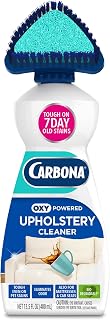
For visible marks, particularly the yellow rings left by dried urine or sweat, the correct tool is a no-rinse dry foam. A no-rinse mattress cleaner foam spray lifts the stain into a foam matrix you wipe away, delivering almost no free liquid into the core. For older, set-in stains that resist the first attempt, an oxygen-based cleaner like Carbona Oxy Powered Upholstery Cleaner breaks the chromophores chemically and leaves no residue behind; its included brush and sponge give you controlled agitation without over-wetting. Always spot-test on the mattress underside first, and treat concentrically from the outer edge of the stain inward to avoid spreading a wider halo.
Step Four: Dry Completely — This Is Non-Negotiable
Foam that feels dry to the palm may still hold moisture two centimeters down. Stand the mattress on its side if you can manage it, open a window, and run a fan aimed across the treated surface for a minimum of four to six hours. A dehumidifier accelerates this considerably. Direct sunlight on a balcony is excellent for the antimicrobial benefit but limit it to an hour or two, as prolonged UV exposure degrades polyurethane over time. Do not re-cover the mattress until it is unambiguously dry.
Step Five: Set a Realistic Maintenance Rhythm
- Vacuum the bare surface monthly, or every two weeks if you have pets or allergies
- Deodorize with enzymes quarterly
- Wash the mattress protector every two to three weeks alongside your sheets
- Rotate the mattress head-to-foot every three months — foam is never flipped unless dual-sided
Tips
- Baking soda works, but sift it thin and vacuum thoroughly after an hour — thick layers leave gritty residue trapped in the foam cells.
- Fresh urine is a race against time: blot immediately with towels and pressure, then treat with enzymes. Once it crystallizes, removal odds drop sharply.
- Skip steam cleaners entirely. They introduce exactly the deep moisture memory foam cannot expel.
- A waterproof-but-breathable protector prevents more work than any cleaning product resolves. Buy one first.
Frequently Asked Questions
Can I use vinegar on memory foam?
Diluted white vinegar handles light odor, but it introduces more free liquid than a foam or enzyme product and its own smell lingers in porous foam for days. It’s a workable backup, not a first choice.
Do UV-C bed vacuums actually sanitize?
UV-C at 253.7nm does inactivate surface bacteria and mites at the exposure levels these units deliver, but it penetrates only millimeters. Treat it as a useful supplement to suction and heat, not a replacement for either.
How do I remove blood stains?
Cold water only — heat sets hemoglobin permanently. Blot with cold, then apply an oxygen-based cleaner and blot again. Repeat patiently rather than escalating the moisture.
When is a mattress beyond cleaning?
If mold is visible, if odor survives two enzyme treatments and full drying, or if the foam has permanently lost its rebound, replace it. Interior mold in foam cannot be remediated.
Conclusion
Cleaning memory foam well comes down to a single discipline: remove as much as possible dry, and introduce moisture only in the smallest effective amount. Vacuum with real agitation, treat odor enzymatically and stains with no-rinse foam, dry with genuine patience, and protect the surface so the whole cycle stays manageable. Do that a few times a year and your mattress will keep the support and the air quality you paid for well into its second decade.