Key takeaways
- Rip capacity over raw horsepower: Furniture means sheet goods, and sheet goods mean crosscutting a 4×8 down the middle. A 32-inch rip capacity lets you break down plywood at the saw instead of on the floor with a track saw. Anything under 24 inches will limit you sooner than you expect.
- Fence quality is the whole machine: A rack-and-pinion fence that locks parallel every time is worth more than an extra amp of motor. Check for deflection at the far end — if you can push the fence out of square by hand, your joinery will show it.
- Router mounting and plate flatness: If you’re pairing a standalone router with a benchtop table, confirm the insert plate matches your router’s base and sits dead flush. A plate that dips 0.010 inch will telegraph into every profiled edge you cut.
- Dust extraction at both stations: Routers throw more fine dust than saws do, and fine dust is what follows you into the house and wrecks your evening. Look for above-and-below-table collection on the router side and a shrouded blade guard with a 2-1/2-inch port on the saw.
- Storage and mobility footprint: Measure the folded-and-parked dimensions, not the working dimensions. A rolling stand that stands upright against a wall buys back more usable shop space than any accessory you’ll ever add.
What's inside
Almost nobody sets out to buy a “table saw router combo.” What actually happens is this: you finish a set of shaker doors, realize your rip cuts were fighting you the whole time, and notice the router work took three passes because the base wouldn’t sit flat. Then you price out a cabinet saw and a router table separately, look at your garage floor, and start doing math on square footage. The two-machines-one-footprint approach isn’t a compromise so much as a recognition that most furniture builders are working in a bay that also has to hold a car, a bike, and a water heater.
The other half of the equation is fatigue — and I mean that literally. A saw that requires you to muscle stock through a mediocre fence, at 9 p.m., after a full workday, is how mistakes and injuries happen. Good ergonomics, low vibration, dust control that actually works, and a setup you can break down without a fight all mean you leave the shop tired in the good way instead of wired and frustrated. This guide covers what to look for in a saw-and-router pairing for furniture work, then walks through the specific combinations that hold up: SKIL’s integrated router table kit, DEWALT’s rolling-stand jobsite saw, the compact DWE7485, the DWP611 compact router, BOSCH’s RA1141 benchtop table, and the BOSCH 1617EVSPK dual-base kit.
As an Amazon Associate we earn from qualifying purchases.


🛒 Best Price Today on Amazon
Prime members get fast, free shipping on everything above, plus member-only deals. New members get a 30-day free trial — cancel anytime.
How to Choose a Table Saw Router Combo (2026)
- Rip capacity over raw horsepower: Furniture means sheet goods, and sheet goods mean crosscutting a 4×8 down the middle. A 32-inch rip capacity lets you break down plywood at the saw instead of on the floor with a track saw. Anything under 24 inches will limit you sooner than you expect.
- Fence quality is the whole machine: A rack-and-pinion fence that locks parallel every time is worth more than an extra amp of motor. Check for deflection at the far end — if you can push the fence out of square by hand, your joinery will show it.
- Router mounting and plate flatness: If you’re pairing a standalone router with a benchtop table, confirm the insert plate matches your router’s base and sits dead flush. A plate that dips 0.010 inch will telegraph into every profiled edge you cut.
- Dust extraction at both stations: Routers throw more fine dust than saws do, and fine dust is what follows you into the house and wrecks your evening. Look for above-and-below-table collection on the router side and a shrouded blade guard with a 2-1/2-inch port on the saw.
- Storage and mobility footprint: Measure the folded-and-parked dimensions, not the working dimensions. A rolling stand that stands upright against a wall buys back more usable shop space than any accessory you’ll ever add.
The Best Table Saw Router Combo (2026)s Reviewed
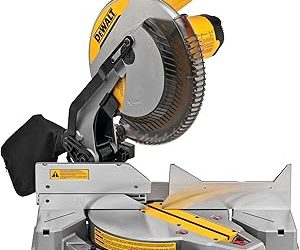
DEWALT DWE7491RS Table Saw with Rolling Stand
This is the anchor of most small-shop combos, and the reason is the 32-1/2-inch rip capacity paired with a rack-and-pinion fence that stays true through hundreds of adjustments. The foldable rolling stand deploys in seconds and parks vertically, which matters more than the spec sheet suggests.
SKIL RT1323-01 Router Table and Router Kit
The most direct answer to the combo question: a fixed-base 10-amp router already matched to its own table, so there’s no plate-fitting guesswork. The aluminum top and included featherboards make it a genuinely capable edge-profiling and dado station for a modest outlay.
BOSCH 1617EVSPK Plunge and Fixed-Base Router
The 2.25 HP dual-base kit is the router I’d buy if I were only buying one, because the fixed base lives in the table and the plunge base handles mortises and stopped dados handheld. Soft start and variable speed let it swing large panel-raising bits without stalling.
BOSCH RA1141 Portable Benchtop Router Table
Pair this with the 1617EVSPK and you have a router station that rivals shop-built tables at a fraction of the build time. The aluminum fence with adjustable faces and the featherboard system are the standouts; clamp it to a bench when in use and shelve it when you’re not.
DEWALT DWP611 Compact Router
An excellent second router — dedicated to roundovers, chamfers, and template trimming so you’re not swapping bits out of your table-mounted unit. The dual LEDs and variable-speed trigger make it the one you’ll reach for on detail work.
Frequently Asked Questions
Can I mount a router in my table saw’s extension wing?
On many jobsite saws, no — the wings aren’t thick or rigid enough. A separate benchtop table like the RA1141 is usually safer and gives you a proper fence.
Is the DWE7485 enough saw for furniture?
For solid-wood furniture and smaller casework, yes. Its 8-1/4-inch blade and lighter frame make it the pick for tight shops, but the reduced rip capacity makes plywood breakdown harder.
Do I need variable speed on a router?
For anything over about 1-1/2 inches in diameter, absolutely. Large bits at full RPM burn stock and stress the motor.
How much dust collection do I actually need?
A 2-1/2-inch shop vac with a HEPA filter and a cyclone separator handles both stations adequately. Add an air cleaner if you spend long sessions routing.
Final Thoughts
For most home furniture builders, the DEWALT DWE7491RS plus a BOSCH 1617EVSPK in an RA1141 table is the pairing that will still be right in ten years. If budget or space is the binding constraint, start with the SKIL RT1323-01 kit alongside the compact DWE7485 and upgrade the saw first.