Key takeaways
- Detent accuracy over detent count: Nine positive stops you can trust beat a dozen that drift. Check the 45° and 22.5° stops against a machinist square before your first project, and favor saws with a firm, repeatable lock rather than a spongy one — a half-degree error doubles at the joint.
- Cut-line visibility: Shadow-light systems that cast the blade’s own silhouette are more reliable than lasers, which need calibration and shift with blade changes. For dark walnut or stained bed rails, visibility is the difference between a clean miter and a re-cut.
- Capacity matched to bedroom stock: Headboard uprights and bed rails are often 1×8 to 1×12. A sliding 12-inch head gives you crosscut room to spare; a 10-inch chop saw is lighter and cheaper but will have you flipping wide boards, which introduces error exactly where you don’t want it.
- Dust capture and noise discipline: Bag-only collection catches maybe half the chips and almost none of the fines. Look for a port that adapts to a shop vacuum, and cut outside or in a garage rather than in or near a bedroom. Wear hearing protection — sustained exposure to shop noise contributes to tinnitus, which is one of the more stubborn sleep disruptors.
- Bevel type: Single bevel is fine for square-cornered case work. Double bevel earns its price on crown-style headboard caps and canopy details, where you’d otherwise be flipping stock and hoping the second face is as flat as the first.
What's inside
Anyone who has built a headboard knows the moment of truth: you clamp the four mitered corners together and either they close like a zipper or they gap just enough to catch the light. In bedroom furniture that gap matters more than it does anywhere else in the house. A nightstand with a sloppy return joint will loosen; a platform bed with imprecise 45s will develop the faint seasonal creak that wakes a light sleeper at 3 a.m. From a sleep-wellness standpoint, the furniture around your bed is part of your sleep environment — it should be silent, stable, and boring. Miters are where that quietness is won or lost, and the saw is where the miters are won or lost.
This guide looks at miter saws through that lens: which ones hold an angle over hundreds of cuts, which ones cut cleanly enough that a bed rail doesn’t need filler, and which ones manage dust well enough that you aren’t carrying fine particulate into the room you sleep in. Below you’ll find the models worth considering in 2026, a short buying framework, and honest notes on where each saw fits — whether you’re framing a single upholstered headboard or producing a full bedroom set.
As an Amazon Associate we earn from qualifying purchases.


🛒 Best Price Today on Amazon
Prime members get fast, free shipping on everything above, plus member-only deals. New members get a 30-day free trial — cancel anytime.
How to Choose a/an The Best Designed Saw For Cutting Miter Joints Is A (2026)
- Detent accuracy over detent count: Nine positive stops you can trust beat a dozen that drift. Check the 45° and 22.5° stops against a machinist square before your first project, and favor saws with a firm, repeatable lock rather than a spongy one — a half-degree error doubles at the joint.
- Cut-line visibility: Shadow-light systems that cast the blade’s own silhouette are more reliable than lasers, which need calibration and shift with blade changes. For dark walnut or stained bed rails, visibility is the difference between a clean miter and a re-cut.
- Capacity matched to bedroom stock: Headboard uprights and bed rails are often 1×8 to 1×12. A sliding 12-inch head gives you crosscut room to spare; a 10-inch chop saw is lighter and cheaper but will have you flipping wide boards, which introduces error exactly where you don’t want it.
- Dust capture and noise discipline: Bag-only collection catches maybe half the chips and almost none of the fines. Look for a port that adapts to a shop vacuum, and cut outside or in a garage rather than in or near a bedroom. Wear hearing protection — sustained exposure to shop noise contributes to tinnitus, which is one of the more stubborn sleep disruptors.
- Bevel type: Single bevel is fine for square-cornered case work. Double bevel earns its price on crown-style headboard caps and canopy details, where you’d otherwise be flipping stock and hoping the second face is as flat as the first.
The Best The Best Designed Saw For Cutting Miter Joints Is A (2026)s Reviewed
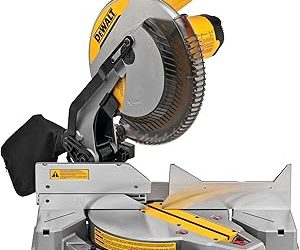
DEWALT DWS780 12-Inch Double Bevel Sliding Compound
The XPS shadow light is the standout feature here — no calibration, no batteries, just an accurate cut line at the kerf, which is exactly what you want when trimming a mitered bed rail to a scribed mark. Between the double bevel and the slide, this is the saw that will still be adequate three bedroom sets from now.
DEWALT DWS779 12-Inch Double Bevel Sliding Compound
Mechanically very close to the DWS780 with a strong 3800 RPM, 15-amp motor and generous crosscut capacity, minus the shadow light. If you’re comfortable working to a pencil line and want the slide and dual bevel for less, this is the value pick of the sliding group.
DEWALT DWS715 12-Inch Single Bevel Compound
A non-sliding 12-inch head with real capacity for its class, and noticeably easier to keep square because there’s no slide mechanism to develop play. Ideal for someone building nightstands and headboards occasionally rather than continuously.
DEWALT DWS713 10-Inch Single Bevel Compound
Light, accurate, and easy to carry to a driveway or balcony — which matters if your only alternative is cutting near living space. Capacity is the limit, so plan on it for frames, cleats, and trim rather than wide bed rails.
DOVAMAN 10-Inch Sliding Miter Saw
An unusually well-specified budget slider: dual speeds for wood versus metal, three included TCT blades, ambidextrous controls, and a 3.5 x 13.4-inch maximum cut. Expect to spend an evening tuning the fence and detents, after which it holds angles well for the money.
Frequently Asked Questions
Do I need a sliding saw to build a bed?
Not necessarily. Most bed components are under 8 inches wide, which a 10- or 12-inch chop saw handles in one pass. Sliders earn their keep on wide headboard panels and cap rails.
Why do my miters still gap when the saw reads 45°?
Usually the fence, not the blade. Confirm both fence halves are coplanar, cut a four-piece test frame in scrap, and adjust in small increments — each corner absorbs half of any error, so tiny corrections matter.
What blade should I use for bedroom furniture?
An 80-tooth fine-finish blade for 12-inch saws (60-tooth for 10-inch) leaves a glue-ready surface on hardwood and reduces tearout in veneered panels.
Can I cut in a spare bedroom?
Avoid it. Fine wood dust lingers in soft furnishings and bedding for weeks and can aggravate nighttime congestion. Cut outdoors or in a garage, and let the room air out before sleeping in it.
Final Thoughts
If you want one saw to carry you from a first headboard through a matching bedroom set, the DEWALT DWS780 is the clearest choice — the shadow light alone reduces re-cuts, and the double-bevel slide covers every joint a bed frame will ask for. The DWS779 delivers nearly the same capability for less if you can live without that light, while the DOVAMAN 10-inch slider is the sensible entry point for a first build, provided you’re willing to tune it before trusting it with hardwood.