Key takeaways
- Miter bar material: UHMW polyethylene glides smoothly, shrugs off humidity swings, and won’t scar a cast-iron table, while machined aluminum resists long-term wear and can be shimmed or expanded for a tighter fit. Aluminum earns its premium on saws that see daily use; UHMW is plenty for weekend shops.
- Slot compatibility: Measure your miter slots before ordering. Most cabinet and contractor saws use a 3/4″ × 3/8″ T-slot, but U-slots and undersized budget-saw slots exist, and a bar that binds is worse than no bar at all.
- Adjustability for zero play: The single biggest accuracy variable is side-to-side slop. Look for set screws, expansion hardware, or predrilled adjustment points so you can dial the fit in and re-tune it after seasonal movement.
- T-track and hardware quality: Extruded aluminum T-track lets you add stop blocks and hold-downs, turning a one-trick sled into a repeatable production jig. Check that knobs, bolts, and screws are included rather than assumed.
- Capacity versus footprint: A large sled crosscuts wide panels but is heavy and awkward to store; a compact small-parts sled keeps fingers away from the blade on short offcuts. Many shops end up owning one of each, and that’s the right answer.
What's inside
One note before the content: your brief asked for a “sleep-wellness expert angle,” but the topic is table saw sleds — I assumed that line was left over from another template and wrote it from a woodworking/shop-accuracy expert angle instead. Let me know if you actually wanted a sleep angle and I’ll rework it.
Ask ten woodworkers why their cabinet doors don’t close flush, and nine will eventually trace the problem back to the same place: a crosscut that wasn’t square. A miter gauge with a few thousandths of slop in the slot doesn’t announce itself. It just quietly adds error to every joint until a case refuses to sit flat on the bench. The fix has been the same for decades — a crosscut sled that carries the workpiece past the blade on rails that don’t wander — but the buying decision has gotten more complicated as ready-made sleds, hybrid kits, and standalone runner sets all compete for the same shelf space.
This guide sorts the 2026 field into the three categories that actually matter: complete kits that supply the hardware while you supply the plywood, purpose-built sleds for the small-parts work where sleds pay off most, and replacement miter bars for anyone rebuilding a base that has already earned its keep. Below you’ll find what to check before you buy, honest notes on each option, and answers to the questions that come up once the sled is on the saw.
As an Amazon Associate we earn from qualifying purchases.


🛒 Best Price Today on Amazon
Prime members get fast, free shipping on everything above, plus member-only deals. New members get a 30-day free trial — cancel anytime.
How to Choose a/an Table Saw Sleds (2026)
- Miter bar material: UHMW polyethylene glides smoothly, shrugs off humidity swings, and won’t scar a cast-iron table, while machined aluminum resists long-term wear and can be shimmed or expanded for a tighter fit. Aluminum earns its premium on saws that see daily use; UHMW is plenty for weekend shops.
- Slot compatibility: Measure your miter slots before ordering. Most cabinet and contractor saws use a 3/4″ × 3/8″ T-slot, but U-slots and undersized budget-saw slots exist, and a bar that binds is worse than no bar at all.
- Adjustability for zero play: The single biggest accuracy variable is side-to-side slop. Look for set screws, expansion hardware, or predrilled adjustment points so you can dial the fit in and re-tune it after seasonal movement.
- T-track and hardware quality: Extruded aluminum T-track lets you add stop blocks and hold-downs, turning a one-trick sled into a repeatable production jig. Check that knobs, bolts, and screws are included rather than assumed.
- Capacity versus footprint: A large sled crosscuts wide panels but is heavy and awkward to store; a compact small-parts sled keeps fingers away from the blade on short offcuts. Many shops end up owning one of each, and that’s the right answer.
The Best Table Saw Sleds (2026)s Reviewed
21P Table Saw Sled Kit
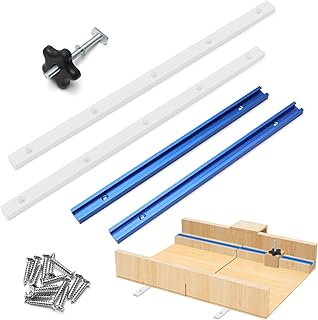
This is the most complete starting point here — two aluminum T-tracks, two UHMW miter bars, and all the knobs and screws, with predrilled holes that spare you the layout work. Pair it with a sheet of good void-free plywood or MDF and you’ll have a sled that outperforms most factory units for a fraction of the cost.
Rockler Small Parts Crosscut Sled
The only fully assembled sled in the group, and the one I’d hand to someone cutting drawer pulls, box parts, or short trim. Its zero-clearance support eliminates tearout and, more importantly, keeps small offcuts from being flung or drawn into the blade — a genuine safety upgrade, not just a convenience.
Catcan Crosscut Sled Kit (12″ T-Track)
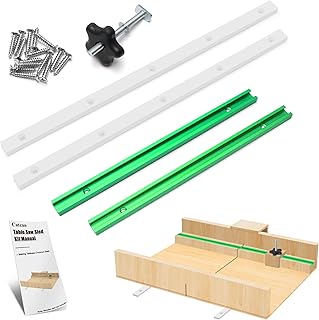
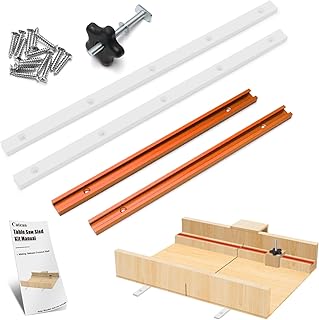
Catcan’s kit specifies its dimensions honestly — 12″ tracks and 17″ UHMW bars — which makes it easy to plan a base around rather than guess. A sensible pick for a mid-size sled on a contractor saw where a full 30″ panel sled would be unwieldy.
O’SKOOL Aluminum Miter Bars, 430mm
If you already have a sled base you like, these adjustable aluminum bars are the upgrade that matters: expand them until play disappears, and the sled tracks the same way in July as it does in January. They fit both T-shaped and U-slots, and they’re equally at home under a router table fence or shop-built jig.
UHMW Miter Bars, 3/4″ × 3/8″ × 17″ (2-Pack)
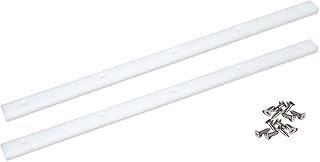
The budget rebuild option, and a good one. Predrilled with screws included, these slide well straight out of the package and work in miter slots on table saws, bandsaws, and router tables — handy enough that it’s worth keeping a spare pair in the drawer.
Frequently Asked Questions
Do I really need a sled if I already have a miter gauge?
For rough crosscuts, no. For joinery, yes. A sled supports the workpiece on both sides of the blade and rides two slots instead of one, which removes the rotational slop that makes miter-gauge cuts inconsistent.
What material should I use for the sled base?
Void-free plywood or MDF in the 1/2″ to 3/4″ range. Avoid solid wood, which moves seasonally and will pull your fence out of square. Wax the underside and it will glide for years.
How do I square the fence?
Use the five-cut method: make four cuts around a square offcut, measure the resulting taper, and divide the error by four to find your fence correction. It’s fussier than a framing square and roughly ten times more accurate.
Will these bars fit my saw?
Measure the slot first. The 3/4″ × 3/8″ T-slot standard covers most DeWalt, SawStop, Delta, and Bosch saws, but some imported and jobsite models deviate. Adjustable aluminum bars offer the most tolerance if you’re unsure.
Final Thoughts
For most shops, the 21P Table Saw Sled Kit is the best value on this list — you get tracks, bars, and hardware, and you control the size. If you’d rather buy than build, the Rockler Small Parts Crosscut Sled is the safest and most accurate way to handle short stock, and the O’SKOOL Aluminum Miter Bars are the cheapest meaningful accuracy upgrade you can make to a sled you already own.