Key takeaways
- Fence quality above all: The rip fence determines whether your joints close. Look for a fence that locks parallel to the blade and stays put under hand pressure — rack-and-pinion systems are noticeably easier for beginners to trust than basic single-lock fences.
- Rip capacity for sheet goods: Roughly 24 inches lets you rip a plywood sheet in half; 30-plus inches lets you cut cabinet sides without repositioning. If furniture and casework are your goal, prioritize this over motor claims.
- Stand and footprint: A wobbling base ruins otherwise good cuts. Rolling and folding stands matter most in shared garages, while benchtop models suit small shops with a solid existing surface.
- Safety hardware included: Confirm the saw ships with a riving knife or splitter, blade guard, anti-kickback pawls, and a push stick — and plan to actually use them rather than storing them in a drawer.
- Dust and noise management: A functional dust port keeps sightlines clear and your lungs happier. Noise is the underrated factor: a screaming universal motor discourages hearing protection compliance and makes evening work miserable for everyone in the house.
What's inside
Few purchases stall a beginner woodworker longer than the table saw. It sits at the center of nearly every furniture build — breaking down plywood, ripping stock to width, cutting clean crosscuts for case sides and shelves — yet the market is crowded with lookalike 10-inch models whose spec sheets read almost identically. Amp ratings, RPM figures, and “multifunctional” claims blur together, and the genuine differences (fence accuracy, rip capacity, stand stability, dust control) are the ones manufacturers describe least clearly. The result is a lot of first saws that get returned, or worse, get fought with for years.
This guide sorts the field for someone building furniture at home rather than framing houses. Below you’ll find the models worth shortlisting, the handful of specifications that actually predict day-to-day accuracy, honest notes on where the budget options compromise, and answers to the questions beginners ask most. One point worth stating up front, because it rarely appears in tool reviews: a table saw punishes fatigue faster than any other machine in the shop. Kickback and hand-placement errors cluster at the end of long sessions and late nights. Choose a saw that’s stable and predictable, then treat rested attention as part of your safety equipment — no blade guard compensates for a woodworker who should have stopped two hours ago.
As an Amazon Associate we earn from qualifying purchases.




🛒 Best Price Today on Amazon
Prime members get fast, free shipping on everything above, plus member-only deals. New members get a 30-day free trial — cancel anytime.
How to Choose a/an Table Saw For Beginner Woodworker (2026)
- Fence quality above all: The rip fence determines whether your joints close. Look for a fence that locks parallel to the blade and stays put under hand pressure — rack-and-pinion systems are noticeably easier for beginners to trust than basic single-lock fences.
- Rip capacity for sheet goods: Roughly 24 inches lets you rip a plywood sheet in half; 30-plus inches lets you cut cabinet sides without repositioning. If furniture and casework are your goal, prioritize this over motor claims.
- Stand and footprint: A wobbling base ruins otherwise good cuts. Rolling and folding stands matter most in shared garages, while benchtop models suit small shops with a solid existing surface.
- Safety hardware included: Confirm the saw ships with a riving knife or splitter, blade guard, anti-kickback pawls, and a push stick — and plan to actually use them rather than storing them in a drawer.
- Dust and noise management: A functional dust port keeps sightlines clear and your lungs happier. Noise is the underrated factor: a screaming universal motor discourages hearing protection compliance and makes evening work miserable for everyone in the house.
The Best Table Saw For Beginner Woodworker (2026)s Reviewed
DEWALT DWE7491RS 10-Inch Table Saw
The rack-and-pinion fence and 32-1/2-inch rip capacity make this the most capable saw here for real furniture work — you can crosscut a cabinet side and rip a full sheet without improvising. The rolling stand deploys quickly and holds the table genuinely rigid, which is exactly what a nervous beginner needs.
SKIL TS6307-00 15 Amp Portable Jobsite Saw
SKIL’s folding stand is the standout feature for shops that double as parking spaces, and the integrated foot pedal plus rack-and-pinion fence give it accuracy well beyond its price bracket. A sensible first saw if the DEWALT’s rip capacity exceeds your ambitions.
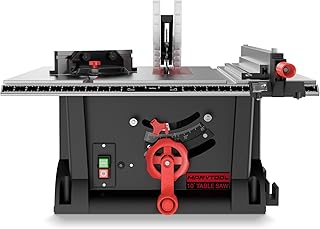
15 Amp Compact Portable Table Saw with 36T Blade
A straightforward benchtop machine with 90-degree crosscut and 0–45-degree bevel capability, suited to small projects, trim, and shop fixtures. The 36-tooth blade cuts cleanly enough for painted furniture, though upgrading the blade is the single best improvement you can make.
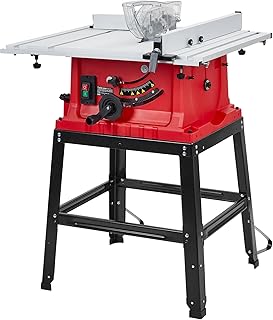
10-Inch 15A Multifunctional Table Saw with Stand and Push Stick
The included stand and push stick mean you’re ready to work out of the box, and the adjustable blade height handles dadoes and grooves for basic joinery. Expect to spend time squaring the fence before your first cut — a worthwhile ritual on any budget saw.
10-Inch 15 Amp Table Saw with Protective Cover and 36 x 25-Inch Tabletop
The larger tabletop provides more workpiece support than most saws in this class, which pays off when handling wider boards alone. Its ability to handle plastics and soft metals with the appropriate blade adds versatility for mixed-material projects.
Frequently Asked Questions
Is a 10-inch saw enough for furniture building?
Yes. A 10-inch blade cuts roughly 3-1/8 inches deep at 90 degrees, which covers virtually all furniture stock, including thick tabletop slabs cut in two passes.
Should I replace the included blade?
Almost always. A quality 40-tooth combination blade improves cut quality, reduces tearout, and lowers strain on the motor more than any other upgrade at this price.
Do I need a dedicated 20-amp circuit?
Most 15-amp saws run on a standard household circuit, but avoid sharing it with dust collection or space heaters to prevent nuisance trips mid-cut.
How do I avoid kickback as a beginner?
Keep the riving knife installed, never cut freehand, never rip between blade and fence with a narrow offcut, and use a push stick for anything under six inches wide.
Final Thoughts
For most beginners building furniture, the DEWALT DWE7491RS is the saw you won’t outgrow, thanks to its fence precision and generous rip capacity. If space or budget is tighter, the SKIL TS6307-00 delivers similar fence accuracy in a more compact folding package, while the 36 x 25-inch tabletop model offers the most workpiece support among the value picks.