Key takeaways
- Tooth count: For trim, more teeth means smaller chips and a cleaner exit face. Aim for 80 teeth on a 10-inch blade and 90–100 on a 12-inch. Anything under 60 belongs on framing lumber, not casing.
- Grind geometry: ATB (alternate top bevel) teeth act like tiny knives and are ideal for solid wood and veneered molding. TCG (triple chip grind) is the choice for aluminum trim, PVC, and abrasive composites where ATB points would chip out.
- Hook angle: Look for a low or slightly negative hook on a miter saw. It keeps the blade from grabbing and self-feeding into the workpiece, which is what causes that sudden lurch and a blown-out miter tip.
- Arbor and plate quality: Confirm 5/8-inch for most 10-inch saws and 1-inch for 12-inch models. A laser-cut, tensioned plate with expansion slots stays flatter under heat and runs noticeably quieter — worth considering if you’re cutting in an occupied house.
- Carbide grade: Micro-grain carbide holds a keen edge through hundreds of cuts in MDF, which is far more abrasive than pine. Thin-kerf plates reduce load on smaller saws but flex more on wide crown stock.
What's inside
Trim work is where a project either sings or falls apart. Baseboard returns, crown miters, door casing, shoe molding — these joints sit at eye level in finished rooms, and a blade that tears the grain or leaves a fuzzy edge on the show face turns a clean install into an afternoon of filler and sanding. Most frustration blamed on the saw is actually the blade: too few teeth, the wrong hook angle, or worn carbide that pushes fibers instead of slicing them.
This guide narrows the field to blades built specifically for fine finish cuts in soft and hardwood trim, MDF, and composite molding. We look at tooth count and grind geometry, arbor fit, how each blade behaves on a sliding versus chop-style miter saw, and which ones hold an edge long enough to justify their cost. Whether you run a 10-inch or 12-inch saw, there’s a right answer below — and a few honest notes about when a premium blade is overkill.
As an Amazon Associate we earn from qualifying purchases.



🛒 Best Price Today on Amazon
Prime members get fast, free shipping on everything above, plus member-only deals. New members get a 30-day free trial — cancel anytime.
How to Choose a/an Miter Saw Blade For Trim (2026)
- Tooth count: For trim, more teeth means smaller chips and a cleaner exit face. Aim for 80 teeth on a 10-inch blade and 90–100 on a 12-inch. Anything under 60 belongs on framing lumber, not casing.
- Grind geometry: ATB (alternate top bevel) teeth act like tiny knives and are ideal for solid wood and veneered molding. TCG (triple chip grind) is the choice for aluminum trim, PVC, and abrasive composites where ATB points would chip out.
- Hook angle: Look for a low or slightly negative hook on a miter saw. It keeps the blade from grabbing and self-feeding into the workpiece, which is what causes that sudden lurch and a blown-out miter tip.
- Arbor and plate quality: Confirm 5/8-inch for most 10-inch saws and 1-inch for 12-inch models. A laser-cut, tensioned plate with expansion slots stays flatter under heat and runs noticeably quieter — worth considering if you’re cutting in an occupied house.
- Carbide grade: Micro-grain carbide holds a keen edge through hundreds of cuts in MDF, which is far more abrasive than pine. Thin-kerf plates reduce load on smaller saws but flex more on wide crown stock.
The Best Miter Saw Blade For Trim (2026)s Reviewed
DEWALT 12-Inch 100-Tooth Fine Finish (DWA112100)
This is the safest recommendation for anyone running a 12-inch sliding miter saw on trim all day: 100 ATB teeth, tough micro-grain carbide, and a plate flat enough to hold a crisp 45 across wide baseboard. It costs more than the generic alternatives, but edge retention in MDF is where that premium actually shows up.
WEN BL1080 10-Inch 80-Tooth
The value pick, and a genuinely good one — 80 carbide-tipped teeth is the sweet spot for 10-inch saws cutting pine, poplar, and primed molding. It won’t outlast an industrial blade, but the finish straight off the saw needs little more than a light scuff before paint.
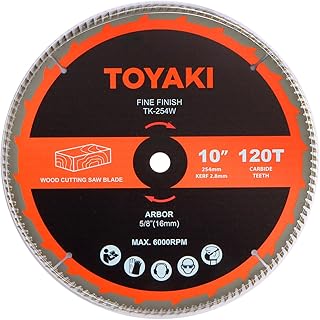
10-Inch 120-Tooth Fine-Finish Blade
A 120-tooth count on a 10-inch plate is aggressive territory: gorgeous glass-smooth cuts on thin, delicate stock like shoe mold and picture-frame stock, provided you feed slowly. Push it hard through thick hardwood and heat buildup becomes the limiting factor, so treat this as a specialty finish blade rather than an everyday workhorse.
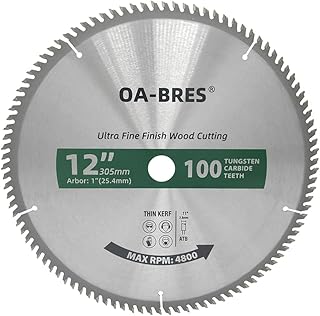
12-Inch 100-Tooth ATB TCT with 1-Inch Arbor
Essentially the budget counterpart to the DEWALT, with the same 100-tooth ATB layout and correct 1-inch arbor for full-size saws. Runout tolerance is less consistent unit to unit, but for a homeowner trimming out a room or two, the cut quality is hard to fault.
10-Inch TCG 120-Tooth Aluminum-Working Blade
Reach for this one when your “trim” isn’t wood — aluminum edge trim, PVC molding, and composite cladding all cut cleanly here because the triple-chip grind takes abuse that would chip ATB points. Pair it with a slow feed and, ideally, a wax stick for nonferrous work.
Frequently Asked Questions
Is a 120-tooth blade better than an 80-tooth for trim?
Not automatically. Above roughly 80 teeth on a 10-inch blade, gullet space shrinks and chip evacuation suffers, which can scorch hardwood. Use 120-tooth blades for thin, fine stock and 80-tooth for general trim work.
Why do my miters still show a gap?
Usually saw calibration or wall geometry, not the blade. Verify your detents against a machinist square, check for blade deflection on long slides, and remember that inside corners are rarely a true 90 degrees.
Can I use one blade for both trim and framing?
You can, but you’ll compromise both. A 40-tooth general-purpose blade tears finish faces, and a fine-finish blade dulls quickly in wet construction lumber. Keeping two blades and swapping is cheaper long term.
How do I know when to replace the blade?
Watch for increased feed pressure, burn marks, fuzzy exit edges, and a rising pitch in the cut. Fine-finish blades can be professionally sharpened several times before the carbide runs out.
Final Thoughts
For most trim carpenters on a 12-inch saw, the DEWALT DWA112100 remains the blade to beat on cut quality and longevity. On a 10-inch saw, the WEN BL1080 delivers the best finish per dollar for painted and stained wood molding, while the TCG 120-tooth blade earns a spot in the case for anyone regularly cutting aluminum, PVC, or composite trim.