Key takeaways
- Tooth count: For moulding, more teeth means fewer fibers torn per pass. Aim for 80T minimum on a 10-inch blade and 96T–100T on a 12-inch. Ultra-fine 120T blades excel on veneered and pre-finished trim, but they cut slower and demand a patient, steady feed.
- Grind and hook angle: Look for an ATB (alternate top bevel) or Hi-ATB grind, which slices fibers cleanly instead of shearing them. A low or slightly negative hook angle keeps the blade from grabbing thin stock and lifting it off the fence — critical on tall crown cuts.
- Arbor and diameter match: Confirm your saw’s arbor before buying. Most 10-inch blades use a 5/8-inch bore, while many 12-inch blades use a 1-inch bore. Never shim a blade to fit an arbor it wasn’t made for.
- Plate quality and kerf: A tensioned, laser-cut plate with expansion slots stays flat under heat, and flatness is what keeps a 45-degree miter from creeping open. Thin-kerf blades reduce strain on smaller saws; full-kerf plates track straighter in dense hardwood.
- Carbide grade and single vs. multi-pack: Micrograin carbide holds an edge far longer through MDF and pre-primed trim, which is abrasive. If you also rip and rough-cut, a two- or three-blade set is more economical than buying one premium finish blade and dulling it on framing lumber.
What's inside
Moulding punishes a mediocre blade. Crown, base cap, chair rail, and shoe are all thin, often pre-primed, and almost always installed at eye level where a fuzzy edge or a chipped profile reads instantly across the room. The frustration most trim installers describe isn’t the cut angle — it’s the blade dragging splinters off the back face of a piece of pine, or blowing out the delicate return on a mitered corner they measured three times. Caulk hides a lot, but it can’t hide tearout on a painted profile, and on stained hardwood moulding it hides nothing at all.
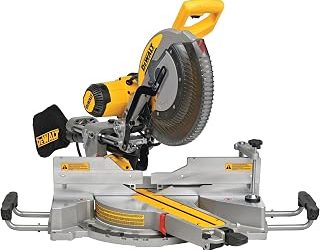
The fix is usually simpler than buying a better saw: switch to a blade designed for finish crosscutting rather than general framing. Below, we’ve gathered the blades that consistently deliver clean, glue-ready miters on trim stock — high-tooth-count carbide options for 10-inch and 12-inch saws, plus a couple of multi-packs worth owning if you rip and crosscut alongside your trim work. We’ll cover what actually matters when comparing blades, then review the standouts.
As an Amazon Associate we earn from qualifying purchases.


🛒 Best Price Today on Amazon
Prime members get fast, free shipping on everything above, plus member-only deals. New members get a 30-day free trial — cancel anytime.
How to Choose a Miter Saw Blade For Moulding (2026)
- Tooth count: For moulding, more teeth means fewer fibers torn per pass. Aim for 80T minimum on a 10-inch blade and 96T–100T on a 12-inch. Ultra-fine 120T blades excel on veneered and pre-finished trim, but they cut slower and demand a patient, steady feed.
- Grind and hook angle: Look for an ATB (alternate top bevel) or Hi-ATB grind, which slices fibers cleanly instead of shearing them. A low or slightly negative hook angle keeps the blade from grabbing thin stock and lifting it off the fence — critical on tall crown cuts.
- Arbor and diameter match: Confirm your saw’s arbor before buying. Most 10-inch blades use a 5/8-inch bore, while many 12-inch blades use a 1-inch bore. Never shim a blade to fit an arbor it wasn’t made for.
- Plate quality and kerf: A tensioned, laser-cut plate with expansion slots stays flat under heat, and flatness is what keeps a 45-degree miter from creeping open. Thin-kerf blades reduce strain on smaller saws; full-kerf plates track straighter in dense hardwood.
- Carbide grade and single vs. multi-pack: Micrograin carbide holds an edge far longer through MDF and pre-primed trim, which is abrasive. If you also rip and rough-cut, a two- or three-blade set is more economical than buying one premium finish blade and dulling it on framing lumber.
The Best Miter Saw Blade For Moulding (2026)s Reviewed
DEWALT 12-Inch 100-Tooth Fine Finish (DWA112100)
This is the safest recommendation for anyone running a 12-inch saw on paint-grade or stain-grade trim — the tooth geometry leaves a surface that needs little more than a scuff sanding. The carbide is genuinely sharp out of the sleeve, and the plate stays true through long crown-moulding sessions.
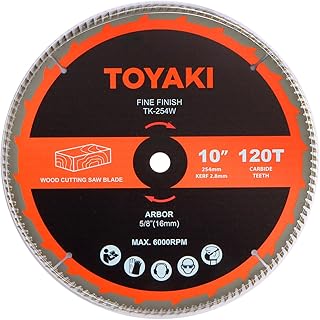
120-Tooth Fine-Finish Woodworking Blade (10-Inch, 5/8-Inch Arbor)
The highest tooth count here, and the one to reach for on pre-finished, veneered, or laminate-wrapped moulding where even minor chipout is unacceptable. Feed slowly and let the blade work; rushing it will scorch light-colored stock.
LM6300 12-Inch 100-Tooth Miter Joint Blade
Purpose-built for tight joinery, this blade produces miters clean enough to glue directly without touch-up — a real advantage on returns and outside corners. The 1-inch bore fits most full-size 12-inch saws, so verify your arbor first.
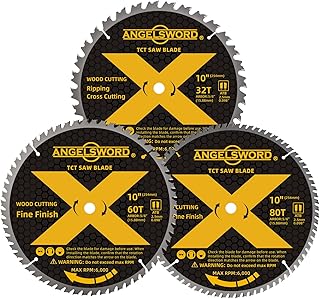
ANGELSWORD 10-Inch 3-Pack (32T / 60T / 80T)
The best value entry for a hobbyist outfitting a 10-inch saw from scratch: the 80T handles finish trim, while the 32T and 60T cover framing and general crosscuts. Rotating tasks across three blades keeps your finish edge sharp far longer than a single blade ever would.
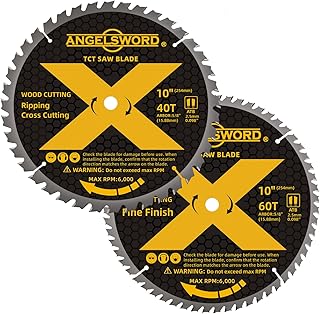
ANGELSWORD 12-Inch 2-Pack (40T / 60T)
A practical pairing for renovation work where you’re cutting framing lumber and trim on the same day. The 60T is respectable on paint-grade moulding, though stain-grade hardwood will show the difference against a dedicated 100T finish blade.
Frequently Asked Questions
How many teeth do I need for crown moulding?
Eighty teeth is the practical floor on a 10-inch saw and 96–100 on a 12-inch. Anything lower leaves visible tearout along the delicate cove and ogee details.
Will a high-tooth-count blade cut framing lumber?
It can, but it shouldn’t. Thick stock overloads fine-tooth gullets, which causes burning, and construction lumber’s grit and nails destroy expensive carbide quickly.
How do I stop chipout on pre-primed MDF trim?
Combine a fine-tooth blade with a zero-clearance sacrificial fence, support the workpiece fully, and cut in one smooth downward motion without backing out mid-stroke.
Can these blades be resharpened?
Carbide-tipped blades can be professionally resharpened several times, though on budget multi-packs replacement is often cheaper than service.
Final Thoughts
For most trim carpenters running a 12-inch saw, the DEWALT DWA112100 is the reliable, no-drama choice, with the LM6300 100T close behind when glue-tight miter joints are the priority. If you’re working on a 10-inch saw or building out a first blade collection, the ANGELSWORD 3-pack delivers finish-capable results alongside everyday utility for the price of one premium blade.