Key takeaways
- Runner material and fit: UHMW plastic runners glide smoothly and shrug off humidity swings, while machined aluminum bars offer adjustable set screws to dial out slop. Either beats hardwood runners, which swell and bind in a damp shop or garage.
- Capacity versus footprint: A large sled crosscuts wide panels but eats fence travel and storage room. Match the deck size to what you actually build — drawer parts and rail-and-stile stock rarely need a 24-inch sled.
- Zero-clearance support: Look for a replaceable or self-forming kerf that supports fibers right at the cut line. This is what keeps thin dowels, small blocks, and veneered edges from splintering or dropping into the blade slot.
- Squaring adjustability: The fence should be attachable with a pivot point and a locking screw so you can perform the five-cut test and tune the angle. A fixed, unadjustable fence is only as good as its factory tolerance.
- Hold-downs and T-track: Integrated T-track lets you add stop blocks for repeatable lengths and clamps to keep hands well clear. For repetitive furniture parts, a reliable stop is what turns four matching legs into eight.
What's inside
Anyone who has tried to build a nightstand drawer or a bed frame’s mitered headboard cap knows the moment of truth: you clamp the joint dry, and daylight shows through. A crosscut that drifts even half a degree telegraphs through every stage of assembly, and no amount of glue, clamping pressure, or sanding truly hides it. The miter gauge that shipped with your saw is rarely the culprit’s only accomplice — short stock pivots, thin dowels tip into the blade gap, and small parts get flung rather than cut. For bedroom furniture in particular, where surfaces sit at eye level from a pillow and joints get stressed nightly, square is not a nicety. It is the whole game.
A sled fixes this by riding the miter slots on its own runners, carrying the workpiece and the zero-clearance support surface together so nothing shifts and nothing tears out. This guide covers the sleds and sled-building kits worth your bench space in 2026, from compact small-parts jigs for drawer dividers and tenon shoulders to a full slab-flattening router sled for live-edge headboards and bedside tables. Below you will find selection criteria, hands-on assessments of the top five options, and answers to the questions that come up most often once the jig is actually on the saw.
As an Amazon Associate we earn from qualifying purchases.


🛒 Best Price Today on Amazon
Prime members get fast, free shipping on everything above, plus member-only deals. New members get a 30-day free trial — cancel anytime.
How to Choose a Table Saw Sled (2026)
- Runner material and fit: UHMW plastic runners glide smoothly and shrug off humidity swings, while machined aluminum bars offer adjustable set screws to dial out slop. Either beats hardwood runners, which swell and bind in a damp shop or garage.
- Capacity versus footprint: A large sled crosscuts wide panels but eats fence travel and storage room. Match the deck size to what you actually build — drawer parts and rail-and-stile stock rarely need a 24-inch sled.
- Zero-clearance support: Look for a replaceable or self-forming kerf that supports fibers right at the cut line. This is what keeps thin dowels, small blocks, and veneered edges from splintering or dropping into the blade slot.
- Squaring adjustability: The fence should be attachable with a pivot point and a locking screw so you can perform the five-cut test and tune the angle. A fixed, unadjustable fence is only as good as its factory tolerance.
- Hold-downs and T-track: Integrated T-track lets you add stop blocks for repeatable lengths and clamps to keep hands well clear. For repetitive furniture parts, a reliable stop is what turns four matching legs into eight.
The Best Table Saw Sled (2026)s Reviewed
Small Crosscut Sled with Zero-Gap Support
Built for the fussy work — 90-degree cuts on thin dowels, small tenons, and slender decorative moldings — this compact kit uses aluminum slide rails that stay consistent across seasons. If your projects lean toward drawer components and trim details rather than wide panels, it earns its keep quickly.
POWERTEC 71403 Crosscut Sled Kit
A hardware-and-jig kit rather than a finished sled, meaning you supply the plywood deck and get exactly the size you want. The value here is excellent, and building it yourself means you understand every adjustment when it eventually needs tuning.
Rockler Small Parts Crosscut Sled
Rockler’s zero-clearance design is the one to reach for when the offcut is too small to hold safely by hand, which is precisely when most shop injuries happen. Fit and finish are a step above, and the support surface keeps tiny parts flat and captured through the cut.
O’SKOOL Slab Flattening Router Sled (RTA012)
Different tool, same principle: the three-axis gantry rides rails while a 3.5-inch router lift skims a live-edge slab dead flat. For anyone building a river-table nightstand or a solid slab headboard, this is far cheaper than renting time on a wide-belt sander.
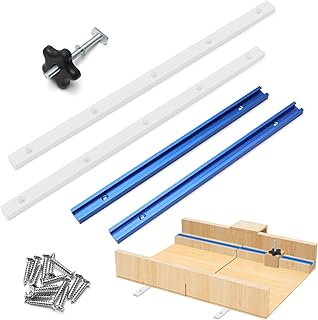
21P Table Saw Sled Kit
The most complete DIY package on this list, pairing two UHMW miter bars with two lengths of aluminum T-track and predrilled hardware. The T-track is the standout feature, letting you mount stops and clamps for the repeatable cuts that furniture work demands.
Frequently Asked Questions
Do I need a sled if I already have a good miter gauge?
A quality miter gauge handles longer stock well, but it does not support the workpiece on both sides of the blade or provide zero clearance at the cut. For short parts and clean shoulders, a sled is meaningfully safer and more accurate.
How do I make sure my sled is truly square?
Use the five-cut method: cut a scrap panel on all four sides, then trim a thin final strip and measure it at both ends. The difference, divided by four, tells you exactly how far to nudge the fence.
Will a sled fit my saw?
Check your miter slot dimensions — most contractor and cabinet saws use a standard 3/4-inch by 3/8-inch T-slot, but some compact jobsite saws do not. Also confirm you have enough blade height left after the deck thickness.
Can I use one sled for both crosscuts and miters?
You can add an angled auxiliary fence, but dedicated jigs perform better. Most furniture makers keep a squared crosscut sled permanently tuned and build a separate miter sled for picture-frame joinery.
Final Thoughts
For most people building bedroom and living-room furniture, the Rockler Small Parts Crosscut Sled is the safest, most immediately useful purchase — it solves the small-offcut problem the day it arrives. If you would rather build than buy, the 21P Sled Kit gives you T-track, UHMW bars, and a deck sized to your bench, while the O’SKOOL Router Sled is the specialist worth owning the moment a live-edge slab lands in your shop.