Key takeaways
- Seat depth over seat width: Depth is the number that makes or breaks fit. Aim for roughly 17–19 inches so the back of your knee clears the cushion edge by two fingers’ width; anything deeper and you’ll lose lumbar contact no matter how good the padding is.
- Seat height and foot contact: Look for a seat-to-floor measurement in the 16–18 inch range so both feet rest flat with thighs level. Dangling feet shift load onto the hamstrings and quietly encourage fidgeting instead of settling.
- Adjustable headrest or a lower-set back: A fixed headrest built for a taller torso will push your head forward. Either choose a power-adjustable headrest you can drop to your neck’s actual height, or a lower-backed chair where the natural crown of the cushion meets your cervical curve.
- Recline range and footrest reach: A wider angle range (roughly 90° to 160°) lets you find a genuinely restorative position rather than just two presets. Check that the extended footrest is short enough to support your heels, not just your calves.
- Clearance and mechanism type: Zero-wall and push-back designs need only a few inches behind them, which suits apartments and small bedrooms. Manual levers are cheapest but demand some upper-body force; power and lift mechanisms are the better call for limited strength or mobility.
What's inside
Most recliners are engineered around a 5’10” frame, which is why so many shorter and petite adults end up perched on the front edge of a seat with their feet dangling and their lower back unsupported. A seat pan that’s too deep forces the knees forward and the pelvis into a backward tilt, a headrest positioned above the skull leaves the neck unbraced, and an oversized footrest ends up pressing into the calves instead of cradling the heels. From a sleep-wellness standpoint this matters more than comfort alone: a chair that can’t support neutral spinal alignment will keep the nervous system in low-grade bracing mode, which is precisely the opposite of what you want in the hour before bed.
This guide looks at recliners through that lens — fit first, then features. Below you’ll find the models worth shortlisting for smaller frames in 2026, a checklist of the dimensions and adjustments that actually determine whether a chair fits you, short expert notes on each pick, and answers to the questions we hear most from petite buyers. Whether you want a compact reading chair, a power lift model for an older relative, or a rocker for a nursery corner, the aim is to help you match the chair to your body rather than the other way around.
As an Amazon Associate we earn from qualifying purchases.


🛒 Best Price Today on Amazon
Prime members get fast, free shipping on everything above, plus member-only deals. New members get a 30-day free trial — cancel anytime.
How to Choose a/an Recliner For Small Person (2026)
- Seat depth over seat width: Depth is the number that makes or breaks fit. Aim for roughly 17–19 inches so the back of your knee clears the cushion edge by two fingers’ width; anything deeper and you’ll lose lumbar contact no matter how good the padding is.
- Seat height and foot contact: Look for a seat-to-floor measurement in the 16–18 inch range so both feet rest flat with thighs level. Dangling feet shift load onto the hamstrings and quietly encourage fidgeting instead of settling.
- Adjustable headrest or a lower-set back: A fixed headrest built for a taller torso will push your head forward. Either choose a power-adjustable headrest you can drop to your neck’s actual height, or a lower-backed chair where the natural crown of the cushion meets your cervical curve.
- Recline range and footrest reach: A wider angle range (roughly 90° to 160°) lets you find a genuinely restorative position rather than just two presets. Check that the extended footrest is short enough to support your heels, not just your calves.
- Clearance and mechanism type: Zero-wall and push-back designs need only a few inches behind them, which suits apartments and small bedrooms. Manual levers are cheapest but demand some upper-body force; power and lift mechanisms are the better call for limited strength or mobility.
The Best Recliner For Small Person (2026)s Reviewed
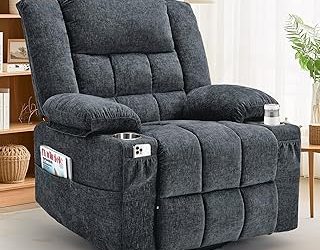
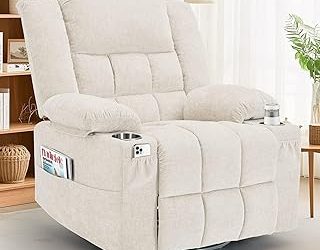
Sweetcrispy Massage Recliner Chair
A well-judged compact fabric recliner with a pronounced lumbar bolster that sits low enough to catch a shorter back rather than a taller one, and gentle vibration massage that’s useful as a pre-bed wind-down cue. The modest footprint makes it a sensible living room or home theater choice where floor space is tight.
Zero Wall Power Recliner
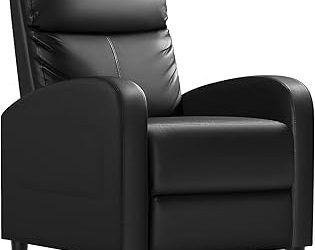
Built explicitly for petite frames and small rooms, this one earns its place on two counts: the shallow seat keeps your knees properly positioned, and the zero-wall mechanism means it can live just inches from the wall. Power operation removes the shoulder effort a manual lever demands.
MCombo Small Power Lift Recliner 7111
The strongest pick for petite older adults, pairing a genuine lift function with an adjustable power headrest — the single most valuable feature for anyone whose neck sits below a standard chair’s crown. Heating and massage across the lumbar and seat add real value for stiffness and circulation, and assembly requires no tools.
Furnimart Small Manual Recliner
An overstuffed chenille chair that delivers a plush, enveloping feel in a compact shell, which is a rare combination. Note that the chunky cushioning compresses over the first few weeks, so measure your knee clearance again after break-in.
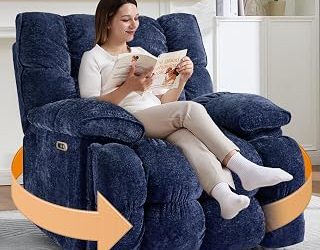
Korser 360 Swivel Rocker Recliner
The rocking-and-swivel combination makes this the natural nursery or reading-nook choice, and gentle rhythmic motion is genuinely effective at easing the transition into drowsiness. Upholstered fabric keeps it visually light in a small room.
Frequently Asked Questions
What height counts as “petite” for a recliner?
Most petite-specific chairs are designed for adults roughly 4’10” to 5’4″. If you’re in that range, standard recliners will usually feel too deep and too tall regardless of the brand.
Is a power recliner worth the extra cost?
For most petite buyers, yes — chiefly because power models are far more likely to offer an adjustable headrest and infinite recline positions, both of which help you dial in neutral alignment.
Can I sleep overnight in a recliner?
Occasionally, and some people with reflux or post-surgical recovery needs sleep better slightly inclined. Long-term nightly use isn’t ideal, as the seated position restricts hip extension and can contribute to leg swelling.
How much space do I need behind the chair?
Zero-wall and push-back designs typically need three to six inches; traditional mechanisms often need a foot or more. Always check the manufacturer’s fully reclined depth before buying.
Final Thoughts
If you want one recommendation, the MCombo Small Power Lift 7111 is the most thoughtfully proportioned option here thanks to its adjustable headrest and lift assistance, making it the clear choice for petite older users. For a small apartment where wall clearance is the constraint, the Zero Wall Power Recliner is the smarter buy, while the HRVEOCEI push-back model offers the widest recline range at the friendliest price for anyone furnishing a compact bedroom or media corner.