Key takeaways
- Seat depth before anything else: Measure from the back of your knee to your buttocks while seated, then subtract about two inches. For most people under 5’4″, that lands between 17 and 19 inches. Anything deeper and you’ll perch forward, losing the back support you paid for.
- Seat height that lets your feet land flat: Aim for a seat-to-floor measurement close to your inseam — commonly 16 to 18 inches for petite frames. Flat feet mean the calf can fully release, which is the single biggest factor in whether a chair feels restful or merely soft.
- Extended or adjustable footrests: Counterintuitively, short users often need footrest extension, because a full recline pushes the ottoman section past shorter legs and leaves the heels hanging. A 4-plus-inch extension solves this by filling the gap under the calves.
- Power headrest and infinite position: A fixed headrest set for a taller torso will push your head forward into a chin-tucked posture that restricts breathing. Independent headrest adjustment lets you align the cervical spine properly, and infinite position lets you separate back angle from leg angle to find a true zero-pressure recline.
- Heat placement, not just heat presence: Lumbar heat is only useful if the panel sits where your lumbar curve actually is. On petite-specific models the heating element is positioned lower; on standard-size chairs it often isn’t. Check the panel height, not the feature list.
What's inside
Most recliners are engineered around a mythical average body: roughly 5’9″, with a 19-inch lower leg and a torso long enough to meet a headrest set high on the backrest. If you’re 5’4″ or under, that geometry works against you in specific, measurable ways. The seat is too deep, so the front edge presses into the back of your calves and cuts circulation. Your feet dangle instead of resting, which keeps the ankle flexed and the calf muscle mildly engaged — a small tension signal your nervous system reads as “still working.” And the lumbar bolster lands somewhere around your mid-back, leaving the actual curve of your spine unsupported. The result is a chair you can sit in but never quite settle into.
That distinction matters more than comfort marketing suggests. Genuine rest — the drowsy, downshifted state that precedes sleep — depends on your body having no unresolved postural work to do. When a chair forces micro-adjustments, you stay in a low-grade holding pattern instead of drifting. This guide covers what to measure before buying, which specifications actually correlate with a good fit for petite frames, and six chairs worth considering in 2026, including purpose-built petite lift recliners and a compact option for smaller living rooms.
As an Amazon Associate we earn from qualifying purchases.


🛒 Best Price Today on Amazon
Prime members get fast, free shipping on everything above, plus member-only deals. New members get a 30-day free trial — cancel anytime.
How to Choose a Recliner For Short Person (2026)
- Seat depth before anything else: Measure from the back of your knee to your buttocks while seated, then subtract about two inches. For most people under 5’4″, that lands between 17 and 19 inches. Anything deeper and you’ll perch forward, losing the back support you paid for.
- Seat height that lets your feet land flat: Aim for a seat-to-floor measurement close to your inseam — commonly 16 to 18 inches for petite frames. Flat feet mean the calf can fully release, which is the single biggest factor in whether a chair feels restful or merely soft.
- Extended or adjustable footrests: Counterintuitively, short users often need footrest extension, because a full recline pushes the ottoman section past shorter legs and leaves the heels hanging. A 4-plus-inch extension solves this by filling the gap under the calves.
- Power headrest and infinite position: A fixed headrest set for a taller torso will push your head forward into a chin-tucked posture that restricts breathing. Independent headrest adjustment lets you align the cervical spine properly, and infinite position lets you separate back angle from leg angle to find a true zero-pressure recline.
- Heat placement, not just heat presence: Lumbar heat is only useful if the panel sits where your lumbar curve actually is. On petite-specific models the heating element is positioned lower; on standard-size chairs it often isn’t. Check the panel height, not the feature list.
The Best Recliners For Short People (2026), Reviewed
MCombo 7631 Small Power Lift Recliner (3 Motor)
The standout for petite users who want full flexibility: three independent motors mean back, legs, and headrest all move separately, so you can build a lay-flat position that fits a shorter torso instead of approximating one. The 4.7-inch footrest extension and compact seat depth are the details that make it work.
MCombo 7893 Small Dual Motor Lift Recliner
Zero-gravity positioning elevates the knees above the heart, which reduces lower-back load and is genuinely useful for anyone with evening leg swelling or restless legs. The breathable faux leather runs cooler than vinyl alternatives, a real consideration if you tend to overheat while dozing.
MCombo 7408 Small Lift Recliner with Heat and Massage
The most straightforward petite option here, and the best value if you don’t need three motors. FSC and OEKO-TEX certification means lower off-gassing from foams and finishes — worth noting for a chair that will sit in a bedroom or small living space where air turnover is limited.
MCombo 7661 Triple Motor Lift Recliner (Medium)
A sensible pick for the 5’3″ to 5’6″ range, where petite chairs can feel slightly cramped and standard sizes too large. Adjustable headrest plus lay-flat capability gives you enough range to dial in a proper neutral-spine recline.
Sweetcrispy Massage Recliner Chair
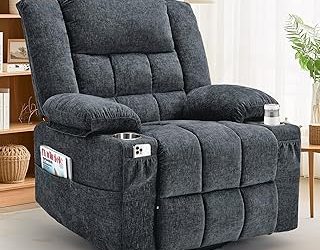
Not a lift chair, and priced accordingly — this is the choice for a smaller-framed adult who wants a compact reclining seat for a tight room rather than assisted standing. The lumbar support sits low enough to be effective on shorter torsos, which is unusual at this price.
MCombo R7635 Lay Flat Lift Recliner (Large-Wide)
Included as the deliberate outlier: if you’re short but broader through the hips and shoulders, seat width becomes the limiting dimension and petite models will feel confining. This one pairs generous width with an adjustable headrest so height still isn’t compromised.
Frequently Asked Questions
What seat height should a short person look for?
Roughly 16 to 18 inches from floor to seat, matched to your inseam. Sit fully back and check that both heels rest flat without your thighs angling upward. If the seat is too high, a firm footstool is a workable interim fix; if it’s too low, standing becomes harder over time.
Is sleeping overnight in a recliner actually a problem?
Occasional nights are generally fine, and for some conditions — reflux, post-surgical recovery, certain respiratory issues — an inclined position is preferable. The concerns are prolonged limb dependency and reduced position changes, both of which a true lay-flat, zero-gravity chair mitigates. Discuss habitual recliner sleeping with your doctor rather than treating it as a permanent solution.
Do I need a lift function if I’m mobile?
Not necessarily, though it’s the feature people most often wish they’d bought. Lift mechanisms reduce knee and hip loading on every stand, which matters more as chairs get lower — and lower chairs are exactly what short users are told to buy.
How much wall clearance do these need?
Check the manufacturer’s figure for each model rather than assuming. Most power lift recliners need several inches behind them to recline fully; some designs reduce this, but “wall-hugger” claims vary widely in practice.
Final Thoughts
For most shorter buyers, the MCombo 7631 is the chair to beat — three-motor independence is what lets a petite frame achieve a genuinely neutral recline rather than a compromise. Choose the MCombo 7893 if zero-gravity positioning and cooler upholstery appeal, or the MCombo 7408 if you want proper petite sizing and certified low-emission materials without paying for a third motor. Measure your seated knee-to-buttock depth and your inseam before you order; those two numbers will tell you more than any spec sheet.