Key takeaways
- Rear clearance and swivel radius: Measure twice — once for the reclined depth and once for the arc the chair sweeps when it swivels. A 360° base needs breathing room on all sides, not just behind. Chairs with a “wall-hugger” style mechanism recline forward rather than backward, which can save six to eight inches.
- Seat depth versus your leg length: A seat that’s too deep forces you to slouch, which tips your head forward and makes drifting off uncomfortable. Aim for a depth where your knees clear the front edge by roughly two fingers when your back is against the cushion.
- Rocking cadence: Slow, low-amplitude rocking is the kind associated with easier sleep onset; a fast, springy glide is stimulating rather than settling. Look for a smooth, weighted motion with no rebound bounce at the end of the arc.
- Lumbar and neck support: High-back designs with dedicated lumbar shaping keep your spine neutral during long sits. Without it, you’ll wake with the stiff-neck feeling that undermines the whole point of resting in the chair.
- Fabric and heat retention: Core body temperature needs to drop for sleep to arrive. Breathable chenille and polyester weaves shed heat better than dense velvet or vinyl, which is worth weighing if you tend to run warm in the evenings.
What's inside
Small living rooms create a specific kind of frustration: you want a chair that supports genuine rest, but every recliner on the showroom floor seems built for a den twice the size of yours. Wall clearance eats up floor space, the footrest swings into a coffee table, and the “compact” label turns out to be generous marketing. From a sleep-wellness standpoint, this matters more than square footage — a chair you can’t fully settle into is a chair that won’t help you wind down, and evening wind-down is where most people’s sleep quality is either built or lost.
This guide looks at rocker recliners through that lens: which compact models actually let your nervous system downshift, how rocking motion interacts with sleep pressure, and what dimensions and mechanisms to check before you commit. Below you’ll find the standout small-space options for 2026, a practical selection checklist, and answers to the questions readers ask most often about using a recliner as part of a healthy sleep routine.
As an Amazon Associate we earn from qualifying purchases.




🛒 Best Price Today on Amazon
Prime members get fast, free shipping on everything above, plus member-only deals. New members get a 30-day free trial — cancel anytime.
How to Choose a Rocker Recliner For Small Spaces (2026)
- Rear clearance and swivel radius: Measure twice — once for the reclined depth and once for the arc the chair sweeps when it swivels. A 360° base needs breathing room on all sides, not just behind. Chairs with a “wall-hugger” style mechanism recline forward rather than backward, which can save six to eight inches.
- Seat depth versus your leg length: A seat that’s too deep forces you to slouch, which tips your head forward and makes drifting off uncomfortable. Aim for a depth where your knees clear the front edge by roughly two fingers when your back is against the cushion.
- Rocking cadence: Slow, low-amplitude rocking is the kind associated with easier sleep onset; a fast, springy glide is stimulating rather than settling. Look for a smooth, weighted motion with no rebound bounce at the end of the arc.
- Lumbar and neck support: High-back designs with dedicated lumbar shaping keep your spine neutral during long sits. Without it, you’ll wake with the stiff-neck feeling that undermines the whole point of resting in the chair.
- Fabric and heat retention: Core body temperature needs to drop for sleep to arrive. Breathable chenille and polyester weaves shed heat better than dense velvet or vinyl, which is worth weighing if you tend to run warm in the evenings.
The Best Rocker Recliner For Small Spaces (2026)s Reviewed
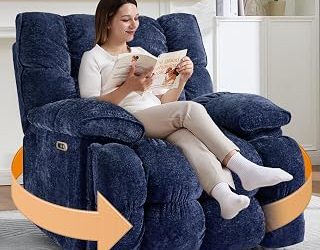
Korser 360 Swivel Rocker Recliner (Upholstered Fabric Glider)
Korser’s fabric glider strikes the balance most compact rooms need: a genuinely small footprint paired with a rocking arc slow enough to be calming rather than fidgety. The upholstered back holds its shape well over months of nightly use, which is where cheaper foam-only chairs tend to collapse.
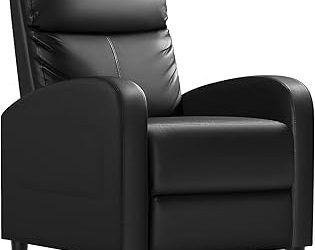
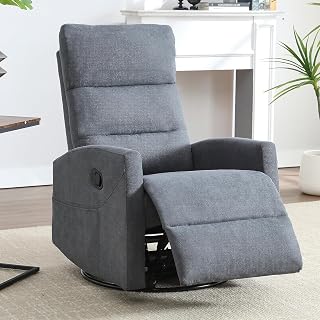
Small Swivel Rocker Recliner for Living Room & RV (Dark Grey)
This is the most space-efficient pick here, and the narrow profile makes it a rare recliner that genuinely works in an RV, a studio, or a bedroom reading corner. The trade-off is a firmer seat — good for posture and for people who don’t want to sink, less indulgent if you prefer plush.
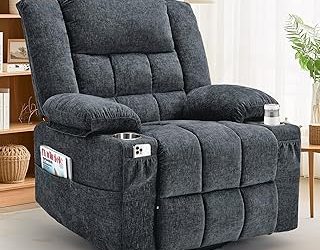
360° Swivel Rocker Recliner, Manual Reclining Chair (Polyester Dark Grey)
The manual mechanism is a quiet advantage: no motor hum, no cable to trip over, and no power draw in a bedroom where you’d rather keep electronics to a minimum. The polyester weave breathes noticeably better than velvet alternatives, helping avoid the overheated, restless feeling that interrupts an evening nap.
Small Swivel Rocker Recliner Glider with Massage & Heat (Light Brown)
The heated lumbar function is the standout feature, and applied warmth to the lower back is a reliable way to release muscular tension before bed. Use the massage setting earlier in the evening rather than right at bedtime — vibration is alerting, and you want the last stretch of your routine to be still.
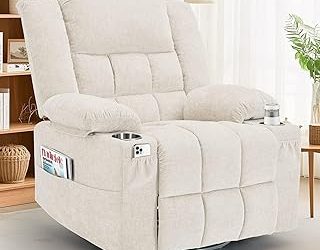
Korser Swivel Rocker Recliner with Side Pockets (Chenille, Beige)
Chenille gives this Korser model a softer hand-feel without trapping as much heat as velvet, and the side pockets are more useful than they sound for keeping a book or sleep mask within reach instead of on your phone-cluttered nightstand. A strong choice for anyone who wants the chair to look like furniture rather than equipment.
Frequently Asked Questions
How much clearance does a small rocker recliner really need?
Plan for four to six inches behind the chair for a standard recliner, and add several inches on each side if the base swivels. Always check the reclined depth in the specifications rather than the upright depth, since the two can differ by more than a foot.
Is sleeping in a recliner bad for you?
Occasional recliner sleep is generally fine, and for people managing reflux, congestion, or certain post-surgical recoveries, the elevated position can be more comfortable than lying flat. Every night, though, tends to invite hip and neck stiffness — treat the chair as a wind-down space and move to a bed for the main sleep period.
Does rocking actually help you fall asleep?
Gentle, rhythmic motion provides steady, predictable sensory input, which tends to reduce alertness and make sleep onset easier — the same principle behind rocking an infant. The key is a slow, even cadence; brisk rocking has the opposite effect.
Swivel or fixed base for a small room?
A swivel base is genuinely useful in tight rooms because you can reorient toward a window or television without shifting the chair. Skip it if the chair will sit in a corner or against furniture where the swivel can’t be used anyway.
Final Thoughts
For most small rooms, the Korser 360 Swivel Rocker Recliner is the safest all-round bet — compact, well-supported, and paced for actual relaxation. If your space is genuinely tight, the Small Swivel Rocker Recliner for Living Room & RV squeezes into corners nothing else will, while the heated massage glider is the one to choose if lower-back tension is what keeps you from settling in the evening.