
Key takeaways
- Age Range Description: Adult
- Mount Type: Doorway Mount
- Item Dimensions W x H: 37"W x 20.2"H
A pull-up bar in a family home gets used by people it was never sized for. An adult installs it, and within a week a nine-year-old is swinging from it, a teenager is doing negatives off a chair, and someone is hanging a resistance band from it for assisted reps. That is a good outcome — but it does change the requirements. A bar that is perfectly safe for one 175 lb adult doing controlled sets is being asked to handle swinging, side loading, and repeated on-off cycles that a solo user would never generate.
Two things follow. First, favour designs that stay put rather than ones that need careful re-seating, because a bar that must be checked before every use will eventually be used unchecked. Second, think about where the bar lives when it is not in use — a family hallway with a bar permanently at head height is a hazard for anyone carrying laundry. The six options below vary a lot on both counts, and the differences matter more in a busy household than the headline weight ratings do.
Our top picks
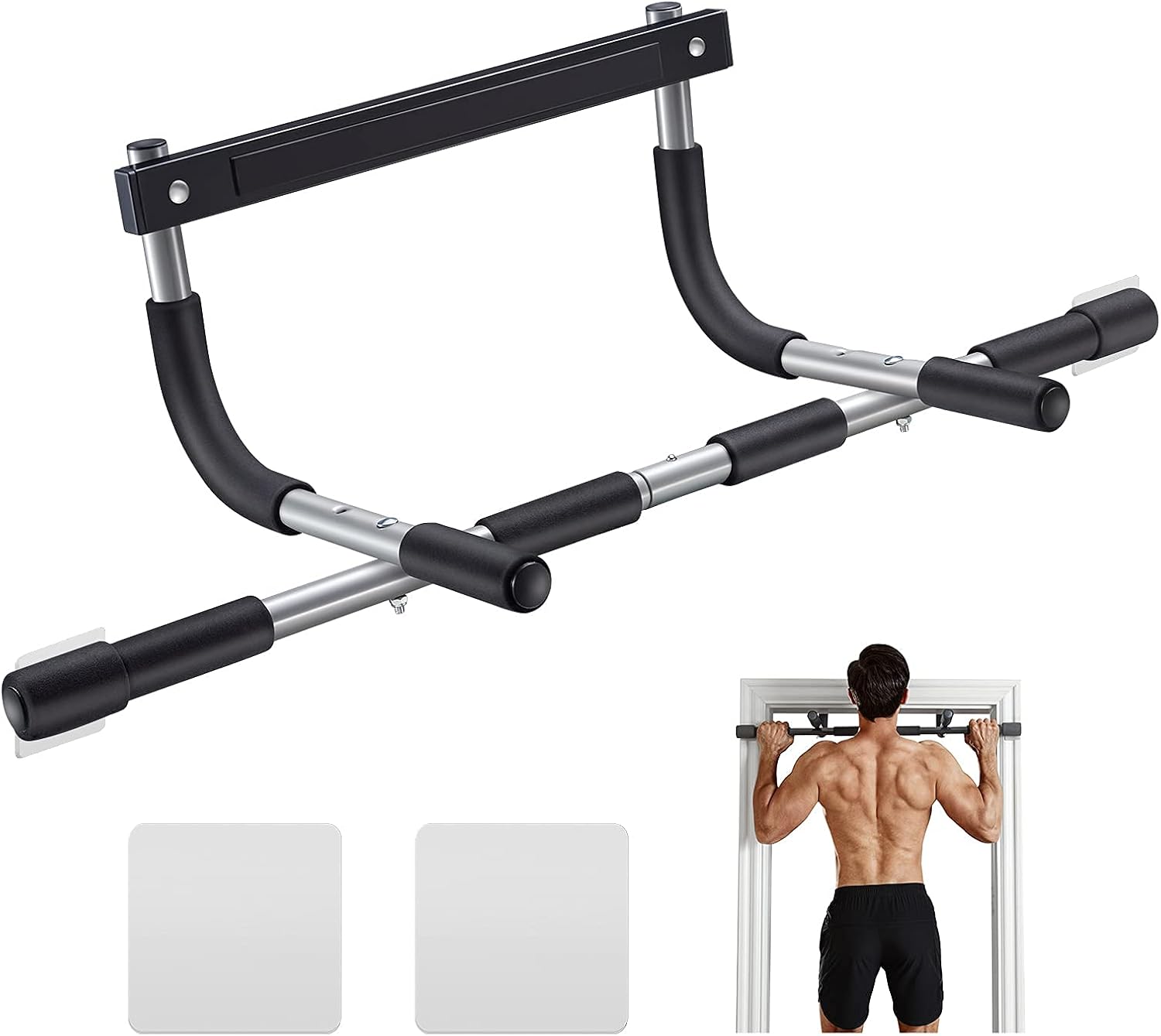 Ally Peaks Pull Up Bar for Doorway
- Age Range Description: Adult
- Mount Type: Doorway Mount
- Item Dimensions W x H: 37"W x 20.2"H
| Product | Key specs | |
|---|---|---|
| Ally Peaks Pull Up Bar for Doorway | Age Range Description: Adult Mount Type: Doorway Mount Item Dimensions W x H: 37"W x 20.2"H | Check price |
 Ally Peaks Pull Up Bar for Doorway Ally Peaks Pull Up Bar for Doorway | Check price | |
 Body-Solid Body-Solid | Check price | |
 Sportneer Pull Up Bar for Doorway Sportneer Pull Up Bar for Doorway | Age Range Description: Adult Mount Type: Doorway Mount Item Dimensions W x H: 37.01"W x 6.69"H | Check price |
 KAKICLAY 2026 Upgrade Multi-Grip Pull Up Bar KAKICLAY 2026 Upgrade Multi-Grip Pull Up Bar | Age Range Description: Adult Mount Type: Doorway Mount Item Dimensions W x H: 10.5"W x 2"H | Check price |
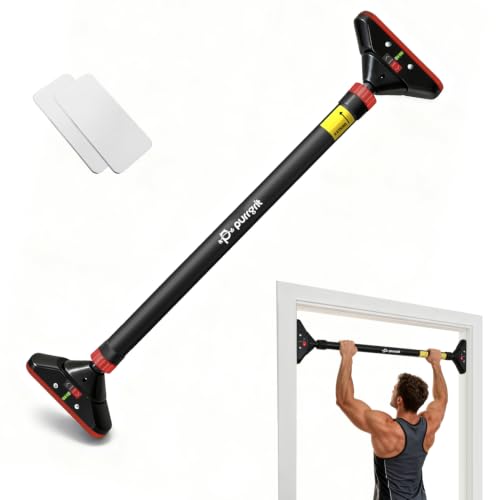 PURRGRIT Adjustable Doorway Pull Up Bar No-Screw PURRGRIT Adjustable Doorway Pull Up Bar No-Screw | 【Fit Size Guide 【440 LBS Reinforced Dual-Steel Frame】2mm outer + 1.5mm… 【Certified Safety & Sustainability】Independently tested to meet strict… | Check price |
 EVERYMATE Wall Mount Pull Up Bar EVERYMATE Wall Mount Pull Up Bar | Check price | |
 Pull Up Bar for Doorway Pull Up Bar for Doorway | Check price |
As an Amazon Associate we earn from qualifying purchases at no extra cost to you.
Quick Comparison
| Product | Best For | Standout Feature | Watch Out For |
|---|---|---|---|
| Ally Peaks Pull Up Bar | Shared household use | Lifts off in seconds when not needed | Marks paint if left mounted |
| Ally Peaks Multi-Grip Bar | Mixed ability levels | Handles suit different hand sizes | Tempting for kids to swing on |
| Body-Solid PUB34 Bar | Heavy daily traffic | Commercial-grade durability | Costs roughly double the average |
| Sportneer No-Drill Bar | Homes you want unmarked | No wall contact at all | Not ideal for casual shared use |
| KAKICLAY Multi-Grip Bar | Older homes, deep trim | Hooks clear substantial architrave | Wrong fit on flat modern casing |
| No-Screw Adjustable Bar | Narrow interior doorways | 29.1-37.4 in range, 360 lock | Needs adults to verify tension |
How to Choose
- Pick a design that removes easily: In a busy hallway the bar will need to come down regularly. Leverage designs lift off in a second; compression bars must be re-tensioned every time, which turns into a chore nobody does properly.
- Set house rules with the hardware: Swinging and kipping generate several times bodyweight in peak force. Choose the sturdiest frame you can afford and make no-swinging an explicit rule rather than hoping the rating covers it.
- Add a step, not a jump: A small sturdy stool lets shorter household members reach the bar and step down instead of dropping. It reduces both injury risk and the noise complaints from downstairs.
- Think about band anchoring: Assisted pull-ups with a looped resistance band are the fastest way to bring a beginner along. Bars with smooth, uninterrupted centre sections take a band loop far more securely than heavily contoured ones.
- Store it somewhere obvious: A bar that lives behind a wardrobe never gets used. A hook on the wall beside the doorway keeps it visible and takes the friction out of a five-minute set.
Top Picks Reviewed
Best Overall: Ally Peaks Pull Up Bar
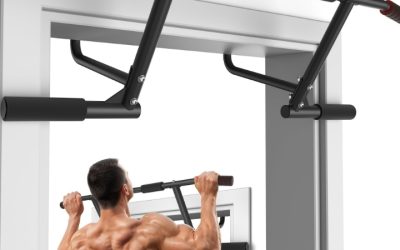
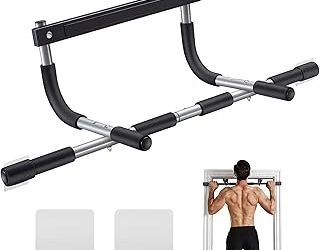
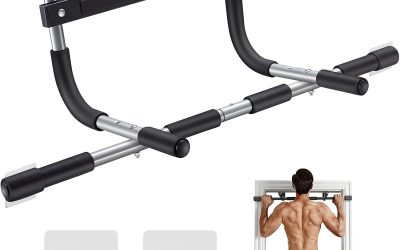
The combination of a rigid, thick-walled frame and a mount that lifts off in seconds makes this the most practical choice for a home where the doorway has other jobs. The smooth centre section also takes a resistance band loop cleanly, which matters if someone in the house is still working up to a first unassisted rep.
Left mounted permanently, the backplate will press marks into the wall above the casing. If the bar is going to live in place, put a thin plywood shim behind the pad and accept a touch-up eventually.
Best for Mixed Abilities: Ally Peaks Multi-Grip Bar
Different grips suit different bodies. Narrower neutral handles are far easier for someone with smaller hands or less grip strength, which in practice means a teenager can actually complete reps rather than hanging and letting go.
The same handles look like playground equipment to a child. If there are young kids in the house, this is the design most likely to be swung on, and that is precisely the loading these bars handle worst.
Best for Heavy Use: Body-Solid PUB34 Adjustable Bar
When three or four people use a bar daily, build quality stops being a luxury. The welds, the adjustment mechanism and the finish here are all a clear step up, and the mount does not develop the play that cheaper bars acquire after a few hundred cycles.
It costs roughly double the mid-range options. For a household where one person trains twice a week, that premium is difficult to justify on performance alone.
Best for Keeping Walls Pristine: Sportneer No-Drill Bar
If the priority is a home that shows no evidence of a gym, this compression design touches nothing above the door casing and leaves no marks. It covers 29.5 to 37 inch openings and holds a 440 lb rating.
It is the least suited to casual shared use, precisely because it needs its tension verified regularly. In a household where anyone might grab the bar without checking it, that is a real drawback rather than a footnote.
Best for Character Properties: KAKICLAY Multi-Grip Bar
Deep, moulded architrave is common in older houses and it stops standard hooks from bearing correctly on the wall behind. The enlarged hook design solves that and seats solidly where other bars perch and rock.
Fit it to shallow, flat modern trim and it holds the bar too far off the wall, increasing leverage on the casing. This is a fix for a specific problem, not a general improvement.
Best for Narrow Doorways: No-Screw Adjustable Bar
Bedroom and box-room doorways are often narrower than the main hallway, and the 29.1 inch minimum here covers openings that most adjustable bars miss. The 360-degree locking collar is a more repeatable tensioning system than a plain threaded adjuster.
An adult needs to own the tension check. Children will not notice that a compression bar has loosened, so this is only sensible in a household where one person takes clear responsibility for it.
Frequently Asked Questions
Is a doorway pull-up bar safe for children to use?
Under supervision and without swinging, yes — hanging is genuinely good for developing grip and shoulder health. Swinging and kipping multiply the load well beyond what these mounts are designed for, so that should be an explicit rule.
How can a beginner build up to a full pull-up?
Loop a resistance band over the bar and put a knee or foot in it to offset part of your bodyweight, then reduce the band strength over time. Slow negatives from a stool are the other reliable route. Both need a bar with a smooth centre section for the band to sit on.
Should the bar stay mounted all the time?
In a low-traffic doorway, leaving it up removes the excuse not to use it. In a main hallway it becomes a head-height obstacle, so a design that lifts off in seconds is the better answer.
What if several people in the house are different heights?
The bar height is fixed by the doorway, so shorter users need a step. A small non-slip stool solves it and also gives everyone a controlled way to step down instead of dropping to the floor.
Final Thoughts
For a shared household, the Ally Peaks Pull Up Bar hits the practical sweet spot: rigid under load, quick to remove, and friendly to band-assisted training for beginners. Where several people train on it daily, the Body-Solid PUB34 is the one that will not develop play over the years. And in a home with deep period trim that defeats standard hooks, the KAKICLAY Multi-Grip Bar is the model that actually seats properly.


Write Your Review
No reviews yet. Be the first to share your experience!