
The most common foam roller mistake is buying one that is too firm. A dense EVA roller with an aggressive grid pattern feels effective in the shop and unbearable on an untrained IT band, which means it gets used twice and then lives behind a door. Density should match tissue tolerance, and tolerance builds over weeks. Start softer than your ego suggests, and you will actually roll three times a week instead of promising yourself you will.
There is a second variable people ignore: length. A 36-inch roller supports your whole spine for thoracic extension work; a 13-inch model targets calves and quads but wobbles under your back; an 11-inch travel roller fits a carry-on and does neither especially well. The six options below span multi-density 13-inch rollers, an 18-inch high-density cylinder, a compact travel unit, a five-piece set, and a vibrating model — with notes on who each firmness level actually suits.
Our top picks


 PURSONIC Vibrating Foam Roller
- Powerful Vibration Technology: Equipped with a robust motor…
- Adjustable Intensity Settings: Offers 5 different vibration levels…
- Enhances Recovery: Suitable for both pre-workout warm-ups and…
 Amazon Basics High-Density Foam Roller for Exercise
- Item Dimensions: 18 x 6 x 6 inches
- Item Diameter: 6 Inches
- Item Firmness Description: Firm


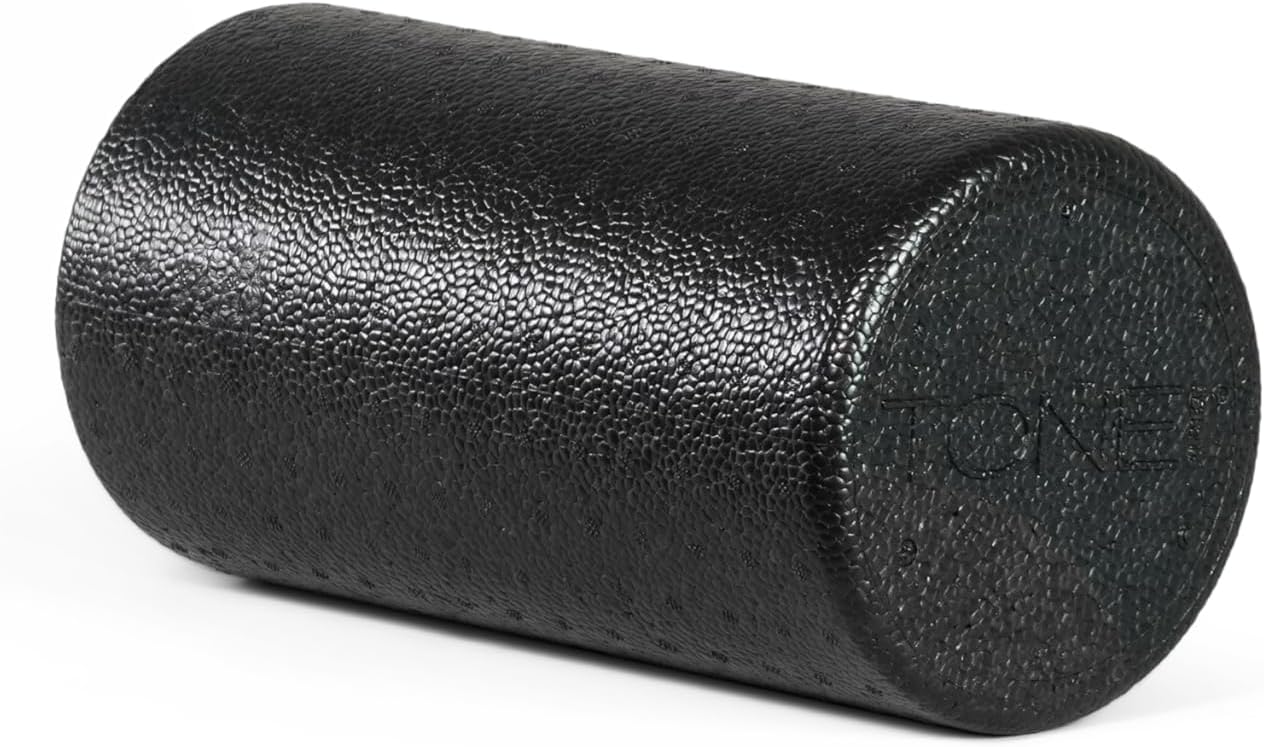 Tone Fitness High Density EPP Foam Exercise
- Item Dimensions: 5.71 x 5.71 x 11.61 inches
- Item Diameter: 5.7 Inches
- Item Firmness Description: Firm
As an Amazon Associate we earn from qualifying purchases at no extra cost to you.
Quick Comparison
| Product | Best For | Standout Feature | Watch Out For |
|---|---|---|---|
| 13-inch Multi-Density Roller | General recovery | Varied surface zones | Short for spinal work |
| Oceanfoam Ripple Travel Roller | Packing light | 11 inches, firm profile | Too firm for beginners |
| Vulken Vibrating Foam Roller | Stubborn tight spots | 4 speeds up to 3800 RPM | Needs charging, heavier |
| 5-in-1 Foam Roller Set | Whole-body coverage | Multiple tools in one kit | More items to store |
| Amazon Basics 18-Inch Roller | Beginners | Smooth surface, forgiving | Compresses over time |
| TriggerPoint Grid 1.0 | Trained athletes | Hollow core, distinct ridges | Intense on untrained tissue |
How to Choose
- Match density to experience: If you have never rolled regularly, start with a smooth high-density cylinder. Move to a textured grid pattern only once the smooth roller stops producing a strong response, typically after a month or two.
- Length dictates what you can treat: Under 14 inches suits limbs; 18 inches and above lets you lie lengthwise along your spine for thoracic mobility. If mid-back stiffness is your main complaint, do not buy short.
- Hollow core versus solid foam: A rigid hollow core keeps its shape indefinitely under heavy users; solid moulded foam is more forgiving but slowly compresses and softens over a year or two of frequent use.
- Vibration is a supplement, not a shortcut: Vibrating rollers can reduce discomfort and let you tolerate pressure sooner, but they cost more, need charging, and do not replace the underlying habit.
- Surface texture has a purpose: Ridges and channels are meant to let tissue move rather than just compress it. They are genuinely more intense, which is a feature for athletes and a barrier for everyone else.
Top Picks Reviewed
Best for Beginners: Amazon Basics 18-Inch Roller
A smooth high-density cylinder at 18 inches is the right first roller for almost everyone: long enough to lie along the spine for thoracic extension, firm enough to be useful, and without the aggressive texture that makes people quit. It is also the cheapest way to establish the habit.
Solid moulded foam does compress over time. Under a heavier user rolling several times a week, expect it to soften noticeably within a couple of years and eventually need replacing.
Best for Athletes: TriggerPoint Grid 1.0
The hollow rigid core will not deform under load, and the distinct ridge pattern creates varied pressure zones that work tissue rather than simply squashing it. For anyone with a training history and reasonable tolerance, this is the reference standard at 13 inches.
On untrained calves or IT bands it is genuinely painful, and pain leads to guarding, which defeats the purpose. This is not a first roller.
Best All-Rounder: 13-inch Multi-Density Roller
Different surface zones on one cylinder let you choose a gentler or firmer contact by shifting position, which is a practical compromise if one roller has to serve two people of different tolerances.
At 13 inches it is too short to support the spine lengthwise. For upper back work you will be balancing rather than relaxing, which limits its usefulness for posture-related stiffness.
Best for Deep Work: Vulken Vibrating Foam Roller
Four speeds up to 3800 RPM plus a 17-inch length makes this the most capable single tool here. Vibration measurably reduces the discomfort of rolling, which means you stay on a tight spot for the 60 to 90 seconds it actually needs.
It is heavier, needs charging, and costs several times a plain cylinder. If it lives in a drawer uncharged, a basic roller you actually use beats it comfortably.
Best for Travel: Oceanfoam Ripple Travel Roller
At 11 by 3.35 inches it fits a carry-on or a gym bag without argument, and the firm rippled surface makes up in intensity what it lacks in size. For calves, forearms, and feet on the road it is genuinely useful.
The small diameter and firm profile make it aggressive for anyone new to rolling, and the short length rules out any spinal work at all.
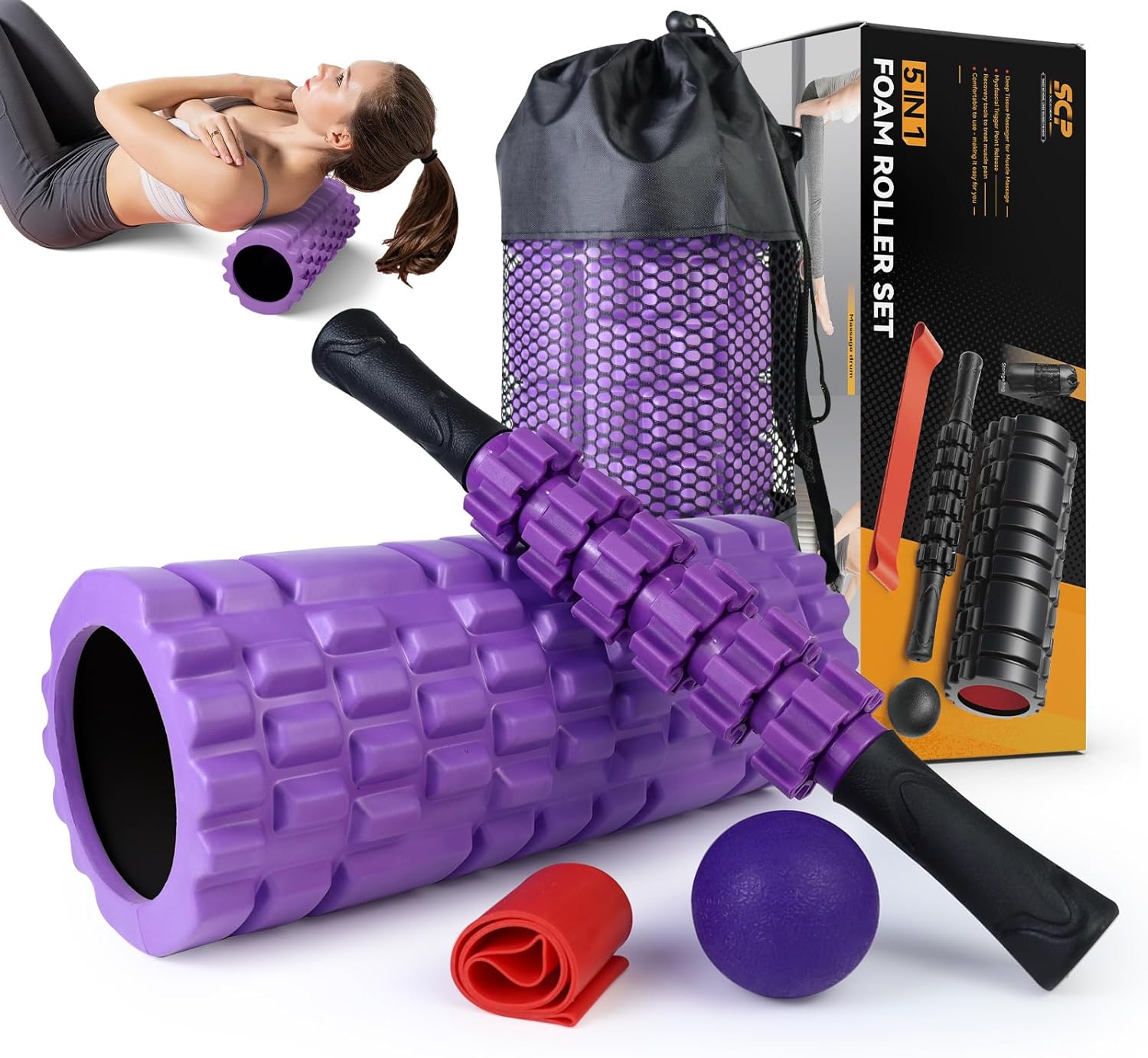
Most Complete Kit: 5-in-1 Foam Roller Set
A roller plus accessory tools covers the areas a cylinder cannot reach — feet, forearms, and the small spots around the shoulder blade. For a household where several people have different complaints, the breadth is welcome.
It is several items to store rather than one, and the individual pieces are competent rather than exceptional. A dedicated roller plus a lacrosse ball covers similar ground more cheaply.
Frequently Asked Questions
How firm should my first foam roller be?
Softer than you think. A smooth high-density cylinder without ridges is the standard recommendation. If you can only tolerate 20 seconds on a spot, the roller is too firm for where you are now.
How long should I roll each muscle?
Around 60 to 90 seconds per area, moving slowly and pausing on tender spots while breathing normally. Fast rolling for ten seconds achieves very little beyond a warm-up effect.
Should I roll before or after training?
Briefly before, to improve range of motion, and longer after or on rest days for recovery. Extended rolling immediately before heavy lifting can slightly reduce force output, so keep the pre-session version short.
Is a vibrating roller worth the extra cost?
It helps if pain tolerance is what stops you rolling long enough to benefit. If you already roll consistently on a standard cylinder, the added benefit is modest relative to the price.
Final Thoughts
Most people should start with the Amazon Basics 18-Inch Roller — long enough for spinal work, forgiving enough to use regularly — and graduate to the TriggerPoint Grid 1.0 once smooth foam stops registering. Anyone who travels often, or who already rolls consistently and wants to work through stubborn tissue faster, will get more from the Oceanfoam Ripple Travel Roller and the Vulken Vibrating Foam Roller respectively.
Write Your Review
No reviews yet. Be the first to share your experience!