
Key takeaways
- Age Range Description: Adult
- Mount Type: Doorway Mount
- Item Dimensions W x H: 37"W x 20.2"H
Standard interior doors are 80 inches tall, which puts a doorway pull-up bar at roughly 78 to 82 inches off the floor depending on the design. For someone who is 5-foot-6, that is a comfortable reach with plenty of hanging clearance. For someone who is 6-foot-3 with a reach of about 82 inches, it means bent knees on every single rep and a head that meets the frame at the top. Nobody mentions this in the product description, and it is the reason a lot of tall people quietly stop using the bar they bought.
Body dimensions drive this decision more than brand does. Tall users need either a joist-height mount or a free-standing tower with real overhead clearance. Shorter users need to check that they can reach the bar without a chair, since jumping up to a bar in a doorway is how you knock a leverage design loose. And heavier users need capacity margin regardless of height. Here are six options assessed against the person using them rather than the room.
Our top picks
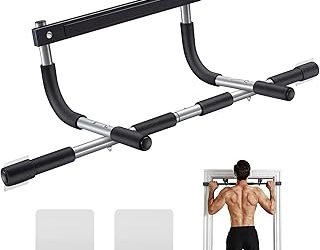
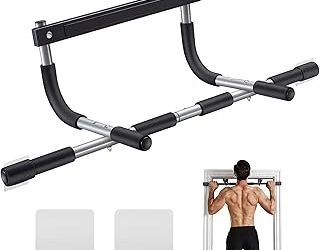
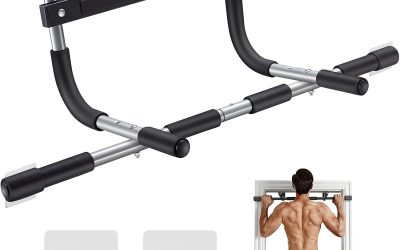
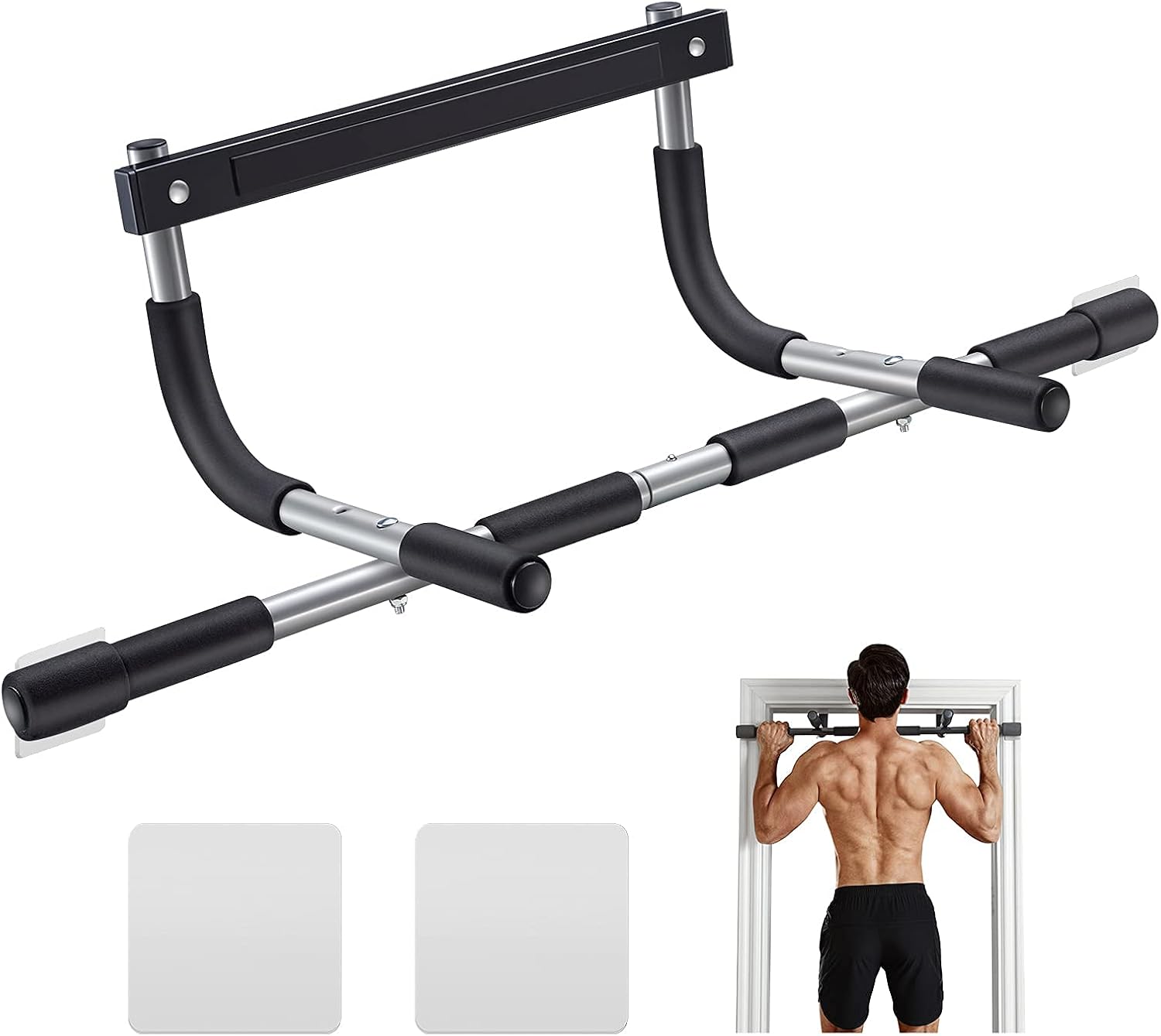 Ally Peaks Pull Up Bar for Doorway
- Age Range Description: Adult
- Mount Type: Doorway Mount
- Item Dimensions W x H: 37"W x 20.2"H
 Sportneer Pull Up Bar for Doorway
- Age Range Description: Adult
- Mount Type: Doorway Mount
- Item Dimensions W x H: 37.01"W x 6.69"H
| Product | Key specs | |
|---|---|---|
| Ally Peaks Pull Up Bar for Doorway | Age Range Description: Adult Mount Type: Doorway Mount Item Dimensions W x H: 37"W x 20.2"H | Check price |
 Ally Peaks Pull Up Bar for Doorway Ally Peaks Pull Up Bar for Doorway | Check price | |
| Sportneer Pull Up Bar for Doorway | Age Range Description: Adult Mount Type: Doorway Mount Item Dimensions W x H: 37.01"W x 6.69"H | Check price |
 2026 Upgrade Multi-Grip Pull Up Bar with 2026 Upgrade Multi-Grip Pull Up Bar with | Age Range Description: Adult Mount Type: Doorway Mount Item Dimensions W x H: 10.5"W x 2"H | Check price |
 Ally Peaks Pull Up Bar for Doorway Ally Peaks Pull Up Bar for Doorway | Check price | |
 SPORTSROYALS Free Standing Pull Up Bar SPORTSROYALS Free Standing Pull Up Bar | Warranty Description: 2-Year Warranty Maximum Weight Recommendation: 360 Pounds Warranty Type: No Warranty | Check price |
 New Upgrade Pull Up Bar for Doorway New Upgrade Pull Up Bar for Doorway | Check price | |
 Ally Peaks Pull Up Bar for Doorway Ally Peaks Pull Up Bar for Doorway | Check price |
As an Amazon Associate we earn from qualifying purchases at no extra cost to you.
Quick Comparison
| Product | Best For | Standout Feature | Watch Out For |
|---|---|---|---|
| Ally Peaks Multi-Grip Doorway Bar | Average-height users | Grip variety suits different arm lengths | Neutral handles reduce headroom for tall users |
| Ally Peaks 440 lb Doorway Bar | Heavier trainees | Thick steel with a genuine capacity margin | Bar diameter can be large for smaller hands |
| Sportneer No-Drill Doorway Bar | Shorter users | Simple profile sits high in the frame | May require a step to reach comfortably |
| Upgrade Multi-Grip Bar with Larger Hooks | Users needing a stable platform | Larger hooks resist shifting under long limbs | Grip spacing fixed regardless of shoulder width |
| Ally Peaks Width-Adjustable Doorway Bar | Matching grip to shoulder width | Width adjusts for wide or narrow builds | Setting must be verified before every session |
| SPORTSROYALS Free Standing Power Tower | Tall users | Frame over seven feet gives real overhead room | Still tight for anyone above about 6-foot-4 |
How to Choose
- Measure your standing reach: Stand flat, raise one arm, and measure to the fingertips. Add four inches for a comfortable grip. If that exceeds 80 inches, doorway bars will not give you a full hang.
- Check knee clearance: At full extension your feet should clear the floor. Tall users can bend the knees back, but doing so for years encourages an arched, less efficient pulling position.
- Match grip width to shoulders: Broader builds benefit from wider hand placement. Fixed multi-grip spacing is designed around an average that may not be yours.
- Factor in body weight: Capacity ratings are static. Take your weight, add anything you carry, and leave a margin of at least 50 percent for dynamic loading.
- Consider hand size: Thicker bars build grip strength but shorten sets for people with smaller hands. Around 1.25 inches is the comfortable middle.
Top Picks Reviewed
Best All-Round Fit: Ally Peaks Multi-Grip Doorway Bar
For anyone between roughly 5-foot-4 and 6 feet, this bar’s grip variety covers the useful range of hand positions without forcing an awkward body angle. Longer-armed users benefit particularly from the wider pronated positions.
Neutral handles hang below the main crossbar, which subtracts a few inches of already-scarce headroom. Tall users will find those handles the least usable part of an otherwise good bar.
Best for Heavier Users: Ally Peaks 440 lb Doorway Bar
The thickened steel and high rating are meaningful when your body weight alone is 230 or 250 pounds. The bar does not flex noticeably, which matters psychologically as much as structurally.
That same thick tubing is a genuine grip challenge for smaller hands. If your fingers barely wrap the bar, forearm fatigue will end sets well before your back is tired.
Best for Shorter Users: Sportneer No-Drill Doorway Bar
A clean, simple profile that seats high in the frame gives a shorter person the maximum possible hanging clearance from a doorway design, which is exactly what you want when floor contact is the limiting factor.
If your standing reach is under about 72 inches, you will need a small step to get to it. That is fine, but the step must be stable, because jumping up can dislodge a leverage bar.
Most Stable for Long Limbs: Upgrade Multi-Grip Bar with Larger Hooks
Longer arms and legs generate more swing and more sideways force on the frame. The enlarged hook engagement resists the walking motion that plagues lighter bars during a tall person’s set.
The grip positions are fixed. If your shoulders are wider than the design assumes, you will be pulling from a slightly compromised angle every rep.
Best Width Match: Ally Peaks Width-Adjustable Doorway Bar
Being able to tune the bar’s width lets you seat it optimally in your particular frame and, for some users, gives a slightly better hand position. For anyone whose doorway sits at the edges of standard sizing, this solves a real fit problem.
Adjustable width means one more thing to confirm before each session. Check the lock every time; a bar that has crept narrower is unsafe in a way that is not visually obvious.
Best for Tall Users: SPORTSROYALS Free Standing Power Tower
Standing over seven feet, this gives a 6-foot-2 user something a doorway never can: a full dead hang with feet off the floor and no frame near your head. The dip and knee-raise stations are similarly sized for adult proportions.
It is not unlimited. Anyone above roughly 6-foot-4 will still find themselves tucking the knees slightly at the bottom of a rep, and the tower cannot be raised to fix that.
Frequently Asked Questions
Are doorway pull-up bars too low for tall people?
Often, yes. With a standard 80-inch door, anyone with a standing reach near or above that height will need to bend the knees to hang, which is workable but not ideal long term.
Is it okay to bend my knees during pull-ups?
It is acceptable and very common. Keep the legs still and slightly forward rather than swinging them, since a stable lower body makes the pull cleaner.
What grip width should I use?
Slightly wider than shoulder width for most people. Excessively wide grips shorten the range of motion and increase shoulder stress without adding lat recruitment.
Do I need a step stool to reach the bar?
If you cannot reach with a controlled step-up, yes, and use a stable one. Jumping to grab a doorway bar puts a sudden sideways load on the frame that these designs handle poorly.
Final Thoughts
Measure yourself before you measure the doorway. Standing reach determines whether a doorway bar gives you a genuine hang or a permanent knee bend, hand size determines whether a thick bar helps or hurts, and body weight determines how much capacity margin you need. Fit the equipment to the body and the training takes care of itself.

Write Your Review
No reviews yet. Be the first to share your experience!