Key takeaways
- Oil-based vs. water-based: Oil-based cures harder and adds a warm amber tone that flatters walnut, cherry, and oak. Water-based dries crystal clear and stays clear — the right call over maple, ash, birch, or any painted or whitewashed base you don’t want yellowing.
- Odor and cure environment: Oil-based formulas need serious cross-ventilation and typically smell for three to five days. If you can’t seal the room off from sleeping areas, a water-based finish with low VOC content spares you nights of breathing solvent.
- Sheen selection: Satin hides fingerprints, dust, and micro-scratches far better on a large tabletop. Gloss looks spectacular in photos and magnifies every flaw in raking light. Most homeowners are happier long-term with satin.
- Coats and build: A dining top wants three to four thin coats minimum, scuff-sanded between each with 320-grit. Self-leveling thick-build formulas compress that into one or two passes if you’re short on time.
- Coverage math: A standard six-seat table runs roughly 20 square feet. Multiply by your coat count before buying — a half pint is a repair-and-touch-up size, while a quart handles most full tabletops with margin.
What's inside
A dining table takes more abuse than almost any other surface in a home. Hot casserole dishes, sweating glasses, red wine, homework, spilled nail polish, a toddler’s fork — all of it lands on the same three or four square feet of wood. The finish is the only thing standing between that daily traffic and bare grain, which is why so many refinishing projects fail not from bad sanding but from choosing a topcoat that was never built for a horizontal, high-contact surface. Pick a thin wiping varnish or a floor-grade product with the wrong sheen and you’ll be sanding it all back off within two years.
There’s a second consideration people rarely think about until they’re living with it: air quality. A dining room usually shares open space with the kitchen and living area, and solvent-heavy finishes off-gas for days. If your bedroom sits down the hall, that lingering solvent smell can genuinely disrupt how well you rest while the project cures. Below, we compare the polyurethanes worth using on a dining table in 2026 — weighing durability, clarity, dry time, and how tolerable each one is to live alongside — so you can match the product to your wood, your schedule, and your household.
As an Amazon Associate we earn from qualifying purchases.


🛒 Best Price Today on Amazon
Prime members get fast, free shipping on everything above, plus member-only deals. New members get a 30-day free trial — cancel anytime.
How to Choose a Polyurethane For Dining Room Table (2026)
- Oil-based vs. water-based: Oil-based cures harder and adds a warm amber tone that flatters walnut, cherry, and oak. Water-based dries crystal clear and stays clear — the right call over maple, ash, birch, or any painted or whitewashed base you don’t want yellowing.
- Odor and cure environment: Oil-based formulas need serious cross-ventilation and typically smell for three to five days. If you can’t seal the room off from sleeping areas, a water-based finish with low VOC content spares you nights of breathing solvent.
- Sheen selection: Satin hides fingerprints, dust, and micro-scratches far better on a large tabletop. Gloss looks spectacular in photos and magnifies every flaw in raking light. Most homeowners are happier long-term with satin.
- Coats and build: A dining top wants three to four thin coats minimum, scuff-sanded between each with 320-grit. Self-leveling thick-build formulas compress that into one or two passes if you’re short on time.
- Coverage math: A standard six-seat table runs roughly 20 square feet. Multiply by your coat count before buying — a half pint is a repair-and-touch-up size, while a quart handles most full tabletops with margin.
The Best Polyurethane For Dining Room Table (2026)s Reviewed
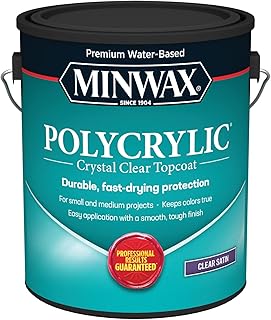
Minwax Polycrylic Protective Finish, Satin, Quart
The most forgiving choice on this list: it goes on milky, dries clear, cleans up with water, and leaves almost no smell by the time you go to bed. Ideal over light woods and painted bases, though it’s slightly softer than oil-based poly, so give it a full week to harden before returning centerpieces to the table.
Minwax Fast Drying Polyurethane, Warm Satin, Quart
This is the traditional oil-based benchmark, and it still produces the toughest, most water-resistant film of anything here — the finish that shrugs off a sweating pitcher left out all evening. Expect meaningful fumes for several days and plan the project for a weekend when you can keep windows open and doors to bedrooms closed.
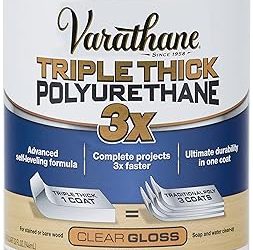
Varathane Triple Thick Polyurethane Gloss
Built for people who don’t want to babysit four coats: it lays down roughly three times thicker than conventional poly and self-levels into a deep, glassy surface in a single pass. Apply it only to a truly level tabletop, work in good light, and resist the urge to rebrush — it wants to be left alone.
Varathane Water-Based Ultimate Gloss Polyurethane, Half Pint
A fast-drying, genuinely clear gloss that recoats in about two hours, letting you finish a tabletop in one day. The half-pint size makes it best suited to repairs, a small bistro table, or testing sheen on an offcut before committing to a larger can.
Minwax Clear Polycrylic Satin, 1 Gallon
The same low-odor, non-yellowing formula in bulk — the sensible buy when the table is joined by matching chairs, a sideboard, or a bench. Decant into a smaller container as you work so the remainder stays free of dust and skinning.
Frequently Asked Questions
How many coats does a dining table really need?
Three at an absolute minimum, four if the table sees daily meals. Keep each coat thin; heavy coats trap solvent, stay soft, and print under warm dishes.
How long before I can actually eat on it?
Light use after 24 to 48 hours, but full cure takes seven to fourteen days. Avoid placemats, tablecloths, and heavy objects during that window — anything left sitting can emboss the film permanently.
Will water-based polyurethane hold up to hot plates?
Modern water-based formulas resist moderate heat well once fully cured, but no consumer polyurethane is genuinely heatproof. Use trivets regardless of which product you choose.
Can I apply polyurethane over an existing finish?
Only if the old finish is sound, clean, and thoroughly scuff-sanded for adhesion. Any peeling, cloudiness, or silicone polish residue means stripping back to bare wood first.
Final Thoughts
For most dining rooms, Minwax Polycrylic Satin is the smartest all-around pick — clear, low-odor, and easy to live with while it cures. Choose Minwax Fast Drying Polyurethane in Warm Satin if maximum durability and a rich amber tone matter more than convenience, and reach for Varathane Triple Thick when you want a deep, showpiece gloss without spending a week on coats.