Key takeaways
- Size and depth: Nearly all residence-hall beds are twin XL (38″ x 80″), not standard twin. Measure your mattress thickness too — dorm mattresses run anywhere from 5 to 9 inches, so a topper with a 15–20″ deep pocket skirt will fit almost anything, while a fitted-style cover sized for a home mattress may float loose.
- Thickness versus your body weight: A 2-inch topper is enough for lighter-framed back sleepers who mainly want to soften a firm surface. Side sleepers and anyone over roughly 180 pounds should go to 3 inches, or the shoulder and hip will compress straight through to the hard core beneath.
- Heat management: Memory foam softens by absorbing body heat, which is exactly why it can sleep warm. Look for gel infusion, ventilated channels, or a breathable cover fiber. If you already run hot, a fiber-filled pillow-top design will almost always sleep cooler than solid foam.
- Washability: Foam cannot go in a machine, so a removable, launderable cover is not a luxury in a shared-bathroom environment — it’s the difference between a topper that lasts four years and one that gets thrown out in November.
- Certification and off-gassing: CertiPUR-US certification indicates the foam has been tested for restricted chemicals and low VOC emissions. Whatever you buy, unbox it and air it out for 24–48 hours before the first night, ideally with a window open.
Dorm mattresses are built for durability, not for sleep quality. Institutional twin XL beds typically use a thin, high-density foam or coil core wrapped in a vinyl-coated cover — a combination chosen because it resists spills, mold, and years of turnover, not because it cradles a hip or lets heat escape. The result is predictable: students report shoulder and lower-back stiffness within the first few weeks, plus that trapped, clammy warmth that comes from sleeping on a non-breathable surface in a room where you don’t control the thermostat.
This guide approaches the problem the way I would with any sleep client: identify what the sleeping surface is failing to do, then correct it with the least amount of material necessary. Below you’ll find the toppers I’d recommend for a standard 80-inch dorm bed in 2026, organized around pressure relief, thermal regulation, and the practical realities of dorm life — narrow beds, deep or shallow mattress depths, shared laundry rooms, and the need to pack everything into a car in May.
Our top picks




As an Amazon Associate we earn from qualifying purchases at no extra cost to you. Ratings are shown as listed on Amazon.
🛒 Best Price Today on Amazon
Prime members get fast, free shipping on everything above, plus member-only deals. New members get a 30-day free trial — cancel anytime.
How to Choose a Mattress Topper For Dorm Bed (2026)
- Size and depth: Nearly all residence-hall beds are twin XL (38″ x 80″), not standard twin. Measure your mattress thickness too — dorm mattresses run anywhere from 5 to 9 inches, so a topper with a 15–20″ deep pocket skirt will fit almost anything, while a fitted-style cover sized for a home mattress may float loose.
- Thickness versus your body weight: A 2-inch topper is enough for lighter-framed back sleepers who mainly want to soften a firm surface. Side sleepers and anyone over roughly 180 pounds should go to 3 inches, or the shoulder and hip will compress straight through to the hard core beneath.
- Heat management: Memory foam softens by absorbing body heat, which is exactly why it can sleep warm. Look for gel infusion, ventilated channels, or a breathable cover fiber. If you already run hot, a fiber-filled pillow-top design will almost always sleep cooler than solid foam.
- Washability: Foam cannot go in a machine, so a removable, launderable cover is not a luxury in a shared-bathroom environment — it’s the difference between a topper that lasts four years and one that gets thrown out in November.
- Certification and off-gassing: CertiPUR-US certification indicates the foam has been tested for restricted chemicals and low VOC emissions. Whatever you buy, unbox it and air it out for 24–48 hours before the first night, ideally with a window open.
The Best Mattress Topper For Dorm Bed (2026)s Reviewed
ELEMUSE 3″ Dual-Layer Memory Foam Topper (Twin XL)
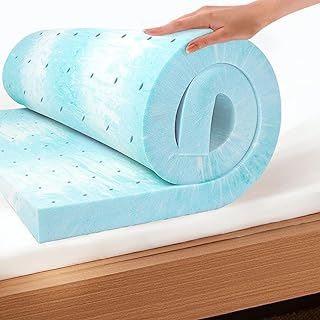
This is the most complete solution on the list: two inches of gel-infused memory foam handling pressure relief, topped by an inch of quilted pillow top that keeps skin off the foam and adds immediate softness. For a student who arrives to find a genuinely punishing mattress, it’s the single upgrade I’d make.
Niagara Sleep Solution Ultra Soft & Cooling Topper
A fiber-filled pillow-top pad with a rayon-from-bamboo surface and a 20-inch deep pocket, so it anchors securely to a thick or oddly sized dorm mattress. Choose this if your complaint is heat and surface harshness rather than deep sagging — it breathes far better than foam and goes straight into the wash.
EGO 2″ Gel Memory Foam Topper
Note that this one is sized 75″ x 38″ — a standard twin, not twin XL — so verify your bed before ordering; some apartment-style and older halls do use regular twins. The two-inch gel-infused, CertiPUR-US foam is a sensible, affordable fix for lighter sleepers who need contouring without much loft.
Linenspa 2″ Gel Memory Foam Topper (Twin XL)
The reliable budget benchmark: plush, gel-infused, CertiPUR-certified, and inexpensive enough that replacing it after graduation is no loss. It won’t rescue a badly worn mattress, but it takes the edge off a firm one and ships compressed for easy move-in.
ViscoSoft 3″ Ventilated Memory Foam Topper (Twin XL)
My pick for durability and airflow. The high-density foam is ventilated through its thickness rather than relying on gel alone, and the removable rayon cover zips off for laundering — meaningful when the same topper needs to survive four academic years.
Frequently Asked Questions
Will a twin XL topper fit my dorm bed?
Almost certainly, since twin XL (38″ x 80″) is the standard in U.S. residence halls. Still, confirm with your housing office or measure during move-in, because a small number of buildings use standard twins or extra-wide frames.
Can I use a topper if I already have a mattress protector?
Yes, and you should. Place the waterproof protector directly on the dorm mattress, the topper above it, then your sheets — or use a second protector over the topper if spills are a concern.
Do foam toppers actually help back pain?
They help when the pain comes from a surface too firm to let the pelvis and shoulders settle into neutral alignment, which is common with institutional mattresses. They won’t compensate for a collapsed core, and persistent morning pain warrants a clinical opinion rather than more foam.
How long does it take a compressed topper to expand?
Expect 24 to 72 hours for full loft, depending on room temperature. A cool dorm room slows the process, so unbox on arrival day rather than the night you plan to sleep on it.
Final Thoughts
For most students, the ELEMUSE 3-inch dual-layer topper delivers the largest measurable improvement per dollar, combining real pressure relief with a cooler quilted surface. Hot sleepers who don’t need deep contouring will be happier with the Niagara Sleep Solution pillow-top pad, while anyone prioritizing longevity and a washable cover should invest in the ViscoSoft 3-inch ventilated topper and expect it to outlast the degree.