Key takeaways
- Measure the clearance, not the bed: Take a tape measure from floor to the lowest point of the frame or slat, then subtract half an inch. Most dorm beds sit between 7 and 12 inches high before being lofted, so a 7.5-inch container is the safe universal choice.
- Wheels versus fabric handles: Hard bins on casters glide out over tile, vinyl, and low-pile carpet with one hand — ideal for anything you access weekly. Soft zippered bags are better for a single seasonal load you’ll retrieve twice a year.
- Dust sealing for sleep quality: Look for a full lid or a two-way zipper rather than an open tote. Anything stored inches from your breathing zone should be enclosed, particularly bedding and cold-weather knits.
- Visibility saves time: Clear or partially transparent tops let you identify contents from the doorway. Opaque containers demand a labeling habit that few first-year students sustain past October.
- Collapsibility for move-out: Dorm storage lives in a car trunk for three months every summer. Foldable frames and tool-free assembly turn a bulky bin into a flat panel, which is worth prioritizing if you’re traveling home by plane or shared vehicle.
Dorm rooms make one promise loudly and another quietly. The loud promise is independence; the quiet one is that you will spend nine months negotiating with roughly 90 square feet of floor. From a sleep-wellness perspective, that negotiation matters more than most students expect — because the space directly beneath the mattress is either a functional storage zone or a slow-growing pile of duffel bags, snack boxes, and last semester’s laundry. Clutter within arm’s reach of the pillow keeps the nervous system mildly “on,” and dust-collecting chaos under a bed is a genuine irritant for anyone with seasonal allergies or a sensitive airway.
This guide treats under-bed storage as sleep equipment rather than decor. Below, we look at rolling drawers, low-profile bins, and zippered fabric bags that fit standard dorm loft heights, seal against dust, and pull out without requiring you to dismantle your bed frame. We cover the measurements that actually determine fit, the closure styles that keep textiles fresh, and the six products worth shortlisting for 2026 move-in day.
Our top picks


As an Amazon Associate we earn from qualifying purchases at no extra cost to you. Ratings are shown as listed on Amazon.
🛒 Best Price Today on Amazon
Prime members get fast, free shipping on everything above, plus member-only deals. New members get a 30-day free trial — cancel anytime.
How to Choose a/an Under Bed Storage Dorm (2026)
- Measure the clearance, not the bed: Take a tape measure from floor to the lowest point of the frame or slat, then subtract half an inch. Most dorm beds sit between 7 and 12 inches high before being lofted, so a 7.5-inch container is the safe universal choice.
- Wheels versus fabric handles: Hard bins on casters glide out over tile, vinyl, and low-pile carpet with one hand — ideal for anything you access weekly. Soft zippered bags are better for a single seasonal load you’ll retrieve twice a year.
- Dust sealing for sleep quality: Look for a full lid or a two-way zipper rather than an open tote. Anything stored inches from your breathing zone should be enclosed, particularly bedding and cold-weather knits.
- Visibility saves time: Clear or partially transparent tops let you identify contents from the doorway. Opaque containers demand a labeling habit that few first-year students sustain past October.
- Collapsibility for move-out: Dorm storage lives in a car trunk for three months every summer. Foldable frames and tool-free assembly turn a bulky bin into a flat panel, which is worth prioritizing if you’re traveling home by plane or shared vehicle.
The Best Under Bed Storage Dorm (2026)s Reviewed
80L Adjustable Under Bed Storage with Wheels, 2-Pack
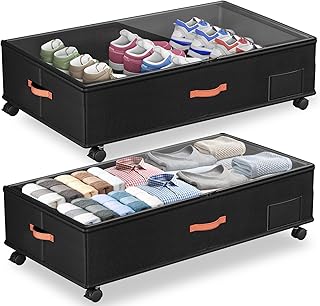
The adjustable footprint is the standout here: you can shorten the container to clear a bed post or extend it to claim the full width of the frame, which solves the most common dorm fit problem. Clear lids and smooth casters make this a strong default pick for clothing rotation and shoes you wear often.
Under Bed Storage Containers with Wheels, 7.5″ Height
At 36 by 16.6 inches with a strict 7.5-inch profile, these slide under nearly every un-lofted dorm bed we’ve measured, including the stubbornly low steel-frame models. Deep enough for folded blankets and comforters, shallow enough that you’re not forced to loft your bed to use them.
ZOBER Under Bed Storage Bags, 90L 4-Pack
Fabric bags are the smarter choice for anything you’re storing rather than accessing, and this four-pack handles a full off-season wardrobe with dual zippers and a clear viewing panel. Reinforced handles hold up when the bag is genuinely full, and all four collapse to nothing come May.
Under Bed Storage Container with Wheels, Patterned Metal, 2-Pack
A metal frame with a patterned finish gives this pair noticeably more structure than plastic alternatives, so the sides don’t bow under a stack of textbooks or folded denim. Tool-free assembly and a foldable build make it a good compromise between rigidity and off-season portability.
Under Bed Storage with Wheels 66L, Clear Lids
The 30-inch length is deliberately shorter than most competitors, which makes this the right answer for beds with center supports or a mini fridge already occupying part of the space. Clear lids and 7.5 inches of height keep it low-profile without sacrificing everyday visibility.
Frequently Asked Questions
What height should I look for if my dorm bed isn’t lofted?
Aim for 7.5 inches or less. That figure clears the majority of standard-issue university frames, and the XXL and 80L options above are all designed around that constraint rather than around residential bed heights.
Will rolling bins damage dorm flooring?
Standard plastic casters are fine on vinyl, laminate, and tile, which covers most residence halls. On older hardwood, roll the bin out rather than dragging it sideways, and check the wheels for grit occasionally — trapped debris is what causes scuffing, not the wheel itself.
Can I store bedding under the bed without it smelling musty?
Yes, provided the textiles are fully dry before they go in and the container actually seals. Wash and dry completely, avoid compressing damp fabric, and choose a lidded bin or zippered bag over an open tote so humidity and dust stay out.
Fabric bags or hard plastic bins — which is better for a dorm?
Buy both, in a rough two-to-one ratio. Use wheeled hard bins for shoes and current-season clothing you touch weekly, and reserve fabric bags like the ZOBER four-pack for winter coats and spare bedding you’ll open once per semester.
Final Thoughts
For most students, the 80L Adjustable Under Bed Storage with Wheels is the best single purchase — the adjustable length removes the guesswork that causes so many returns, and the clear lids support the kind of quick, low-friction retrieval that keeps a small room from spiraling. Pair it with the ZOBER 90L 4-Pack for sealed off-season textiles, and if your frame sits especially low or has a center support, the 66L Clear Lid bins at 30 inches long are the reliable fallback. Choose enclosed storage, measure once before you order, and the space under your bed becomes an asset instead of a source of low-grade stress at bedtime.