Key takeaways
- Blade span vs. room size: A 42-inch fan suits bedrooms and offices up to roughly 150 square feet; step up to 52 inches for open living areas or master bedrooms, since an undersized fan compensates by running at a noisier high speed.
- Color temperature control: Look for 3CCT switching (typically 3000K/4000K/5000K) plus true dimming. Warm, dim light in the final hour before bed is one of the cheapest sleep interventions available; a fixed cool-white LED works against you.
- Motor type: DC motors run quieter, draw roughly 60–70% less power, and offer six speeds instead of three. If the fan lives in a bedroom, treat DC as non-negotiable — the difference at low speed is the difference between white noise and an audible hum.
- Control method: Remote and app control let you adjust speed without leaving bed. Pull chains cost less and never lose a signal, but they mean standing up and reaching overhead in the dark.
- Reversibility and ratings: A reversible motor pushes warm air down in winter, cutting heating load. For porches or humid bathrooms, confirm damp-rated ETL listing rather than dry-rated indoor-only construction.
What's inside
Low ceilings create a specific problem that most fan buyers don’t anticipate until installation day: a standard downrod fixture hanging eight inches into an already-compressed room, blades spinning uncomfortably close to head height, and a light kit that glares straight into your eyes from bed. Add the sleep-quality dimension — a motor that hums at 2 a.m., or a light kit stuck at a cold 5000K that suppresses melatonin right when you’re trying to wind down — and the wrong fan stops being a cosmetic mistake and starts costing you rest.
Hugger fans (also called flush mount or low profile) mount directly against the ceiling, preserving headroom in rooms under eight feet. This guide evaluates the current crop through two lenses I care about professionally: airflow that actually moves air at a low mounting height, and light output warm and dimmable enough to support a healthy evening circadian wind-down. Below you’ll find the models worth your money in 2026, what separates them, and how to match one to your room.
As an Amazon Associate we earn from qualifying purchases.


🛒 Best Price Today on Amazon
Prime members get fast, free shipping on everything above, plus member-only deals. New members get a 30-day free trial — cancel anytime.
How to Choose a Hugger Ceiling Fans With Light (2026)
- Blade span vs. room size: A 42-inch fan suits bedrooms and offices up to roughly 150 square feet; step up to 52 inches for open living areas or master bedrooms, since an undersized fan compensates by running at a noisier high speed.
- Color temperature control: Look for 3CCT switching (typically 3000K/4000K/5000K) plus true dimming. Warm, dim light in the final hour before bed is one of the cheapest sleep interventions available; a fixed cool-white LED works against you.
- Motor type: DC motors run quieter, draw roughly 60–70% less power, and offer six speeds instead of three. If the fan lives in a bedroom, treat DC as non-negotiable — the difference at low speed is the difference between white noise and an audible hum.
- Control method: Remote and app control let you adjust speed without leaving bed. Pull chains cost less and never lose a signal, but they mean standing up and reaching overhead in the dark.
- Reversibility and ratings: A reversible motor pushes warm air down in winter, cutting heating load. For porches or humid bathrooms, confirm damp-rated ETL listing rather than dry-rated indoor-only construction.
The Best Hugger Ceiling Fans With Light (2026)s Reviewed
42-Inch Flush Mount Fan with 3CCT Dimmable Light, Remote, DC Motor
This is the most complete bedroom package here: six DC speeds, three selectable color temperatures with full dimming, and a genuinely quiet noise floor at settings one through three. The ETL indoor/outdoor listing also makes it a legitimate covered-patio option, which is rare at this size.
52″ Black Flush Mount Fan with App and Remote Control
The larger span makes this the pick for master bedrooms and open-plan spaces where a 42-inch fan would have to work too hard. App control is more than a novelty — scheduling the light to shift warm and dim automatically in the evening is exactly the kind of passive circadian support most people won’t do manually.
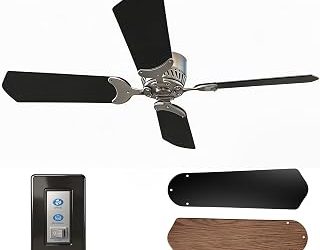
42-Inch Wood Blade Hugger with Power-Off Memory
Wood-toned blades soften the industrial look that plagues most flush mount designs, and the power-off memory means the fan returns to your last speed and light setting after an outage instead of blasting on at maximum. A strong choice for anyone prioritizing warmth of appearance alongside quiet DC operation.
Hunter Builder 51091 42″ Low Profile Fan
Hunter’s reputation rests on the motor assembly, and this bronze Builder model delivers dependable, wobble-free airflow with the brand’s WhisperWind performance. There’s no remote and no color tuning — this is the buy-it-and-forget-it option, best paired with a smart bulb-compatible dimmer if you want evening light control.
Prominence Home Alvina 42″ Flush Mount Fan
The dual-finish reversible blades let one fixture work in two decor schemes, and brushed nickel is the most forgiving finish for mixed-hardware rooms. Pull-chain operation keeps the price down; the reversible motor still earns its keep in winter.
CF-78049L Hugger Ceiling Fan, 3 Light, Brown
A traditional three-light hugger for hallways, guest rooms, and rental units where ambient brightness matters more than tunable warmth. Straightforward, budget-conscious, and unfussy to install.
Frequently Asked Questions
Do hugger fans move less air than downrod fans?
Slightly, yes — blades sitting closer to the ceiling have less clearance to draw air from above, which typically costs you 10–20% in measured CFM. Choosing the largest span your room allows, and a DC motor with a steeper blade pitch, largely closes the gap.
What ceiling height requires a flush mount fan?
Anything under eight feet. Code generally requires seven feet of clearance from floor to blade, and a standard downrod fixture eats that budget quickly on a 7’6″ ceiling.
Can a ceiling fan actually improve sleep?
It can, on two fronts. Core body temperature needs to drop to initiate sleep, and gentle air movement accelerates that; the steady low-frequency sound of a well-balanced fan also masks intermittent noise that would otherwise cause brief arousals you never consciously remember.
Which color temperature should I use at night?
Stay at 3000K or below after sunset, dimmed as low as the fixture allows. Reserve the 5000K setting for daytime tasks — bright, blue-heavy light in the evening delays melatonin onset and pushes your sleep window later.
Final Thoughts
For most bedrooms, the 42-inch flush mount with 3CCT dimming, remote, and six-speed DC motor is the best balance of quiet operation and sleep-friendly lighting on this list. Larger or open-plan rooms should go with the 52″ app-controlled model for its scheduling and airflow reserve, while anyone who wants proven mechanical reliability over features will be happiest with the Hunter Builder 51091.