Key takeaways
- Confirm the base before anything else: Unscrew one existing bulb and measure the threaded end. Roughly half an inch across means E12 candelabra; roughly one inch means E26. Many fan light kits also cap each socket at 40W or 60W equivalent, so check the sticker inside the fitter.
- Match color temperature to the room’s job: Reserve 2700K soft white for bedrooms and nurseries, where warmer light supports the evening melatonin ramp. Save 4000K neutral and 5000K daylight for kitchens, laundry rooms, offices, and hallways where alertness is the goal.
- Right-size the lumens: A three- or four-socket fan kit with 500–600 lumens per bulb lands between 1,500 and 2,400 lumens total, which is plenty for a standard bedroom. Overshooting is the single most common mistake we see in sleep-space assessments.
- Decide on dimming honestly: If your fan runs on a pull chain or a plain wall switch, non-dimmable bulbs are cheaper and won’t buzz. If you have a genuine dimmer, buy dimmable bulbs only — non-dimmable LEDs on a dimmer circuit flicker, hum, and fail early.
- Look for CRI 85 or higher, and shatter-resistant housings: Higher color rendering makes bedding, wood tones, and skin look natural rather than washed out. Enclosed plastic or coated housings also handle the constant low-frequency vibration a spinning fan transmits into the socket.
What's inside
Ceiling fan fixtures are quietly one of the trickiest lighting spots in a house. The sockets are usually small (candelabra E12 or the compact E26 A15 shape), the shades point light straight into your eyes when you’re lying down, and the wattage caps printed inside the housing are lower than most people expect. From a sleep-wellness perspective, that combination matters more than it sounds: the fixture directly above your bed is often the last light source your eyes take in before you close them, and its color temperature and brightness help set the tone for how quickly your body shifts into wind-down mode.
This guide approaches ceiling fan bulbs the way a sleep consultant would approach a bedroom audit — socket compatibility and wattage safety first, then color temperature matched to the room’s purpose, then dimming behavior and vibration tolerance. Below you’ll find our tested picks for 2026 across E12 candelabra, E26 A15, and flood-style fixtures, followed by a buying framework and answers to the questions we field most often.
As an Amazon Associate we earn from qualifying purchases.


🛒 Best Price Today on Amazon
Prime members get fast, free shipping on everything above, plus member-only deals. New members get a 30-day free trial — cancel anytime.
How to Choose a Light Bulbs For Ceiling Fans (2026)
- Confirm the base before anything else: Unscrew one existing bulb and measure the threaded end. Roughly half an inch across means E12 candelabra; roughly one inch means E26. Many fan light kits also cap each socket at 40W or 60W equivalent, so check the sticker inside the fitter.
- Match color temperature to the room’s job: Reserve 2700K soft white for bedrooms and nurseries, where warmer light supports the evening melatonin ramp. Save 4000K neutral and 5000K daylight for kitchens, laundry rooms, offices, and hallways where alertness is the goal.
- Right-size the lumens: A three- or four-socket fan kit with 500–600 lumens per bulb lands between 1,500 and 2,400 lumens total, which is plenty for a standard bedroom. Overshooting is the single most common mistake we see in sleep-space assessments.
- Decide on dimming honestly: If your fan runs on a pull chain or a plain wall switch, non-dimmable bulbs are cheaper and won’t buzz. If you have a genuine dimmer, buy dimmable bulbs only — non-dimmable LEDs on a dimmer circuit flicker, hum, and fail early.
- Look for CRI 85 or higher, and shatter-resistant housings: Higher color rendering makes bedding, wood tones, and skin look natural rather than washed out. Enclosed plastic or coated housings also handle the constant low-frequency vibration a spinning fan transmits into the socket.
The Best Light Bulbs For Ceiling Fans (2026)s Reviewed
comzler E12 LED Candelabra Bulbs, 2700K
This is our default recommendation for bedrooms: 500 lumens of genuinely warm 2700K light with CRI 85+, in the classic B11 candle shape that fits most fan light kits without poking past the shade. It’s non-dimmable, so pair it with a pull chain or standard switch rather than a dimmer circuit.
GvvooHome E12 Dimmable LED, 4000K
A smart pick for kitchen, dining, or home-office fans where you want crisp, neutral light that can still be dialed down in the evening. The 90+ CRI rating is unusually high for a candelabra bulb, and the compact T6/T25 tube shape disappears into narrow glass shades.
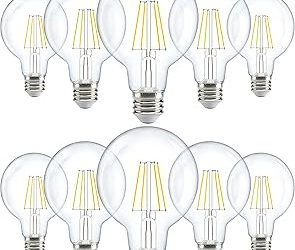
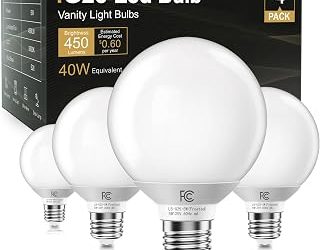
ALAMPEVER G16.5 Dimmable E12 Globe
If your fan uses exposed sockets or open-bottom shades, the small globe profile looks intentional in a way that a bare tube never does. Smooth dimming and a 2700K soft white output make it a strong bedroom and sconce bulb, and the 12-pack covers a multi-fixture room in one order.
Cotanic E26 A15 Ceiling Fan Bulbs, 4000K
Plenty of fan kits use full-size E26 sockets but only have clearance for a shorter bulb, which is exactly the gap the A15 shape fills. At 6W and 600 lumens with CRI 85+, this neutral-white set suits living rooms, playrooms, and covered porches.
A15 LED E26 Ceiling Fan Bulbs, 5000K Daylight
Reach for these when visual clarity outranks ambiance — garages, laundry areas, craft rooms, and basement fans. We’d keep 5000K daylight out of bedrooms, since bright cool light in the hour before bed is the most common self-inflicted sleep disruptor we see.
Frequently Asked Questions
What color temperature is best for a bedroom ceiling fan?
Stay at 2700K or below. Warm light carries less short-wavelength content, which means it’s less likely to suppress melatonin while you’re reading or getting ready for bed. If a fan serves both a bedroom and a work nook, dimmable 2700K bulbs on a dimmer give you the most flexibility.
Why do my ceiling fan bulbs keep burning out?
Usually vibration, heat, or a dimmer mismatch. LEDs tolerate vibration far better than incandescent filaments, but they dislike trapped heat in tight enclosed shades and they fail quickly if a non-dimmable bulb is installed on a dimmer switch. Confirm the fixture’s wattage cap too — exceeding it cooks the driver.
Can I mix bulb types in the same fan?
Technically yes, practically no. Mixing color temperatures or brands in one fixture produces visibly uneven light and uneven dimming, which is why our picks come in multipacks. Replace all sockets at once.
Do I need E12 or E26 bulbs for my fan?
Check the socket, not the fan model. E12 candelabra bases are about 12mm across and common on decorative light kits; E26 medium bases are about 26mm and typically need the shorter A15 shape for clearance. When in doubt, bring an old bulb to compare.
Final Thoughts
For bedrooms, the comzler E12 2700K set is the easiest sleep-friendly upgrade you can make in five minutes, with the ALAMPEVER G16.5 globes as the better-looking option for exposed sockets. For kitchens, offices, and living rooms where you want alert, accurate light, the GvvooHome 4000K dimmable candelabras and the Cotanic E26 A15 set are the two we’d buy first.