Key takeaways
- Lumens matched to the room: A two-car garage is well served by 14,000 to 21,000 lumens. Push past 30,000 only if you’re lighting a large exterior job site or a shop with dark, light-absorbing surfaces. Overshooting creates glare, squinting, and the kind of visual fatigue that lingers long after you’ve put the tools away.
- Adjustable color temperature: Selectable CCT is the single most valuable feature for anyone working past sunset. A 6500K daylight setting sharpens contrast for detail work in the afternoon; dropping to 3000K in the evening reduces the short-wavelength load that suppresses melatonin and delays sleep onset.
- Aiming and beam control: Independently pivoting heads and 360° rotation let you bounce light off a ceiling or wall instead of firing it straight into your field of view. Indirect light dramatically lowers perceived glare while keeping your task surface bright, and it’s easier on the eyes across a long session.
- Height range and stability: A stand that extends to 65–72 inches lets you position light above eye level, which reduces harsh shadows on your hands. Check the collapsed height too, and look for a wide tripod footprint with locking legs so the fixture can’t be nudged over mid-project.
- Cord length and weather rating: A 16- to 18-foot cord keeps outlets from dictating your workflow. IP66 protection means dust and pressurized water won’t end the light’s life, which matters in garages, basements, and anywhere with a hose nearby.
What's inside
Bright light is a drug, and most people dose it accidentally. As someone who spends their days untangling why otherwise healthy adults lie awake at 1 a.m., I’ve learned that the culprit is often sitting in the garage: a blazing 6500K floodlight aimed at the ceiling during a Saturday-night project, or a workbench lamp so dim that the eyes strain, the neck tenses, and the body never quite registers that work is over. Light intensity and color temperature are the two loudest signals your circadian system receives, and standing work lights happen to be among the most powerful light sources a homeowner will ever own.
This guide looks at standing work lights through that lens. I’ll cover how to match lumen output to the size of your space, why adjustable color temperature matters more than raw brightness if you work after dark, and which tripod models deliver genuinely usable light without turning your evening into a physiological false dawn. Below you’ll find the current standouts for 2026, followed by a selection framework and answers to the questions I hear most from clients who work late in workshops, studios, and home offices.
As an Amazon Associate we earn from qualifying purchases.


🛒 Best Price Today on Amazon
Prime members get fast, free shipping on everything above, plus member-only deals. New members get a 30-day free trial — cancel anytime.
How to Choose a/an Standing Work Light (2026)
- Lumens matched to the room: A two-car garage is well served by 14,000 to 21,000 lumens. Push past 30,000 only if you’re lighting a large exterior job site or a shop with dark, light-absorbing surfaces. Overshooting creates glare, squinting, and the kind of visual fatigue that lingers long after you’ve put the tools away.
- Adjustable color temperature: Selectable CCT is the single most valuable feature for anyone working past sunset. A 6500K daylight setting sharpens contrast for detail work in the afternoon; dropping to 3000K in the evening reduces the short-wavelength load that suppresses melatonin and delays sleep onset.
- Aiming and beam control: Independently pivoting heads and 360° rotation let you bounce light off a ceiling or wall instead of firing it straight into your field of view. Indirect light dramatically lowers perceived glare while keeping your task surface bright, and it’s easier on the eyes across a long session.
- Height range and stability: A stand that extends to 65–72 inches lets you position light above eye level, which reduces harsh shadows on your hands. Check the collapsed height too, and look for a wide tripod footprint with locking legs so the fixture can’t be nudged over mid-project.
- Cord length and weather rating: A 16- to 18-foot cord keeps outlets from dictating your workflow. IP66 protection means dust and pressurized water won’t end the light’s life, which matters in garages, basements, and anywhere with a hose nearby.
The Best Standing Work Light (2026)s Reviewed
Zetunlo 21000-Lumen 3-Head Tripod Work Light
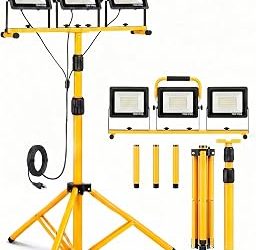
Twenty-one thousand lumens across three aimable heads hits the sweet spot for garages and workshops: bright enough to erase shadows, restrained enough that you’re not flooding your retinas at close range. The 16-foot cord and IP66 sealing make it genuinely portable between indoor and outdoor work.
21000-Lumen 3-Head Work Light, 48″–72″ Adjustable
The standout here is the 72-inch maximum height, which lets you light from well above eye level and keep the source out of your direct sightline. Combined with 360° rotation, it’s an easy setup to configure for indirect, low-glare illumination.
32000LM 3x100W Tripod Floodlight with 3 CCT
This is my top recommendation for anyone regularly working after dark: three selectable color temperatures let you run 6500K by day and shift to a warm 3000K in the evening, meaningfully reducing the circadian disruption of late shop sessions. The 32,000-lumen ceiling is more than most home spaces need, so treat the upper setting as a reserve rather than a default.
30000 Lumen Foldable Tripod Work Light
A straightforward, high-output fixed-6500K option built for construction sites and large outdoor areas where maximum visibility outranks comfort. The 18-foot cord is the longest in this group, and the foldable design stores more easily than the size suggests.
14000 Lumen 2-Head Work Light with Stand
For a single-bay garage, basement, or hobby bench, 14,000 lumens from two heads is plenty and produces noticeably less glare than the triple-head units. It’s the lighter, more manageable choice if you move your light often.
Frequently Asked Questions
Will using a work light at night actually affect my sleep?
Yes. Bright, blue-rich light in the two to three hours before bed can delay melatonin release and push your sleep onset later. If you’re working in the evening, choose a warmer color temperature, aim the light away from your eyes, and give yourself 30 to 60 minutes of dim light before bed.
Is a work light too harsh for a home office?
Usually, yes. Task and ambient lighting call for something gentler and dimmable. A dedicated fixture like the LED Floor Lamp with dual adjustable gooseneck heads offers around 2,000 lumens with dimming, which suits reading, crafts, and detail work far better than a floodlight.
How many lumens do I need for a two-car garage?
Roughly 14,000 to 21,000 lumens will light the space evenly, especially if you bounce some of it off the ceiling. Very dark walls or high ceilings justify moving toward the upper end of that range.
Does IP66 mean I can leave it outside?
IP66 protects against dust and strong water jets, so brief rain during a job isn’t a problem. It isn’t an invitation to store the fixture outdoors permanently, since sustained exposure and UV will degrade seals and housings over time.
Final Thoughts
If you work into the evening with any regularity, the 32000LM 3-CCT tripod floodlight is the smartest buy on this list, purely because adjustable color temperature lets you protect your sleep without sacrificing daytime performance. For a straightforward, well-balanced garage light, the Zetunlo 21000-lumen 3-head model is hard to beat, and the 14000 Lumen 2-head stand is the right call for smaller spaces where comfort and portability matter more than maximum output.