Key takeaways
- Color temperature: Stay at 2700K or below for any fixture used after sunset. Warmer light carries less short-wavelength energy, which is the portion of the spectrum most likely to delay melatonin onset. Save 3000K and above for kitchens and workspaces.
- Dimming quality, not just dimmability: “Dimmable” on the box means little if the bulb buzzes at 30% or drops out entirely at the bottom of the dial. Look for bulbs rated to dim smoothly to 10% or lower, and confirm compatibility with your existing dimmer type before buying a twelve-pack.
- Base and bulb shape: Nearly all chandeliers use an E12 candelabra base, but the glass shape changes the look completely. Flame-tip (CA10) reads traditional and diffuses softly; B10 and B11 clear filament styles show a visible glowing element and suit exposed-socket fixtures.
- Color rendering index (CRI): Anything below 80 CRI makes skin tones look grey and wood finishes look flat. In dining rooms especially, 90+ CRI is worth the small premium — food, faces, and textiles all read as they should.
- Flicker and lumen output: Aim for roughly 450–500 lumens per bulb in a multi-socket fixture; more than that and dimming becomes essential. Cheap drivers produce invisible high-frequency flicker linked to eye strain and headaches, so favor UL-listed bulbs from manufacturers who publish real specs.
What's inside
A chandelier is usually the last light you switch off before bed, which makes it one of the most underrated variables in your sleep environment. Most buyers shop for chandelier bulbs the way they shop for batteries — grab the cheapest multipack, check the base size, done. Then they spend the next two years squinting under light that’s either too blue to wind down under or too dim to read by, with a flicker they can’t quite see but their nervous system registers anyway. Add the sockets themselves: a chandelier can hold six, nine, or twelve bulbs, so any mistake is a mistake multiplied.
This guide approaches chandelier bulbs from a sleep-wellness perspective first and a decor perspective second — because the two rarely conflict once you know what to look for. Below you’ll find the specifications that actually influence how your body responds to evening light (color temperature, dimming behavior, color rendering, flicker), followed by reviews of the strongest E12 candelabra options available in 2026, from soft flame-tip LEDs to clear filament bulbs and traditional incandescents. Whether you’re lighting a dining room, a stairwell, or a bedroom fixture you dim every night, there’s a right answer here.
As an Amazon Associate we earn from qualifying purchases.



🛒 Best Price Today on Amazon
Prime members get fast, free shipping on everything above, plus member-only deals. New members get a 30-day free trial — cancel anytime.
How to Choose Bulbs for a Chandelier (2026)
- Color temperature: Stay at 2700K or below for any fixture used after sunset. Warmer light carries less short-wavelength energy, which is the portion of the spectrum most likely to delay melatonin onset. Save 3000K and above for kitchens and workspaces.
- Dimming quality, not just dimmability: “Dimmable” on the box means little if the bulb buzzes at 30% or drops out entirely at the bottom of the dial. Look for bulbs rated to dim smoothly to 10% or lower, and confirm compatibility with your existing dimmer type before buying a twelve-pack.
- Base and bulb shape: Nearly all chandeliers use an E12 candelabra base, but the glass shape changes the look completely. Flame-tip (CA10) reads traditional and diffuses softly; B10 and B11 clear filament styles show a visible glowing element and suit exposed-socket fixtures.
- Color rendering index (CRI): Anything below 80 CRI makes skin tones look grey and wood finishes look flat. In dining rooms especially, 90+ CRI is worth the small premium — food, faces, and textiles all read as they should.
- Flicker and lumen output: Aim for roughly 450–500 lumens per bulb in a multi-socket fixture; more than that and dimming becomes essential. Cheap drivers produce invisible high-frequency flicker linked to eye strain and headaches, so favor UL-listed bulbs from manufacturers who publish real specs.
The Best Chandelier Bulbs of 2026, Reviewed
Hizashi 90+ CRI LED Candelabra Bulb, 12-Pack
This is the pick I recommend most often: 90+ CRI, 2700K, UL listed, and 450 lumens from a flame-tip CA10 envelope that diffuses light instead of throwing hot spots across a ceiling. The dimming curve is genuinely smooth at the low end, which matters if your chandelier doubles as evening ambient light.
E12 Flame Tip Candle Bulbs, 4W 460 LM, 12-Pack
A dependable soft warm white option with slightly higher output than most 4W bulbs, making it a good fit for larger dining fixtures or entryways with high ceilings. The frosted flame tip hides the diode array well, so it looks appropriate in traditional shaded chandeliers.
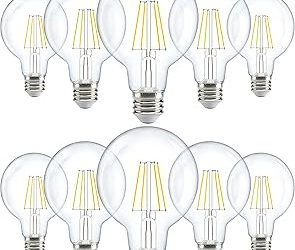
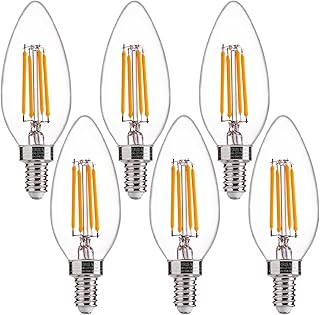
Clear B11 LED Filament Candelabra Bulbs, 60W Equivalent, 6-Pack
Choose these when the bulbs themselves are part of the design. The 60W-equivalent output is brighter than typical candelabra LEDs, so pair them with a dimmer rather than running them wide open in a bedroom or den.
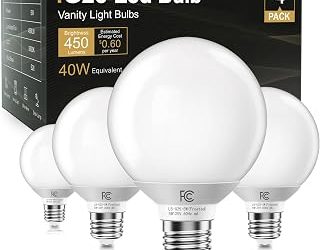
Dimmable E12 LED Candelabra Bulbs, 40W Equivalent, 12-Pack
Vintage clear glass at a genuinely economical per-bulb cost, with a warm 450-lumen output that suits ceiling fans and smaller chandeliers. Best value here if you need to fill a lot of sockets at once.
60W Candelabra Incandescent Bulbs, B10 Clear, 12-Pack
Traditional incandescents remain the gold standard for dimming behavior and spectral warmth — they shift redder as they dim, mirroring firelight. You’ll pay for it in energy use and lifespan, but for a bedroom fixture you dim nightly, that tradeoff can be worth it.
Frequently Asked Questions
What color temperature is best for a bedroom chandelier?
2700K or warmer. Cooler light in the two hours before bed suppresses melatonin more effectively than warm light at the same brightness, so keep evening fixtures at the warm end and control intensity with a dimmer.
Do LED chandelier bulbs really flicker?
Some do, particularly inexpensive dimmable models paired with older triac dimmers. If you notice eye strain, headaches, or a stroboscopic shimmer when you wave your hand under the light, swap either the bulbs or the dimmer.
How many lumens do I need per bulb?
Roughly 450 lumens per socket for a six-to-twelve-light fixture in a standard room. Multiply by socket count and compare against your room size rather than judging any single bulb’s brightness in isolation.
Can I mix bulb types in one chandelier?
Avoid it. Mixing LED and incandescent, or different color temperatures, produces visible color inconsistency and can confuse dimmer circuits. Replace all sockets at once with the same model.
Final Thoughts
For most homes, the Hizashi 90+ CRI Flame Tip 12-Pack is the best overall choice — warm, high-fidelity, low-flicker light at a sensible price per socket. If your fixture puts the bulbs on display, the Clear B11 LED Filament 60W Equivalent set delivers the filament aesthetic without the energy penalty, and for a bedroom chandelier you dim every night, the 60W B10 Clear Incandescents still offer dimming warmth that LEDs only approximate.