Key takeaways
- Match depth to your leg length: A 40″+ seat depth is glorious if you’re tall or you like curling sideways, but shorter frames will find their feet dangling and their lower back unsupported. Measure from the back of your knee to your hip and aim for a seat depth within a few inches of that, then let pillows close any remaining gap.
- Prioritize back height, not just seat depth: Deep seats invite reclining, and reclining without head support means your neck cantilevers forward. Look for a backrest tall enough to meet the base of your skull when you sink in, or plan on a dedicated bolster.
- Ask what the cushion is filled with: High-resilience foam cores with a fiber or down wrap give you the sink-in feeling plus overnight recovery. Pure fiber fill feels wonderful for two months and then permanently flattens where you always sit — a common cause of the asymmetric hip discomfort I hear about.
- Think about airflow if anyone will sleep there: Sleep temperature drives sleep quality. Breathable linen and chenille shed body heat far better than tightly woven synthetics or vinyl-backed velvets, which matters enormously for guests or anyone who naps.
- Check the exit, not just the entry: Sit down, then stand up, ten times. A seat so deep and so soft that you need momentum to escape will become a subtle daily strain on knees and lumbar spine. Firmness under the softness is the fix.
What's inside
Most people shopping for a deep seat sofa aren’t chasing a trend — they’re chasing rest. As someone who spends their days talking to people about why they wake up stiff, unrested, or oddly sore, I can tell you that a shocking number of those conversations trace back to furniture. The sofa is where the nervous system downshifts in the evening: it’s where you read, watch something undemanding, and let your body signal that the day is closing. A shallow, firm seat forces you to perch. Perching keeps the hip flexors and lower back engaged, which keeps arousal levels up, which quietly sabotages the wind-down window before bed. Deep seats let you fully recline into supported flexion — and that’s when breathing slows.
The trouble is that “deep seat” has become a marketing phrase attached to almost anything. Depth without support is just a soft hole you have to fight your way out of. This guide sorts the genuinely restorative options from the merely squishy, with attention to seat depth versus back height, cushion fill recovery, and whether a sofa can honestly serve as an occasional sleep surface. Below are the picks worth your money in 2026, followed by the criteria I use when evaluating them.
As an Amazon Associate we earn from qualifying purchases.



🛒 Best Price Today on Amazon
Prime members get fast, free shipping on everything above, plus member-only deals. New members get a 30-day free trial — cancel anytime.
How to Choose a Deep Seat Sofa (2026)
- Match depth to your leg length: A 40″+ seat depth is glorious if you’re tall or you like curling sideways, but shorter frames will find their feet dangling and their lower back unsupported. Measure from the back of your knee to your hip and aim for a seat depth within a few inches of that, then let pillows close any remaining gap.
- Prioritize back height, not just seat depth: Deep seats invite reclining, and reclining without head support means your neck cantilevers forward. Look for a backrest tall enough to meet the base of your skull when you sink in, or plan on a dedicated bolster.
- Ask what the cushion is filled with: High-resilience foam cores with a fiber or down wrap give you the sink-in feeling plus overnight recovery. Pure fiber fill feels wonderful for two months and then permanently flattens where you always sit — a common cause of the asymmetric hip discomfort I hear about.
- Think about airflow if anyone will sleep there: Sleep temperature drives sleep quality. Breathable linen and chenille shed body heat far better than tightly woven synthetics or vinyl-backed velvets, which matters enormously for guests or anyone who naps.
- Check the exit, not just the entry: Sit down, then stand up, ten times. A seat so deep and so soft that you need momentum to escape will become a subtle daily strain on knees and lumbar spine. Firmness under the softness is the fix.
The Best Deep Seat Sofas (2026) Reviewed
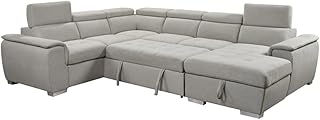
Ihanherry U-Shaped Modular Sectional Cloud Couch
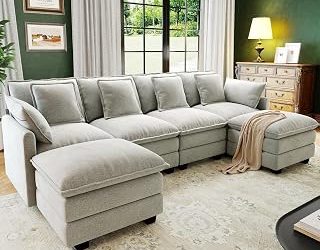
At 111.4″ with a U-shaped footprint and two ottomans, this is the closest thing on the list to a purpose-built rest platform — you can lie fully flat without a single joint hanging off an edge, which is why it earns my nod for households where the sofa doubles as a nap zone. The chenille breathes reasonably well, and the five included pillows let you build the neck support that deep-seat designs otherwise leave to chance.
Legend Vansen Oversized Modular Sectional
The reversible U/L configuration is the practical draw here: you can orient the chaise toward the darkest corner of the room, which is a genuinely useful move if you use the sofa for evening reading and want to control light exposure. Seven seats of plush polyester means real depth, though the synthetic weave runs warmer than linen, so factor that in if you sleep hot.
COPIAE 89″ Extra Deep Seat Sofa
The wide corduroy has a pleasant tactile quality — a small thing, but sensory comfort is part of what makes a wind-down ritual actually stick — and the seats are deep enough for full-body reclining without the sprawling footprint of a sectional. Generous armrests give you something to prop a pillow against, which turns it into a workable single-sleeper in a pinch.
Oversized 85″ Natural Linen Sofa
Linen is the standout feature: it’s the most breathable upholstery in this lineup, making this the pick I’d steer anyone toward who runs warm or plans to host overnight guests. The detachable cover is more than a convenience — washable upholstery matters for allergen load, which quietly affects nighttime nasal congestion and therefore sleep continuity.
Korser 89″ Mid Century Modern Chenille Sofa
A restrained mid-century silhouette that hides considerable seat depth, which makes it the smart choice for smaller rooms where a visually bulky sofa would feel oppressive. Chenille strikes a good middle ground on temperature, and the three-seat proportions suit apartments and bedroom sitting areas well.
Frequently Asked Questions
How deep should a deep seat sofa be?
Anything from 24″ of usable seat depth counts as deep, and the plushest options push past 40″. The useful number is your own: sit fully back and check that your feet still reach the floor and your knees clear the front edge without pressure. If they don’t, the sofa isn’t wrong — it’s just wrong for you.
Can I actually sleep on a deep seat sofa?
For occasional nights, yes, and often more comfortably than on a pull-out mechanism with a bar under the mattress. The limiting factors are usually width and surface evenness at the seams. Sectionals with ottomans do this best because they eliminate the edge you’d otherwise roll toward.
Will a very soft deep sofa hurt my back?
It can, if softness comes without structure. Sinking unevenly rotates the pelvis and keeps stabilizing muscles working when they should be relaxing. Look for a firm foam core beneath a soft top layer, and don’t hesitate to add a lumbar pillow — it’s not a compromise, it’s how deep seating is meant to be used.
Does sofa fabric really affect sleep quality?
More than most people expect. Core body temperature needs to drop for sleep to initiate and hold, and a non-breathable surface traps heat against your back and legs. Linen and chenille manage this far better than dense synthetics — worth weighing if the sofa sees any real sleep duty.
Final Thoughts
If you want one sofa that genuinely supports rest, the Ihanherry U-Shaped Modular Sectional is the most complete answer here — the flat, edge-free lying surface is hard to beat for napping or hosting. For warm sleepers and allergy-prone households, the Oversized 85″ Natural Linen Sofa is the more intelligent buy thanks to its breathability and washable cover. And if space is tight but you refuse to give up depth, the Korser 89″ Chenille Sofa delivers the sink-in feel in a footprint that won’t swallow the room.