Key takeaways
- Fiber and fill type: Rayon or viscose derived from bamboo and long-staple cotton move moisture off the skin faster than polyester microfiber, which is why they feel cool on contact. Foam never feels cool on its own — it needs a gel infusion plus a breathable cover to compensate.
- Loft versus airflow: Plush is comfortable, but a very deep pillow top can cradle you and cut circulation around your torso. If you want thickness, look for box-quilted construction that keeps fill distributed instead of migrating into hot pockets.
- Support goals: Buy fiber if your mattress is firm and you want softness with maximum breathability. Buy 3–4 inches of memory foam if you have hip, shoulder, or lower-back pressure pain and need contouring — then accept that you’re managing heat through the cover, not eliminating it.
- Pocket depth and anchoring: Measure your mattress plus any protector. Deep pockets of 18–20 inches fit modern pillow-top beds; foam toppers should include elastic corner straps, because a topper that shifts overnight creates gaps and wakes you more than the heat does.
- Washability: Hot sleepers sweat, and sweat degrades fill. Prioritize a machine-washable pad or a foam topper with a removable, washable cover, and plan on laundering every four to six weeks.
Overheating at night is rarely a case of “sleeping hot” for no reason. Core body temperature has to drop roughly one to two degrees Fahrenheit for sleep to consolidate, and anything that traps that heat against your skin — a dense foam mattress, a plastic-backed protector, a topper that sinks you in like a hammock — works directly against that drop. The result is the pattern I hear most often in consultations: falling asleep fine, then surfacing at 2 or 3 a.m. damp, restless, and unable to settle again.
A cooling mattress topper is one of the cheapest, highest-leverage fixes available, because it changes the surface layer where nearly all of your body heat and moisture accumulates. This guide breaks down what actually moves the needle thermally — fiber choice, loft, airflow, moisture handling — and then reviews the toppers currently worth your money in 2026, from breathable pillow-top pads to dual-layer gel foam for sleepers who need real pressure relief without the heat penalty.
Our top picks




As an Amazon Associate we earn from qualifying purchases at no extra cost to you. Ratings are shown as listed on Amazon.
🛒 Best Price Today on Amazon
Prime members get fast, free shipping on everything above, plus member-only deals. New members get a 30-day free trial — cancel anytime.
How to Choose a/an Cooling Mattress Topper For Hot Sleepers (2026)
- Fiber and fill type: Rayon or viscose derived from bamboo and long-staple cotton move moisture off the skin faster than polyester microfiber, which is why they feel cool on contact. Foam never feels cool on its own — it needs a gel infusion plus a breathable cover to compensate.
- Loft versus airflow: Plush is comfortable, but a very deep pillow top can cradle you and cut circulation around your torso. If you want thickness, look for box-quilted construction that keeps fill distributed instead of migrating into hot pockets.
- Support goals: Buy fiber if your mattress is firm and you want softness with maximum breathability. Buy 3–4 inches of memory foam if you have hip, shoulder, or lower-back pressure pain and need contouring — then accept that you’re managing heat through the cover, not eliminating it.
- Pocket depth and anchoring: Measure your mattress plus any protector. Deep pockets of 18–20 inches fit modern pillow-top beds; foam toppers should include elastic corner straps, because a topper that shifts overnight creates gaps and wakes you more than the heat does.
- Washability: Hot sleepers sweat, and sweat degrades fill. Prioritize a machine-washable pad or a foam topper with a removable, washable cover, and plan on laundering every four to six weeks.
The Best Cooling Mattress Topper For Hot Sleepers (2026)s Reviewed
Niagara Sleep Solution Bamboo-Derived Rayon Topper (Queen)
This is my default recommendation for someone who runs hot but doesn’t have pressure-point pain: the rayon-from-bamboo surface wicks quickly and stays cool to the touch, while the pillow-top fill adds cushioning without smothering airflow. The 20-inch deep pocket also fits taller mattresses that most pads simply won’t stretch over.
Niagara Sleep Solution 100% Cotton Top Topper (Queen)
Natural cotton is the most breathable face fabric you can put under your body, and this version delivers that cloud-like softness without the slick hand-feel some synthetics have. Choose it over the bamboo-rayon model if you prefer a crisper, more traditional surface or you’re sensitive to smooth, cool-touch finishes.
3-Inch Memory Foam Topper with Cooling Cover (Queen)
Three inches is the sweet spot where memory foam actually changes how a mattress feels — meaningful contouring for hips and shoulders, plus enough give to soften an overly firm bed. The removable cooling cover and corner straps address the two classic foam complaints: heat retention and nightly drift.
4-Inch Dual Layer Gel Foam Topper (Queen)
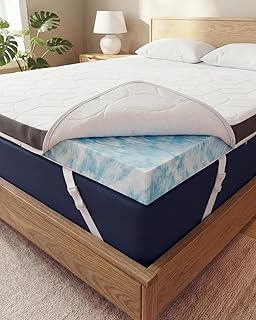
The layered design is smart engineering: two inches of gel memory foam underneath for deep pressure relief, two inches of quilted pillow top above to keep foam off your skin. It’s the best pick for chronic back pain sufferers who’ve abandoned foam toppers before because they slept too warm.
NEWDECO Twin XL Bamboo-Viscose Topper
Purpose-built for dorm beds, with a viscose-from-bamboo cover and an 8–18 inch pocket range that accommodates the thin, unpredictable mattresses in student housing. Lightweight, washable, and the most practical upgrade for a Twin XL sleeper in a room with no climate control.
Frequently Asked Questions
Do cooling toppers actually lower temperature, or just feel cool?
Both mechanisms exist. Cool-to-the-touch fabrics pull heat away on contact for the first few minutes, but the durable benefit is moisture transport — moving sweat vapor away so evaporative cooling can continue all night rather than stalling in saturated fill.
Is memory foam a mistake if I sleep hot?
Not necessarily, but it’s a trade-off. Foam insulates by design, so choose gel-infused foam paired with a breathable quilted cover, and consider the 4-inch dual-layer style that keeps a fiber barrier between you and the foam.
How thick should a cooling topper be?
For breathability alone, 1.5–2 inches of quilted fiber is plenty. For pain relief, go 3–4 inches of foam. Thicker isn’t better thermally — past about four inches you’re mostly adding insulation.
Will a topper fix a mattress that’s making me overheat?
It will substantially improve the sleep surface, but it can’t fix a sagging or worn-out mattress. If you’re waking with pain as well as heat, treat the topper as a bridge rather than a permanent solution.
Final Thoughts
For most hot sleepers, the Niagara Sleep Solution bamboo-derived rayon topper offers the best balance of cooling performance, plushness, and price, with the 100% cotton version as an equally strong alternative for anyone who prefers a natural, breathable surface. If pressure-point pain is part of the picture, the 4-inch dual-layer gel foam topper is the one I’d choose — it delivers genuine contouring while keeping foam heat at arm’s length.