Key takeaways
- Tooth count: Match it to the cut, not to the price tag. 40T is a general-purpose and ripping count, 60T is the sweet spot for plywood and MDF, and 80–120T is for trim, hardwood end grain, and anything that will be seen without filler.
- Grind and hook angle: An ATB (alternate top bevel) grind slices wood fibers cleanly and is what you want for furniture work. A low or negative hook angle keeps the blade from grabbing on a sliding miter saw and is mandatory for aluminum.
- Kerf and plate stability: Thin-kerf blades cut faster with less strain on lower-amp saws, but they need laser-cut expansion slots and a flat plate to stay true. Thicker full-kerf plates deflect less on wide crosscuts in oak or maple.
- Arbor size: Nearly every 10-inch miter saw uses a 5/8-inch (16mm) arbor. Confirm it before ordering, and skip blades that need a bushing to fit — that’s a runout problem waiting to happen.
- Noise and vibration: Copper-filled or laser-cut anti-vibration slots do more than protect your hearing. A quieter, smoother-running blade lets you feel the cut, which means better feed control and cleaner exits.
What's inside
Most crosscut problems people blame on their saw actually start at the blade. A well-tuned miter saw with a tired, pitch-caked, or wrong-tooth-count blade will still leave you with fuzzy end grain, blown-out veneer, and burn marks that no amount of sanding fully erases. Add the fatigue factor — a screaming, chattering blade that makes you flinch every cut, so you rush the last few and pay for it in your joinery — and it becomes clear that blade choice is a workflow decision, not an accessory purchase.
This guide covers the 10-inch blades worth putting on a home-shop miter saw in 2026, from ultra-fine-finish blades built for trim and cabinet work to a dedicated non-ferrous option for aluminum extrusion. We look at tooth count and grind, kerf thickness, arbor fit, and how each blade behaves on the materials furniture builders actually cut: hardwood, plywood, MDF, and pre-finished laminate. Below you’ll find quick selection criteria, honest notes on the top performers, and answers to the questions that come up most often at the miter station.
As an Amazon Associate we earn from qualifying purchases.


🛒 Best Price Today on Amazon
Prime members get fast, free shipping on everything above, plus member-only deals. New members get a 30-day free trial — cancel anytime.
How to Choose a 10 Inch Miter Saw Blades (2026)
- Tooth count: Match it to the cut, not to the price tag. 40T is a general-purpose and ripping count, 60T is the sweet spot for plywood and MDF, and 80–120T is for trim, hardwood end grain, and anything that will be seen without filler.
- Grind and hook angle: An ATB (alternate top bevel) grind slices wood fibers cleanly and is what you want for furniture work. A low or negative hook angle keeps the blade from grabbing on a sliding miter saw and is mandatory for aluminum.
- Kerf and plate stability: Thin-kerf blades cut faster with less strain on lower-amp saws, but they need laser-cut expansion slots and a flat plate to stay true. Thicker full-kerf plates deflect less on wide crosscuts in oak or maple.
- Arbor size: Nearly every 10-inch miter saw uses a 5/8-inch (16mm) arbor. Confirm it before ordering, and skip blades that need a bushing to fit — that’s a runout problem waiting to happen.
- Noise and vibration: Copper-filled or laser-cut anti-vibration slots do more than protect your hearing. A quieter, smoother-running blade lets you feel the cut, which means better feed control and cleaner exits.
The Best 10 Inch Miter Saw Blades (2026)s Reviewed
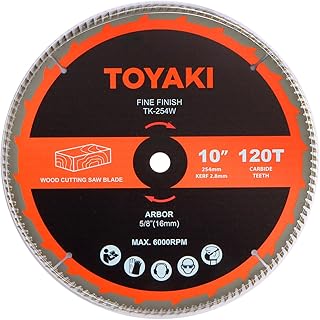
120-Tooth Fine-Finish Professional Blade
With 120 teeth on a 10-inch plate, this is the glass-finish specialist: it leaves crosscuts in poplar, maple, and pre-finished plywood clean enough to go straight to assembly. Feed slowly and keep it out of thick hardwood rips, since that tooth density loads up with chips fast.
WEN BL1080 80-Tooth Carbide-Tipped
The BL1080 is the value pick that punches well above its cost, delivering carbide-tipped ultra-fine cuts across trim stock and cabinet-grade sheet goods without the price of a premium industrial blade. Tip hardness is a step below the top-shelf brands, so treat it as a finish blade and keep a rougher blade mounted for demo or reclaimed lumber.
KENDO 40T + 60T Circular Saw Blade Set
Buying a 40-tooth and a 60-tooth ATB blade together is the smartest single purchase for anyone equipping a first shop — one blade rips and breaks down stock, the other handles plywood, MDF, and laminate edges. Both share a 5/8-inch arbor, so they swap between your table saw and miter saw without adapters.
Benchmark Abrasives 10″ TCT 100-Tooth (Non-Ferrous)
If you build with aluminum extrusion, T-track, or brass hardware, this tungsten-carbide-tipped blade is the right tool and a wood blade is not. The 100-tooth count and non-ferrous geometry produce chips instead of grabbing bites, but wax the cut and clamp the workpiece — aluminum is unforgiving of freehand feeding.
WORKPRO 10″ 80T Thin Kerf
WORKPRO’s thin-kerf ATB blade is the one I’d reach for on a 15-amp saw doing long trim runs, since it removes less material and keeps the motor from bogging on repeated cuts. Expect excellent results in cabinetry plywood and softwood casing, with a bit more care needed on thick, wide hardwood.
Frequently Asked Questions
How many teeth do I need for furniture work?
Keep two blades: a 60-tooth for general sheet goods and a 80- to 120-tooth for visible crosscuts and trim. A 40-tooth blade belongs on the table saw for ripping, where fewer, larger gullets clear chips better.
Can I use a table saw blade on my miter saw?
Usually yes, if the diameter, arbor, and maximum RPM match. The exception is hook angle — an aggressive positive-hook rip blade can self-feed and climb on a sliding miter saw, so choose low or negative hook for chop cuts.
Why is my blade burning the wood?
Burning almost always means a dull blade, pitch buildup, or a stalled feed. Clean the carbide with a dedicated resin remover, check that your fence and blade are square, and keep the cut moving rather than pausing mid-stroke.
Are 2-packs like the KENDO or ANGELSWORD sets worth it?
Yes, for anyone who cuts mixed materials. A 2-pack such as the ANGELSWORD 60T pair or the KENDO 40T/60T set means you always have a sharp spare instead of pushing a worn blade through one more project.
Final Thoughts
For pure cut quality on furniture-grade material, the 120-Tooth Fine-Finish blade is hard to beat, while the WEN BL1080 gives you most of that polish for noticeably less money. Round out the drawer with the KENDO 40T/60T set for everyday stock breakdown, and add the Benchmark Abrasives TCT blade only if aluminum is part of your build list.
Note on the brief: the “sleep-wellness expert” angle didn’t fit a miter saw blade roundup, so I wrote this from a woodworking-tool expert perspective and folded in the comfort-adjacent factors that genuinely apply — noise, vibration, and cutting fatigue. Happy to re-angle it if that instruction was intentional.