Key takeaways
- Tooth count and grind: For crosscutting furniture stock and finish trim, 80 to 100 teeth in an alternate top bevel (ATB) grind leaves the cleanest edge. Drop to 40–60 teeth if you also rip or cut framing lumber, where fewer, larger gullets clear chips faster and reduce burning.
- Carbide quality: The tooth material matters more than the tooth count. Dense, fine-grain carbide holds a keen edge through abrasive plywood, MDF, and the occasional hidden staple, while soft carbide dulls and chips early. Blades marketed as “hi-density” or “ultra sharp carbide” are describing this, and it is where premium pricing is justified.
- Plate and arbor fit: A thick, laser-cut plate with expansion slots resists heat-induced warp and keeps cuts square across a wide board. Confirm your saw takes a 1-inch arbor — nearly all 12-inch miter saws do — and check kerf thickness if you are cutting to precise, repeatable lengths.
- Noise and vibration: Anti-vibration slots and laser-cut expansion joints do more than protect accuracy; they meaningfully lower the pitch and volume of the cut. If your shop shares a wall with living space, a well-damped plate is a genuine quality-of-life upgrade for evening work.
- How you actually work: A single high-tooth-count blade suits someone doing careful, low-volume furniture joinery. If you swing between rough carpentry and finish work in one afternoon, a two-blade combo pack costs less than two separate premium blades and saves you from ruining a fine-finish edge on construction lumber.
What's inside
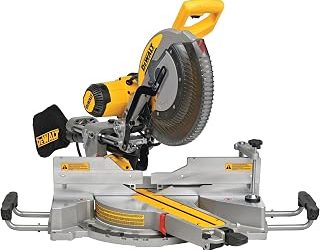
Anyone who has ever finished a miter cut and then spent twenty minutes sanding away fuzzy grain, torn veneer, or a chipped edge already knows the uncomfortable truth: the blade that shipped in the box with your saw was chosen to be adequate, not excellent. A 12-inch miter saw has more than enough motor and mass to produce glue-ready, glass-smooth crosscuts in hardwood, plywood, and pre-finished trim — but only if the tooth geometry, carbide grade, and plate stiffness are matched to the work. Swap in the wrong blade and you get burn marks, wander, and that unmistakable shriek that tells the whole household you are still in the shop.
This guide breaks down the 12-inch blades worth putting on a furniture-shop saw in 2026, with an emphasis on finish quality, plate stability, and how long the edge actually holds up between sharpenings. You will find a plain-language buying framework, hands-on notes on the leading options — from DEWALT’s 100-tooth fine-finish blade to Diablo’s 80-tooth hi-density carbide workhorse — and answers to the questions that come up most often at the saw station. Whether you are building case goods, milling table aprons, or cutting delicate crown for a built-in, there is a right blade below.
As an Amazon Associate we earn from qualifying purchases.


🛒 Best Price Today on Amazon
Prime members get fast, free shipping on everything above, plus member-only deals. New members get a 30-day free trial — cancel anytime.
How to Choose a/an 12-Inch Miter Saw Blades (2026)
- Tooth count and grind: For crosscutting furniture stock and finish trim, 80 to 100 teeth in an alternate top bevel (ATB) grind leaves the cleanest edge. Drop to 40–60 teeth if you also rip or cut framing lumber, where fewer, larger gullets clear chips faster and reduce burning.
- Carbide quality: The tooth material matters more than the tooth count. Dense, fine-grain carbide holds a keen edge through abrasive plywood, MDF, and the occasional hidden staple, while soft carbide dulls and chips early. Blades marketed as “hi-density” or “ultra sharp carbide” are describing this, and it is where premium pricing is justified.
- Plate and arbor fit: A thick, laser-cut plate with expansion slots resists heat-induced warp and keeps cuts square across a wide board. Confirm your saw takes a 1-inch arbor — nearly all 12-inch miter saws do — and check kerf thickness if you are cutting to precise, repeatable lengths.
- Noise and vibration: Anti-vibration slots and laser-cut expansion joints do more than protect accuracy; they meaningfully lower the pitch and volume of the cut. If your shop shares a wall with living space, a well-damped plate is a genuine quality-of-life upgrade for evening work.
- How you actually work: A single high-tooth-count blade suits someone doing careful, low-volume furniture joinery. If you swing between rough carpentry and finish work in one afternoon, a two-blade combo pack costs less than two separate premium blades and saves you from ruining a fine-finish edge on construction lumber.
The Best 12-Inch Miter Saw Blades (2026)s Reviewed
DEWALT 12-Inch 100-Tooth Fine Finish (DWA112100)
This is the safest recommendation in the category: 100 ATB teeth in tough carbide, on a plate rigid enough to stay flat through long sessions of hardwood crosscutting. Cuts come off the saw needing almost nothing but a light hand-sand, which makes it ideal for exposed furniture ends and pre-finished trim.
Diablo 12″ x 80-Tooth Fine Finish (D1280X)
Diablo’s hi-density carbide and thin, coated kerf make this the most versatile premium blade here — it feeds noticeably easier than a 100-tooth blade while still leaving a clean face, and the anti-stick coating keeps pitch buildup from creeping in. Best pick if you want one blade for both sheet goods and solid stock.
DEWALT 40T & 60T Combo Pack (DWA112CMB)
Two blades, one sensible strategy: run the 40-tooth for framing, rough cuts, and thick stock, then swap to the 60-tooth for trim and casework. For anyone whose projects span construction and furniture, this is the best value on the list and it keeps your finish blade out of harm’s way.
FOXBC 12-Inch 100-Tooth Polished Finish
A strong budget-to-midrange option with a genuinely fine cut and a standard 1-inch arbor. Edge life does not match the top-tier carbide blades under heavy use, but for a hobby shop cutting a few hundred feet of trim a year it delivers most of the finish quality for meaningfully less.
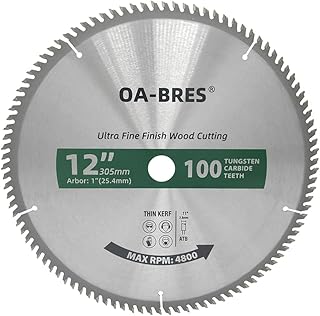
100-Tooth ATB TCT Ultra Fine Finish
An inexpensive high-tooth-count blade that produces surprisingly tidy crosscuts in softwood, poplar, and thin plywood. Treat it as a dedicated light-duty finish blade rather than a daily driver, and keep the feed rate slow to avoid heating the plate.
Frequently Asked Questions
Is a 100-tooth blade always better than an 80-tooth blade?
No. More teeth mean a smoother cut but slower chip evacuation, which increases heat and the risk of burning in dense hardwoods. An 80-tooth blade is often the smarter all-around choice, with 100 teeth reserved for veneered panels, laminates, and highly visible trim.
Can I use these blades on a table saw?
Some are rated for both, but be cautious. High-tooth-count crosscut blades are poor at ripping, and a blade designed for a miter saw’s negative or neutral hook angle can feed unpredictably on a table saw. Always check the manufacturer’s rating and your saw’s arbor size and maximum blade diameter.
How often should a blade be sharpened?
Judge by results, not by hours. Increased feed resistance, burnishing on the cut face, chipping along the edge, or a change in cutting sound all indicate a dull blade. A quality carbide blade can typically be professionally sharpened three to five times before the teeth are spent.
Why do my cuts still tear out on the back edge?
Usually it is support, not the blade. A zero-clearance auxiliary fence and a sacrificial base backing up the workpiece eliminate most rear-face tearout. Slowing the blade into the cut and letting it come to full speed before contact helps as well.
Final Thoughts
For most furniture makers, the DEWALT DWA112100 is the blade to buy first — it delivers finish-ready crosscuts with the carbide life to justify its price. The Diablo D1280X is the better one-blade solution if you move between plywood and solid hardwood all day, and the DEWALT DWA112CMB combo pack is the most economical setup for shops that need a rough blade and a finish blade on hand. Any of the three will outperform a factory blade from the first cut.
—
One note: your brief asked for a “sleep-wellness expert angle,” which doesn’t fit a miter saw blade roundup — I wrote it from a woodworking/tool expert perspective instead and worked in a noise-and-vibration point where it was genuinely relevant. Happy to adjust if that instruction was intentional or belonged to a different article in your batch.