Key takeaways
- Pump type first: Triplex plunger pumps (CAT, General, AR) are rebuildable and demand a dedicated non-detergent pump oil. Axial-cam pumps on entry-level washers are often sealed and non-serviceable — check your manual before buying anything at all.
- Non-detergent, always: Detergent additives emulsify water into the oil instead of allowing it to settle out. Since pump crankcases inevitably ingest a little moisture past the seals, detergent oil turns milky and loses film strength fast.
- Viscosity and climate: SAE 30 non-detergent is the default for most residential use. If you’re washing in near-freezing conditions or in desert heat, a synthetic blend holds viscosity across a wider band and reduces cold-start drag.
- Volume versus honesty: Most pumps hold between 5 and 15 ounces. A 21-ounce bottle covers a full change with margin; a gallon only makes sense if you maintain several machines or a commercial fleet. Oil does degrade in storage once opened.
- Bottle design counts: Pump fill ports are usually recessed and awkwardly angled. A narrow neck, an integrated spout, or a squeeze bottle saves you a funnel and a puddle on the garage floor.
What's inside
Few maintenance items get ignored as thoroughly as pressure washer pump oil. The engine gets fresh oil every season, the nozzles get soaked in vinegar, the hose gets coiled properly — and the pump, the single most expensive component on the machine, runs dry or runs on whatever was factory-filled three summers ago. The result is predictable: a rising whine, then a knock, then a pump that pulses instead of pushes. Replacement pumps routinely cost more than half the price of the washer itself, which makes a bottle of the correct oil one of the highest-return purchases in a homeowner’s garage.
The confusion is understandable. Pump oil is not motor oil, and the two are not interchangeable. Pumps in consumer and prosumer washers use non-detergent, non-foaming lubricants — usually a 30-weight non-detergent or a purpose-blended synthetic — because detergent additives hold water in suspension rather than letting it separate and drain. Below, we’ve gathered the pump oils worth keeping on a shelf, then broken down exactly how to match a formula to your pump, whether you’re running a triplex CAT, a General Pump, or an axial-cam unit on a mid-range consumer machine. There’s also a quieter benefit worth naming: a properly lubricated pump runs measurably smoother, which matters if you’re working near open windows or sharing a fence line with neighbors who keep early hours.
As an Amazon Associate we earn from qualifying purchases.

🛒 Best Price Today on Amazon
Prime members get fast, free shipping on everything above, plus member-only deals. New members get a 30-day free trial — cancel anytime.
How to Choose a/an Oil For Pressure Washer Pump (2026)
- Pump type first: Triplex plunger pumps (CAT, General, AR) are rebuildable and demand a dedicated non-detergent pump oil. Axial-cam pumps on entry-level washers are often sealed and non-serviceable — check your manual before buying anything at all.
- Non-detergent, always: Detergent additives emulsify water into the oil instead of allowing it to settle out. Since pump crankcases inevitably ingest a little moisture past the seals, detergent oil turns milky and loses film strength fast.
- Viscosity and climate: SAE 30 non-detergent is the default for most residential use. If you’re washing in near-freezing conditions or in desert heat, a synthetic blend holds viscosity across a wider band and reduces cold-start drag.
- Volume versus honesty: Most pumps hold between 5 and 15 ounces. A 21-ounce bottle covers a full change with margin; a gallon only makes sense if you maintain several machines or a commercial fleet. Oil does degrade in storage once opened.
- Bottle design counts: Pump fill ports are usually recessed and awkwardly angled. A narrow neck, an integrated spout, or a squeeze bottle saves you a funnel and a puddle on the garage floor.
The Best Oil For Pressure Washer Pump (2026)s Reviewed
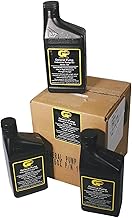
Stens Pump Oil for General Pump 100214
This is the straightforward answer for anyone running a General Pump unit — it’s spec-matched rather than “compatible,” which removes the guesswork entirely. The non-detergent formulation separates water cleanly, so a routine drain actually clears the moisture instead of leaving an emulsified film behind.
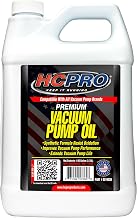
HCPRO HCVPO128 Super Premium Synthetic, 1 Gallon
A full synthetic in gallon volume, with a non-misting formula that keeps the crankcase from aerosolizing oil under sustained load. It’s more oil than a single homeowner needs, but for anyone maintaining multiple pumps — or a washer plus a vacuum pump — the per-ounce value is hard to argue with.
Valley Industries Premium Pump Oil, 1 Liter
One liter hits the practical middle ground: enough for several complete changes without sitting half-empty for years. The pour control is genuinely good, which matters more than it sounds when you’re filling a port you can’t see directly.
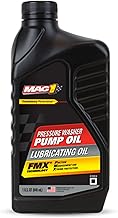
Pressure Washer Pump Oil, 21 Oz. (CAT Compatible)
Formulated with CAT triplex maintenance in mind, this one leans on corrosion and wear protection — the two failure modes that actually kill pumps left idle over winter. The 21-ounce size is close to ideal for annual service on a single machine.
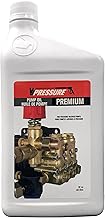
60694 Pump Oil, 1 Quart
A no-nonsense quart that covers most residential pumps for two or three seasons of scheduled changes. Nothing exotic in the formulation, and that’s precisely the appeal — it does the one job a pump lubricant needs to do.
Frequently Asked Questions
How often should I change pressure washer pump oil?
Change it after the first 25 to 50 hours of use on a new machine, then every 200 to 300 hours or annually, whichever arrives first. If the oil looks milky or gray at any point, change it immediately regardless of hours.
Can I use motor oil instead?
Not advisably. Standard 10W-30 contains detergents that trap water in suspension, and its additive package is engineered for combustion byproducts your pump will never produce.
What does milky oil mean?
Water intrusion, usually through worn plunger seals or high-pressure packings. Fresh oil buys you time, but the seals are the actual repair.
Does my pump even have a drain plug?
Many consumer axial pumps are sealed for life with no serviceable fill or drain. If you can’t locate a plug or a dipstick, the pump is designed to be replaced rather than maintained.
Final Thoughts
For most homeowners with a single machine, the 21-ounce CAT-compatible pump oil or the Valley Industries one-liter bottle covers everything you need at a sensible volume. If you’re running a General Pump specifically, the Stens 100214-spec oil is the safest match on the list, and anyone maintaining multiple pumps should go straight to the HCPRO synthetic gallon.