Key takeaways
- Sleep surface over seat count: A 99-inch sectional can still yield a narrow bed. Check the stated open sleeping dimensions, not the sofa’s overall width, and aim for at least 52 inches across if two adults will share it.
- Bar-free construction: Traditional folding frames put a steel crossbar directly under the lumbar region. Boneless and pull-out-platform designs distribute weight more evenly and are markedly kinder to the lower back over multiple nights.
- Thermal regulation: Core body temperature needs to drop roughly 1–2°F to initiate sleep. Chenille and corduroy trap heat more than woven linen blends, so plan on breathable cotton or bamboo sheets rather than adding a synthetic mattress topper.
- Clearance and orientation: Measure the pull-out projection, then add 24 inches for walking room. Reversible chaise configurations matter more than aesthetics here — they let you place the bed away from a doorway or window draft.
- Hygiene and maintenance: Sleeping surfaces accumulate skin cells and moisture. Removable, machine-washable covers and zip-off cushion casings are the single most underrated feature at this price point, particularly for allergy sufferers.
Most guest-room mattresses fail for a reason nobody mentions at the checkout page: they were designed to fold, not to support. A sleeper sofa has to solve two competing problems at once — hold a seated body upright for hours of TV, then hold a horizontal body in neutral spinal alignment for eight. Under $1,000, manufacturers usually solve the first and quietly abandon the second, which is why so many people wake on a pull-out couch with a stiff lower back and blame the guest, the pillow, or their age.
This guide takes a sleep-quality view of the budget sleeper-sofa market for 2026. Rather than ranking by looks alone, I’ve weighed sleeping-surface depth, the presence (or absence) of a metal bar under the shoulders and hips, upholstery breathability, and whether the bed can actually be opened in a small room without dragging furniture across the floor. Six current models are compared below, with notes on who each one genuinely suits — occasional overnight guests, a nightly sleeper, or a household where the sofa doubles as a child’s landing pad.
Our top picks



As an Amazon Associate we earn from qualifying purchases at no extra cost to you. Ratings are shown as listed on Amazon.
🛒 Best Price Today on Amazon
Prime members get fast, free shipping on everything above, plus member-only deals. New members get a 30-day free trial — cancel anytime.
How to Choose a Sleeper Sofa Under $1,000 (2026)
- Sleep surface over seat count: A 99-inch sectional can still yield a narrow bed. Check the stated open sleeping dimensions, not the sofa’s overall width, and aim for at least 52 inches across if two adults will share it.
- Bar-free construction: Traditional folding frames put a steel crossbar directly under the lumbar region. Boneless and pull-out-platform designs distribute weight more evenly and are markedly kinder to the lower back over multiple nights.
- Thermal regulation: Core body temperature needs to drop roughly 1–2°F to initiate sleep. Chenille and corduroy trap heat more than woven linen blends, so plan on breathable cotton or bamboo sheets rather than adding a synthetic mattress topper.
- Clearance and orientation: Measure the pull-out projection, then add 24 inches for walking room. Reversible chaise configurations matter more than aesthetics here — they let you place the bed away from a doorway or window draft.
- Hygiene and maintenance: Sleeping surfaces accumulate skin cells and moisture. Removable, machine-washable covers and zip-off cushion casings are the single most underrated feature at this price point, particularly for allergy sufferers.
The Best Sleeper Sofas Under $1,000 (2026) Reviewed
99″ L-Shaped Convertible Sleeper Sofa with Storage Chaise
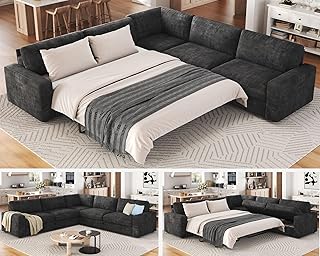
This is the most complete package in the group: a genuinely adult-sized pull-out bed, a storage chaise deep enough to hold spare bedding and pillows where you actually need them, and washable chenille covers that make long-term hygiene realistic. The USB and Type-C ports are a small but meaningful touch, since they let a guest charge a phone across the room instead of on the mattress beside their head.
Txtin’s 112″ U-Shaped Sleeper Sofa
The widest option here, and the right choice if the sofa is a family gathering point by day and a bed by night — the U-shape means the pull-out section doesn’t strand anyone. The warm white chenille reads as calm rather than clinical, though I’d budget for a washable throw over the highest-traffic corner.
2-in-1 Sectional Sleeper Sofa with Double Storage Chaise
Two storage compartments instead of one makes this the strongest pick for small homes where linens have nowhere else to live, and keeping bedding sealed away limits dust exposure between visits. The dark grey upholstery hides wear well, which matters if the bed converts several times a week.
Aiho 78″ Sectional Sleeper with Adjustable Backrest
The adjustable backrest is the standout feature from a sleep-hygiene perspective: it supports a semi-reclined position for reading without encouraging the head-forward slump that leaves people stiff before they even lie down. At 78 inches it’s the sensible ceiling for apartments where a full sectional would dominate the room.
77″ Corduroy L-Shaped Pull-Out Sofa Bed
A tidy footprint, a storage chaise, and corduroy that resists pet hair better than most napped fabrics — a practical combination for a guest room that doubles as a dog’s preferred nap spot. Assembly is straightforward, and the compact scale means the bed can be opened without relocating a coffee table.
Frequently Asked Questions
Can a sleeper sofa be used every night?
Only if it’s a bar-free or boneless design with a continuous sleeping surface. Traditional folding-frame models are best reserved for a few nights at a time; nightly use on one tends to produce morning lower-back stiffness within weeks.
Do I need a mattress topper?
A 2-inch latex or wool topper improves pressure distribution without much heat retention. Thick memory foam is a common mistake — it traps warmth against an already poorly ventilated surface and can fragment sleep.
How do I keep a sleeper sofa clean?
Wash removable covers every few months, vacuum the mattress cavity with an upholstery attachment whenever it’s open, and air the bed for an hour before folding it away so trapped moisture doesn’t linger.
Is chenille or corduroy better?
Corduroy sheds pet hair and debris more easily; chenille feels softer and often comes with washable covers. Both retain heat, so the fabric matters less than your choice of bedding.
Final Thoughts
For most buyers, the 99″ L-shaped convertible offers the best balance of usable bed width, storage, and washable upholstery under $1,000. Choose the Txtin’s 112″ U-shaped model if seating capacity is the priority, or the Aiho 78″ sectional if you’re working with limited floor space and want adjustable back support for daytime use — in all three cases, pair the purchase with breathable sheets and a thin natural-fiber topper, and the sleep quality will rival a spare bedroom.