Key takeaways
- Flatness over softness: A firm deck that lies dead level will out-sleep a plush one with a dip or a raised hinge every time. Before buying, look for a continuous extending platform rather than a two-piece fold, and check where the seam lands relative to a sleeper’s lower back.
- Sleep width, not sofa length: Overall width tells you about your wall; the extended sleep surface tells you about your night. Roughly 30 inches per adult is the comfort floor, so a 77-inch loveseat sleeper suits one adult or a child comfortably, while true two-adult use wants a queen-equivalent footprint.
- Motor count and independence: Multiple motors let the backrest, headrest, and footrest move separately, which matters for reading, congestion, and reflux — all common reasons people sleep badly on a couch. One motor driving everything at once limits you to preset shapes.
- Power routing and light discipline: USB-C, wireless pads, and outlets are genuinely useful at a bedside, but check for always-on LED indicators. A pinpoint of blue light at eye level is an underrated sleep disruptor; tape or a well-placed cushion solves it, though good design shouldn’t require either.
- Clearance and upholstery breathability: Zero-wall designs recline without being pulled forward, a real advantage in tight rooms. On fabric, velvet feels warm and traps heat, while breathable leather-look surfaces sleep cooler but need a fitted sheet to avoid clamminess.
A sofa bed asks one piece of furniture to do two jobs that pull in opposite directions. A sofa wants a firm, upright deck that holds its shape under nightly sitting; a bed wants an even, pressure-relieving surface that lets your shoulders and hips sink without your spine twisting. For decades the compromise was a thin innerspring pad folded over a steel bar you could feel through your ribs at 3 a.m. Electric models change that equation. When motors do the unfolding, designers no longer have to build the frame around a hinge that a human can wrestle open, which frees up room for thicker cushioning, flatter sleep decks, and adjustable backrests that double as reading positions.
This guide looks at the current crop of electric sofa beds through a sleep-quality lens rather than a showroom one: how flat the surface actually lies, whether the seam between sections falls under your torso or your knees, how much usable sleep width you get per inch of wall space, and which convenience features earn their keep versus which ones simply add another thing to break. Below you’ll find the picks, followed by a buying framework and answers to the questions that come up most often once the box is unpacked.
Our top picks



As an Amazon Associate we earn from qualifying purchases at no extra cost to you.
🛒 Best Price Today on Amazon
Prime members get fast, free shipping on everything above, plus member-only deals. New members get a 30-day free trial — cancel anytime.
How to Choose an Electric Sofa Bed (2026)
- Flatness over softness: A firm deck that lies dead level will out-sleep a plush one with a dip or a raised hinge every time. Before buying, look for a continuous extending platform rather than a two-piece fold, and check where the seam lands relative to a sleeper’s lower back.
- Sleep width, not sofa length: Overall width tells you about your wall; the extended sleep surface tells you about your night. Roughly 30 inches per adult is the comfort floor, so a 77-inch loveseat sleeper suits one adult or a child comfortably, while true two-adult use wants a queen-equivalent footprint.
- Motor count and independence: Multiple motors let the backrest, headrest, and footrest move separately, which matters for reading, congestion, and reflux — all common reasons people sleep badly on a couch. One motor driving everything at once limits you to preset shapes.
- Power routing and light discipline: USB-C, wireless pads, and outlets are genuinely useful at a bedside, but check for always-on LED indicators. A pinpoint of blue light at eye level is an underrated sleep disruptor; tape or a well-placed cushion solves it, though good design shouldn’t require either.
- Clearance and upholstery breathability: Zero-wall designs recline without being pulled forward, a real advantage in tight rooms. On fabric, velvet feels warm and traps heat, while breathable leather-look surfaces sleep cooler but need a fitted sheet to avoid clamminess.
The Best Electric Sofa Beds of 2026, Reviewed
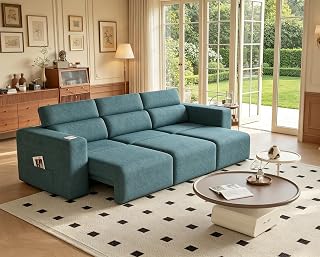
103″ Electric Pull-Out Sleeper Sofa Bed (Velvet Beige)
Three independent motors and a genuinely wide backrest make this the most versatile pick for people who use a sofa bed several nights a week rather than twice a year. The velvet is cozy but runs warm, so pair it with a percale or bamboo sheet if you sleep hot.
122″ Electric Pull-Out Sleeper with Bluetooth and Wireless Charging
The extra footprint buys you a modular layout and a sleep surface that comfortably handles two adults without either person straddling a seam. Treat the onboard stereo as a wind-down tool for low-volume audio, not a home-theater centerpiece, and it earns its place.
Power Recliner Sofa with Adjustable Headrest and Type-C Ports
The separately adjustable headrest is the standout here: being able to fine-tune neck angle independently of the backrest is what makes a reclined position sustainable for an hour of reading instead of ten minutes. Port selection is current-generation, which is rarer than it should be.
FLEXISPOT Zero Wall Power Sofa Bed with Storage Chaise
The zero-wall mechanism means you can place it within an inch or two of the wall and still recline fully, and the storage chaise gives bedding a home so it isn’t living in a closet down the hall. The L-shaped layout is the smartest use of a small living room on this list.
Queen Sleeper Sofa Bed, 77″ Pull-Out Couch
A compact 3-in-1 that punches above its footprint, converting from loveseat to lounger to a queen-width sleep surface — useful in RVs, studios, and home offices doing double duty. Sitting comfort is firmer than the larger picks, which is exactly what you want for a flat overnight surface.
Frequently Asked Questions
Can you sleep on an electric sofa bed every night?
You can, provided the extended deck lies flat and the cushioning is at least four inches thick with no hinge under your torso. For nightly use, add a two- to three-inch topper; it costs little and closes most of the gap between a convertible and a proper mattress.
What happens during a power outage?
Most models include a manual release or a battery backup pack that gives you enough charge to lower the frame. Confirm which system yours uses when you assemble it, not at midnight in the dark.
Do the electronics affect sleep quality?
Only through light and habit. Motors draw power just briefly, but standby indicator lights and an easily reachable charging pad can quietly encourage late scrolling — position the sofa so screens end the evening face-down and away from arm’s reach.
How much clearance do I need behind and in front?
Zero-wall reclining designs need only an inch or two behind, while conventional mechanisms want six to eight. Pull-out sleepers need front clearance roughly equal to the extended depth, typically 30 to 40 inches, plus walking room.
Final Thoughts
For most homes, the 103″ three-motor velvet sleeper strikes the best balance of adjustability and flat-lying sleep surface, while the FLEXISPOT Zero Wall sectional is the smarter buy in tight rooms where storage and wall clearance matter as much as comfort. If space is genuinely limited, the 77″ queen sleeper delivers a surprisingly honest night’s sleep from a loveseat-sized footprint.