Key takeaways
- CoolNest System for a Cooler Night - The…
- 5-Zone Support for Pressure Relief - Engineered with…
- Motion Isolation for Undisturbed Sleep - Constructed with…
A king mattress is the one purchase where budget shoppers feel the squeeze hardest. You’re buying 6,080 square inches of sleep surface — roughly twice the material of a twin — and the price tags in showrooms often start where your entire budget ends. So the temptation is to stretch the credit card, or worse, to grab whatever ships fastest and hope your lower back forgives you. Neither is necessary. The compressed-shipping model has quietly rewritten the math on large mattresses, and a sub-$500 king in 2026 is no longer a compromise so much as a different set of trade-offs you get to choose deliberately.
In my work reviewing sleep surfaces, the sub-$500 king category separates into two honest camps: all-foam beds that excel at motion isolation and contouring, and entry-level hybrids that trade a little quiet for noticeably better edge support and airflow. Below, I’ve broken down the specification details that actually change how you sleep, then reviewed the standout models currently landing under budget — including 16-inch luxury hybrids, cooling gel foam builds, and green-tea-infused options with real CertiPUR-US certification behind them.
Our top picks


 King Size Mattress
- CoolNest System for a Cooler Night - The…
- 5-Zone Support for Pressure Relief - Engineered with…
- Motion Isolation for Undisturbed Sleep - Constructed with…

As an Amazon Associate we earn from qualifying purchases at no extra cost to you.
🛒 Best Price Today on Amazon
Prime members get fast, free shipping on everything above, plus member-only deals. New members get a 30-day free trial — cancel anytime.
How to Choose a King Mattress Under $500 (2026)
- Match construction to your sleep style: Side sleepers and light-sleeping couples usually do better on memory foam, which absorbs movement and cradles the shoulder and hip. Back sleepers, stomach sleepers, and anyone over roughly 230 lbs typically need the pushback of pocket springs to keep the spine from sagging into a hammock shape.
- Treat height as a proxy for layering, not luxury: A 10-inch bed can be excellent, but 12 to 16 inches usually means a thicker comfort layer sitting above a proper support core. If you already own deep-pocket sheets, taller profiles are the safer bet; standard sheets will fight a 16-inch build.
- Insist on zoned support in a king: Because king mattresses span such a wide surface, unzoned cores tend to develop uneven wear where two bodies habitually rest. Five- and seven-zone designs firm up the lumbar region while softening at the shoulders — a genuine engineering feature, not marketing garnish.
- Verify certifications and fiberglass policy in writing: CertiPUR-US confirms the foam was made without ozone depleters, certain flame retardants, or heavy metals. Separately, look for an explicit “fiberglass-free” claim, since fiberglass fire barriers can shed catastrophically if the cover is ever unzipped.
- Read the trial period, not just the warranty: Your body needs roughly two to four weeks to adapt to a new surface, so anything under a 100-night trial is thin protection. A 365-night trial is the strongest signal a brand expects you to keep the bed.
The Best King Mattresses Under $500 Reviewed
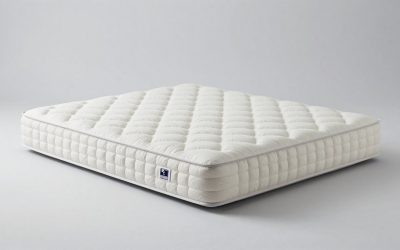
16 Inch Luxury Hybrid King with 7-Zone Support
This is the most ambitious build in the category: a genuinely plush 16-inch profile pairing a thick foam comfort stack with seven-zone pocketed coils, which is why it manages medium-firm feel without the dead, sinking sensation cheap foam beds develop. The 365-night trial makes it the low-risk choice for couples who can’t agree on firmness and need real time to negotiate.
COOL GEL Memory Foam 10-Inch King
A straightforward, well-executed all-foam bed for shoppers who want quiet contouring and nothing they’ll never use. At 10 inches it works best for average-weight side and back sleepers, and it’s the strongest option here for a guest room or a platform bed where a towering profile would look out of place.
EGOHOME 12 Inch Green Tea Memory Foam King
The green-tea and gel infusion addresses memory foam’s two classic complaints — heat retention and off-gassing odor — while the 12-inch medium-firm build lands close to the neutral middle most sleepers tolerate. CertiPUR-US certified and explicitly fiberglass-free, it’s my pick for the cautious first-time foam buyer.
14 Inch Hybrid King with Individual Pocket Springs
Zoned back support and individually wrapped coils give this one the spinal alignment and edge stability that stomach sleepers and heavier sleepers genuinely need, with enough foam above to keep pressure off the hips. Motion isolation is respectable for a spring bed, though not foam-quiet.
Sweetnight CoolNest 14 Inch King
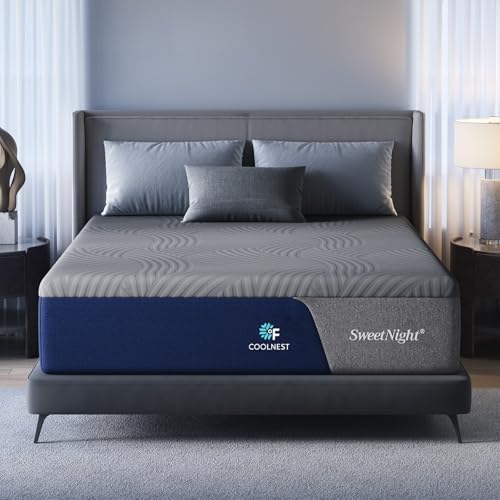
Sweetnight’s five-zone ergonomic layout and breathable cooling construction target hot sleepers who still prefer the hug of foam over the lift of coils. The medium feel is forgiving across positions, making it a sensible default when you’re buying for two people with different habits.
Frequently Asked Questions
Can a king mattress under $500 actually last?
Expect six to eight years of solid service with proper support, versus roughly ten from a premium bed. Foam density is the limiting factor, and the fastest way to shorten that lifespan is an inadequate frame — kings need center support and slats no more than three inches apart.
How long should I let a boxed mattress expand?
Most reach usable shape within a few hours, but give it a full 24 to 72 hours before judging firmness. Ventilate the room during that window; any initial odor from CertiPUR-US foam is harmless and typically clears within a couple of days.
Is a hybrid worth it over foam at this price?
If you sleep on your back or stomach, weigh more than about 230 lbs, or frequently sit on the edge of the bed, yes — the coils provide lift that budget foam can’t replicate. If you share the bed with a restless partner, foam’s motion isolation may matter more.
Do I need a box spring?
No. These beds are designed for platform frames, bunkie boards, or closely spaced slats. A traditional bouncy box spring can void warranties and accelerate sagging.
Final Thoughts
For most households, the 16-inch 7-zone luxury hybrid delivers the most mattress per dollar here, and its 365-night trial removes nearly all of the guesswork. Hot sleepers who prefer foam should look hard at the EGOHOME 12-inch green tea model or the Sweetnight CoolNest, both of which handle heat far better than the category average — and remember that whichever you choose, a supportive frame is what turns a budget king into a bed you’ll still like in year five.