Key takeaways
- Dual motor over single motor: A single-motor chair moves the back and footrest together on a fixed arc, so you cannot fine-tune your angle. Dual motors let you drop the backrest to near-flat while keeping the legs raised — the configuration that actually helps reflux, edema, and positional apnea.
- True lay-flat vs. marketing “lay-flat”: Look for a stated recline angle of 175 degrees or more. Anything in the 140–160 range is a napping chair. If you plan to sleep nightly, insist on the flatter spec and check that the footrest extends far enough to support your heels rather than your calves.
- Lumbar continuity and heat: Sit and slide a hand behind your lower back. Any gap becomes an ache overnight. Built-in lumbar heat is genuinely useful here — gentle warmth reduces paraspinal muscle guarding, which is often what wakes people at the 3 a.m. mark.
- Dimensions matched to your body: Seat width of 24–26 inches suits broader frames; taller users need a back height and footrest extension rated for their height, not a generic “big and tall” label. Confirm the weight capacity with a margin, since repeated lift cycles stress the mechanism.
- Overnight practicalities: USB-A and USB-C ports keep a CPAP remote, phone, or reading light within reach. Cupholders and side pockets prevent the 2 a.m. stumble for water or medication. A quiet motor matters more than buyers expect — a loud actuator will wake a partner sleeping nearby.
What's inside
Plenty of people end up sleeping in a recliner not because they want to, but because lying flat in bed has stopped working. Post-surgical restrictions, reflux that flares the moment the head drops, chronic back pain, swollen legs, sleep apnea that worsens on the back, or simply the effort of getting out of a low mattress — all of these push sleep out of the bedroom and into the living room. The problem is that most recliners are engineered for an evening of television, not seven hours of restorative sleep. Shallow recline angles, a hinge that leaves a gap under the lumbar spine, and cushioning that bottoms out by 2 a.m. are the usual culprits behind waking up stiffer than you went down.
From a sleep-wellness standpoint, a recliner you can genuinely sleep in needs three things: a torso-to-thigh angle that opens rather than folds, continuous support with no pressure gap behind the lower back, and a foam density that holds its shape under sustained load. This guide covers what to look for in 2026, then reviews the lift chairs, zero-gravity models, and rockers that hold up under real overnight use — including options built for taller and heavier bodies, where most standard recliners fail first.
As an Amazon Associate we earn from qualifying purchases.


🛒 Best Price Today on Amazon
Prime members get fast, free shipping on everything above, plus member-only deals. New members get a 30-day free trial — cancel anytime.
How to Choose a/an Recliner Chair To Sleep In (2026)
- Dual motor over single motor: A single-motor chair moves the back and footrest together on a fixed arc, so you cannot fine-tune your angle. Dual motors let you drop the backrest to near-flat while keeping the legs raised — the configuration that actually helps reflux, edema, and positional apnea.
- True lay-flat vs. marketing “lay-flat”: Look for a stated recline angle of 175 degrees or more. Anything in the 140–160 range is a napping chair. If you plan to sleep nightly, insist on the flatter spec and check that the footrest extends far enough to support your heels rather than your calves.
- Lumbar continuity and heat: Sit and slide a hand behind your lower back. Any gap becomes an ache overnight. Built-in lumbar heat is genuinely useful here — gentle warmth reduces paraspinal muscle guarding, which is often what wakes people at the 3 a.m. mark.
- Dimensions matched to your body: Seat width of 24–26 inches suits broader frames; taller users need a back height and footrest extension rated for their height, not a generic “big and tall” label. Confirm the weight capacity with a margin, since repeated lift cycles stress the mechanism.
- Overnight practicalities: USB-A and USB-C ports keep a CPAP remote, phone, or reading light within reach. Cupholders and side pockets prevent the 2 a.m. stumble for water or medication. A quiet motor matters more than buyers expect — a loud actuator will wake a partner sleeping nearby.
The Best Recliner Chairs To Sleep In (2026) Reviewed
Dual Motor 26″ Extra Wide Power Lift Recliner with Zero Gravity
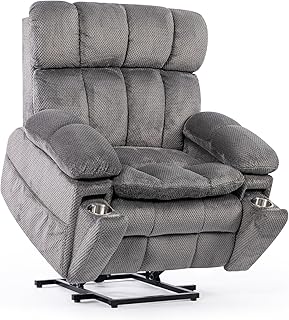
The most complete overnight package here: 26 inches of seat width, independent back and leg control, a lay-flat position, and a zero-gravity preset that elevates the knees above the heart to help with fluid pooling. The flip-arm storage and headrest adjustment are small touches that matter when the chair is doubling as a nightstand and a bed.
Oversized Dual Motor Lay Flat Power Lift Recliner (Grey)
Infinite-position adjustment is the standout feature — rather than choosing between three presets, you can dial in the precise angle where your reflux or breathing settles, then leave it there. The generous frame suits larger sleepers who tend to bottom out standard cushioning within a few months.
EONIX Dual Motor Zero Gravity Recliner (Navy Blue)
A strong mid-range choice with genuinely independent backrest and footrest motors, plush padding that resists flattening, and lumbar heat placed where it actually does something. The narrower footprint makes it the sensible pick for a bedroom corner rather than a wide living room.
MCombo Lift Chair for Tall Users (6’6″)
Height, not width, is the usual failure point for tall sleepers, and this model addresses it with an extended back and longer footrest so the head and heels are both supported. Faux leather wipes clean easily, which is a practical advantage during recovery periods.
Korser 360° Swivel Rocker Recliner with Massage and Heat
Manual rather than powered, this is the value option — best for lighter sleepers, nursing parents, and anyone who finds gentle rocking sleep-inducing. It will not reach a true flat position, so treat it as a semi-upright sleeping chair rather than a bed replacement.
Frequently Asked Questions
Is sleeping in a recliner every night bad for you?
Not inherently, and for reflux, post-surgical recovery, or heart failure it is often the better option. The risks are circulatory: prolonged hip and knee flexion can contribute to stiffness and, rarely, clot formation. Keep the legs elevated rather than dangling, change position when you wake, and walk shortly after rising.
What recline angle is best for sleep?
Most people settle between 135 and 160 degrees. Reflux sufferers usually do best nearer 135 with the head clearly above the stomach; back-pain sleepers often prefer flatter, closer to 170, with knees slightly raised to unload the lumbar spine.
Do I need a lift chair, or just a recliner?
Choose a lift chair if standing from a seated position is difficult or painful, or if you are recovering from hip, knee, or spinal surgery. The lift function protects joints during transfer and reduces fall risk during nighttime trips to the bathroom.
Are heat and massage features worth paying for?
Lumbar heat is the more valuable of the two for sleep, since warmth reduces muscle tension before you drift off. Massage is best used as a pre-sleep wind-down rather than overnight — the vibration tends to fragment deeper sleep stages.
Final Thoughts
For most buyers seeking genuine overnight comfort, the Dual Motor 26″ Extra Wide Zero Gravity Recliner offers the best balance of true lay-flat capability, width, and thoughtful extras. Taller sleepers should go straight to the MCombo 6’6″ Lift Chair for its extended back and footrest, while the EONIX Dual Motor model is the smartest pick if you want independent motor control and lumbar heat without stretching the budget. Whichever you choose, if you are sleeping upright because of breathing difficulty or persistent reflux, treat the chair as symptom relief and still raise the underlying issue with your doctor.