Key takeaways
- Compare pillowcase openings, flap overlap, zipper handling and filled-pillow fit without assuming either closure is better for every pillow.
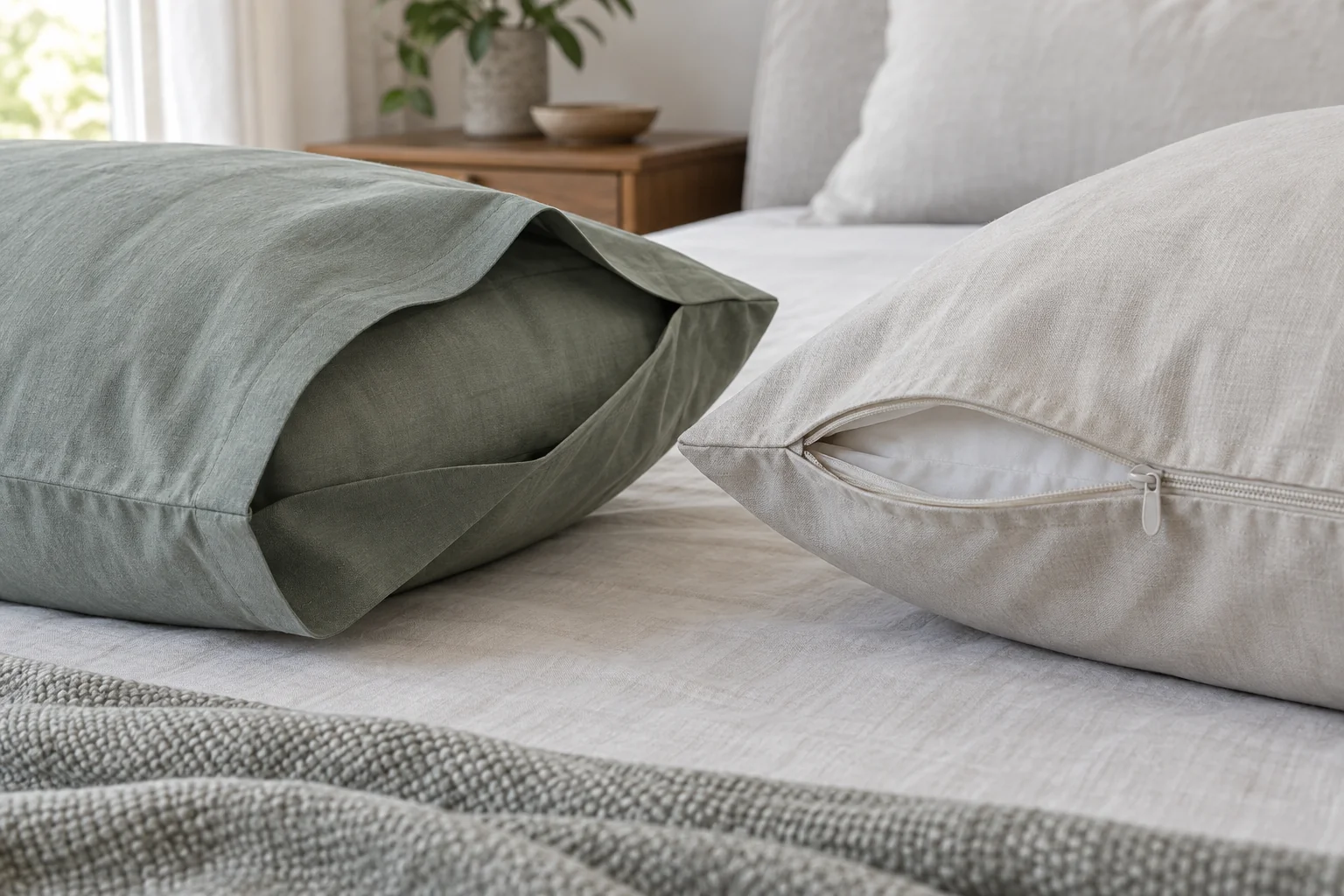
Compare envelope and zipper pillowcase closures by checking how the opening works with your actual pillow and how easily you can change the case. An envelope uses an overlapping fabric flap; a zipper joins the opening with a fastener. Neither construction automatically guarantees a better fit, longer life or a particular health benefit.
Start with the pillow you intend to cover, including any protector normally used with it. A closure that works comfortably on a flatter pillow may behave differently around a fuller one. Choose the complete fit and handling arrangement rather than treating the closure name as a ranking.
Look at the actual opening
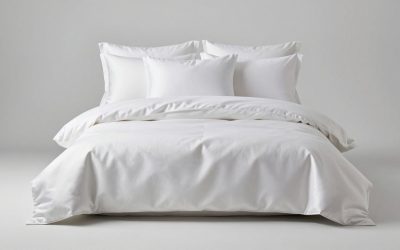
Ask for a clear view of the open end or seam. On an envelope design, identify where the pillow enters and where the flap folds over it. On a zippered design, locate the zipper, its usable opening and the place where the pull rests when closed. A photograph of a fully dressed bed rarely shows these details.
Manufacturer listings demonstrate that these are separate constructions. Slip lists a queen pillowcase with an invisible zipper and a separate queen envelope collection. That confirms the available closure formats, not a universal advantage for either. Compare the exact product’s dimensions and instructions before deciding.
Separate case size from usable entry space
The pillowcase’s stated width and length describe one part of fit. The opening may be shorter than the full side, and a flap can change how you insert the pillow. Ask the seller about usable entry space if your pillow is firm, contoured or difficult to compress. Do not force a pillow through an opening because the size label appears compatible.
When checking a case you own, support the pillow and fabric rather than pulling on the zipper slider or stretching the flap seam. Follow the pillow maker’s handling instructions. Some pillows should not be folded or squeezed in the same way as a soft loose-fill pillow.
| Check | Envelope closure | Zipper closure |
|---|---|---|
| Putting the pillow in | Can you turn the flap into place comfortably? | Does the opening admit the pillow without force? |
| Finished end | Does the overlap lie as intended? | Can the zipper close without fabric or fill in its path? |
| Contact area | Is the folded edge comfortable for your use? | Where does the covered pull rest? |
| Changing the case | Can you release the flap without straining seams? | Can you operate the fastener reliably? |
| Care | What does this product’s label require? | What does this product’s label say about its fastener? |
Check the fit while the pillow is filled
A flat case can look spacious but become tight when the pillow’s depth takes up fabric. With the permitted fit in place, inspect the corners and opening. An envelope flap should sit in its intended position; a zipper should close normally without needing the slider to pull two strained sides together.
Do not interpret visible strain as proof that one closure type is inherently poor. The case may be the wrong dimensions, the pillow may be unusually full or the protector may change the combination. Recheck those factors before buying the same size with a different fastener.
A fictional comparison with the same pillow
Imagine two cases labeled for the same nominal pillow size. The first has an envelope flap that is easy to turn over a soft pillow, but difficult for its owner to manage around a firmer replacement. The second has a zipper opening the owner can use comfortably, but only if the pillow fits without tension at the seam.
The decision comes from those particular products and that person’s handling needs. It does not establish that all zippers are easier or that all envelopes come loose. Record what was difficult: a short opening, awkward flap, exposed pull or tight finished fit. That observation gives the next comparison a useful target.
Keep laundering instructions product-specific
Read the care label for the case and any separate instructions about closing fasteners, turning it inside out or using a laundry bag. Do not borrow a washing method from another case merely because both have zippers or both are silk. Fabric, trim and construction can differ.
Inspect a fastener that catches or a seam that starts opening before continuing to use it. Avoid repeatedly forcing the closure. Contact the maker about suitable repair or replacement options where necessary; improvised alterations can change the opening and the fit you were trying to preserve.
Choose by a short practical brief
Write down the pillow model or actual dimensions, whether a protector is included, your preferred opening position and any handling difficulty. Ask the seller the unanswered questions before ordering, especially where returns are restricted after use or laundering.
The useful outcome is a case you can fit, remove and care for without strain. Closure style is one part of that decision. Claims about skin, allergens or hair require their own evidence and should not be inferred from whether the end closes with fabric or a zipper.