Key takeaways
- Match thickness to body weight: Lighter sleepers under roughly 150 lb usually get enough shoulder relief from 2 inches. Average builds do best at 3 inches. If you’re over about 230 lb, look for 3 to 4.5 inches, or you’ll compress straight through to the mattress beneath and lose the benefit entirely.
- Decide between contour and cushion: Memory foam wraps the shoulder joint and redistributes load, which is the more clinically effective route for pressure points. Fiber-filled pillow tops float you on the surface instead — a better call if you dislike the sunk-in sensation or change positions frequently through the night.
- Take heat management seriously: Foam that hugs also traps warmth against the torso. Prioritize gel infusion paired with ventilation channels, or a bamboo-derived viscose cover, which moves moisture off the skin faster than standard polyester.
- Confirm depth and anchoring: Measure your mattress before ordering. Skirted pads need a pocket deep enough to clear your mattress plus any protector; strap-secured foam slabs need a fitted sheet with real stretch or they migrate toward the footboard within a week.
- Check foam credentials: CertiPUR-US certification confirms the foam is free of formaldehyde, heavy metals, and regulated flame retardants, and holds emissions low. Expect a short break-in period regardless — most off-gassing clears in 24 to 48 hours with the room ventilated.
Side sleeping is the most popular position in the world and, mechanically, the most demanding on a sleep surface. Your shoulder and hip carry the bulk of your body weight across a contact patch smaller than a dinner plate, which means pressure per square inch climbs fast. When the surface underneath doesn’t yield enough, circulation gets pinched and you wake with a dead arm, a sore hip, or a lower back that feels like it spent the night twisted. When it yields too much, the pelvis sinks and the lumbar curve collapses. Neither extreme lets you stay asleep through a full cycle.
A topper is the least expensive way to correct a mattress that’s firmer than your body wants without replacing the whole thing. The catch is that product listings all promise the same three words — soft, cooling, supportive — with no clue about how deeply the shoulder will actually sink. Below, I break down the specs that genuinely predict comfort for side sleepers, then review the toppers worth shortlisting in 2026 across both memory foam and plush pillow-top construction.
Our top picks



As an Amazon Associate we earn from qualifying purchases at no extra cost to you. Ratings are shown as listed on Amazon.
🛒 Best Price Today on Amazon
Prime members get fast, free shipping on everything above, plus member-only deals. New members get a 30-day free trial — cancel anytime.
How to Choose a Mattress Topper for Side Sleepers (2026)
- Match thickness to body weight: Lighter sleepers under roughly 150 lb usually get enough shoulder relief from 2 inches. Average builds do best at 3 inches. If you’re over about 230 lb, look for 3 to 4.5 inches, or you’ll compress straight through to the mattress beneath and lose the benefit entirely.
- Decide between contour and cushion: Memory foam wraps the shoulder joint and redistributes load, which is the more clinically effective route for pressure points. Fiber-filled pillow tops float you on the surface instead — a better call if you dislike the sunk-in sensation or change positions frequently through the night.
- Take heat management seriously: Foam that hugs also traps warmth against the torso. Prioritize gel infusion paired with ventilation channels, or a bamboo-derived viscose cover, which moves moisture off the skin faster than standard polyester.
- Confirm depth and anchoring: Measure your mattress before ordering. Skirted pads need a pocket deep enough to clear your mattress plus any protector; strap-secured foam slabs need a fitted sheet with real stretch or they migrate toward the footboard within a week.
- Check foam credentials: CertiPUR-US certification confirms the foam is free of formaldehyde, heavy metals, and regulated flame retardants, and holds emissions low. Expect a short break-in period regardless — most off-gassing clears in 24 to 48 hours with the room ventilated.
The Best Mattress Toppers for Side Sleepers (2026) Reviewed
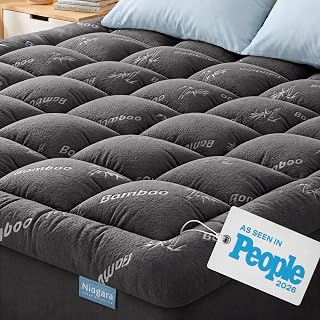
Niagara Sleep Solution Bamboo Cooling Pillow-Top Topper
The bamboo-derived rayon surface here is genuinely cool to the touch and the quilted fill adds a forgiving top layer without the slow-sink feel of foam. Its 20-inch pocket is the standout practical feature, clearing tall hybrids and pillow-top mattresses that defeat most skirted pads.
BEDLORE Viscose Bamboo Thick Pillow-Top Pad
A well-constructed plush option for side sleepers who want their shoulder cradled rather than swallowed, with dense baffled fill that resists the clumping cheaper pads develop by month three. The stretchable pockets fit 6- to 18-inch mattresses, making it a flexible pick for guest rooms where depths vary.
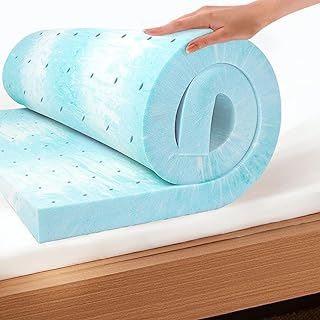
EGO 3-Inch Gel Memory Foam Topper
Three inches is the sweet spot for most average-build side sleepers, and this one delivers real hip and shoulder decompression rather than token softness. The ventilated, gel-infused foam keeps surface temperature reasonable, and the CertiPUR-US certification means you can trust what’s in it.
LUCID 2-Inch 5-Zone Gel Memory Foam Topper
The zoned construction is smart engineering: softer foam under the shoulders, firmer support beneath the hips and lumbar region, which addresses the exact alignment problem side sleeping creates. At 2 inches it suits lighter sleepers and anyone who wants pressure relief without dramatically changing their mattress feel.
Extra-Thick 1000GSM Down-Alternative Pillow Top (King)
With 1000GSM of down-alternative fill, this delivers hotel-bed loft and works well for side sleepers who find memory foam claustrophobic or overly warm. The 8- to 21-inch pocket range accommodates nearly any mattress, and it’s easily the most inviting option here for a guest bedroom.
Frequently Asked Questions
How thick should a topper be for side sleeping?
Two inches for lighter frames, three for average builds, and three to four-plus inches if you carry more weight. The test is simple: your shoulder should sink until your spine reads as a straight horizontal line from behind.
Can a topper rescue a mattress that’s too firm?
Yes, that’s the scenario toppers handle best. What they can’t fix is a sagging or broken-down mattress — adding softness on top of an unsupported dip only deepens the problem.
Do gel memory foam toppers actually sleep cooler?
Gel infusion and ventilation channels measurably slow heat buildup compared with conventional foam, but no foam is as breathable as fiberfill. If you run hot and sleep on your side, pair a foam topper with percale or bamboo-derived sheets.
How long should a topper last?
Expect three to five years from quality foam and two to four from fiber-filled pads. Persistent body impressions that don’t recover overnight are your signal to replace it.
Final Thoughts
For most side sleepers, the EGO 3-Inch Gel Memory Foam Topper hits the right balance of contouring depth, temperature control, and certified materials. Lighter sleepers who want targeted alignment should choose the LUCID 5-Zone, while anyone who prefers plush loft over a foam hug will be happiest with the Niagara Sleep Solution bamboo pillow top.