Key takeaways
- Assess the mattress first: A topper can correct a bed that’s too firm or lightly worn, but it cannot bridge a real dip. Lay a broom handle across the mattress — a gap deeper than an inch and a half means replacement, not resurfacing.
- Match depth to sleeping position: Two to three inches suits back and stomach sleepers who need cushioning without losing the floor beneath them. Side sleepers and heavier bodies usually need four to five inches so the shoulder and hip can sink far enough to keep the spine level.
- Read density, not just thickness: Foam in the 3–5 lb/ft³ range holds its shape under the pelvis for years, while lighter foam compresses within months and recreates the sag you were escaping. CertiPUR-US certification is a reasonable proxy for consistent manufacturing and low emissions.
- Choose contouring or cushioning: Memory foam cradles and holds position, which is better for pressure relief at the hip and shoulder. Fiber-filled pillow tops cushion and rebound, which suits sleepers who change position often or dislike the sinking sensation.
- Confirm fit and anchoring: Look for a deep-pocket skirt sized to your mattress or four-way elastic straps. A topper that shifts overnight forms a ridge under the lumbar spine and undoes the benefit entirely.
Back pain that is worst in the first ten minutes of the morning and eases by the time you’ve finished your coffee is rarely a spine problem — it’s usually a surface problem. When a mattress lets the pelvis, the heaviest part of the body, settle below the line of the shoulders and heels, the lumbar spine spends seven or eight hours in a slow sag. The small stabilizing muscles never fully switch off, and you wake stiff. A well-matched topper lifts and redistributes that load so the lower back can rest in something closer to its neutral curve.
The difficulty is that “topper for back pain” now covers everything from two inches of budget foam to five-inch fiber pillow tops that behave nothing alike. Below, we break down which construction solves which problem, then review five models judged on foam density, support under the hips, heat retention, and how well they stay anchored to the mattress.
Our top picks



As an Amazon Associate we earn from qualifying purchases at no extra cost to you. Ratings are shown as listed on Amazon.
🛒 Best Price Today on Amazon
Prime members get fast, free shipping on everything above, plus member-only deals. New members get a 30-day free trial — cancel anytime.
How to Choose a Mattress Topper for Bad Backs (2026)
- Assess the mattress first: A topper can correct a bed that’s too firm or lightly worn, but it cannot bridge a real dip. Lay a broom handle across the mattress — a gap deeper than an inch and a half means replacement, not resurfacing.
- Match depth to sleeping position: Two to three inches suits back and stomach sleepers who need cushioning without losing the floor beneath them. Side sleepers and heavier bodies usually need four to five inches so the shoulder and hip can sink far enough to keep the spine level.
- Read density, not just thickness: Foam in the 3–5 lb/ft³ range holds its shape under the pelvis for years, while lighter foam compresses within months and recreates the sag you were escaping. CertiPUR-US certification is a reasonable proxy for consistent manufacturing and low emissions.
- Choose contouring or cushioning: Memory foam cradles and holds position, which is better for pressure relief at the hip and shoulder. Fiber-filled pillow tops cushion and rebound, which suits sleepers who change position often or dislike the sinking sensation.
- Confirm fit and anchoring: Look for a deep-pocket skirt sized to your mattress or four-way elastic straps. A topper that shifts overnight forms a ridge under the lumbar spine and undoes the benefit entirely.
The Best Mattress Toppers for Bad Backs (2026), Reviewed
BEDLORE Viscose Bamboo Pillow-Top Topper
This is fiber fill rather than foam, making it the sensible pick for anyone whose back objects to the slow, hugged feel of memory foam — it softens an overly firm mattress without changing how easily you turn over. Stretch pockets fit mattresses from roughly 6 to 18 inches, and the bamboo-derived viscose face sleeps considerably cooler than any foam surface.
SHOUREN 5-Inch Gel Memory Foam Topper
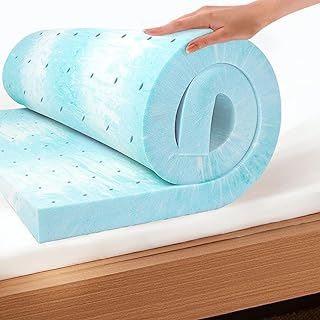
At five inches this functions as a supplementary sleep surface, and it’s the strongest option for side sleepers or heavier bodies that need real depth before the shoulder and hip find support. The gel-infused foam contours firmly through the lumbar region, and the four-way straps keep a slab this substantial from migrating toward the footboard.
WhatsBedding 5-Inch Pillow-Top Topper
Comparable height to the SHOUREN but built from lofted fill rather than solid foam, so you get generous plushness with far less trapped heat and no break-in period. It’s a strong match for a firm or aging mattress; sleepers who specifically want lumbar contouring should choose foam instead.
SINWEEK 3-Inch Ventilated Gel Memory Foam Topper
The most broadly suitable option here for back sleepers — three inches of high-density ventilated foam relieves pressure at the sacrum and shoulder blades while still preventing the pelvis from dropping. The removable, washable cover is a genuine practical advantage over sealed designs.
EGO 3-Inch Cooling Gel Memory Foam Topper
A clean, well-ventilated three-inch layer for sleepers who want measured softening of a firm bed rather than a wholesale change in feel. Allow 24 to 48 hours in a warm room for it to decompress fully before judging the support.
Frequently Asked Questions
Can a topper genuinely reduce back pain?
It can when the pain is mechanical and surface-related, and morning stiffness that resolves within half an hour of rising is the classic signature. Pain that wakes you at night, radiates into a leg, or persists all day deserves a clinician’s assessment rather than new bedding.
Is a firmer or softer topper better for the lower back?
Neither extreme. Aim for a medium-firm result once the topper is on the bed — enough give to accept the shoulder and hip, enough resistance to hold the pelvis level with them. Layering something very soft over an already-soft mattress is the most common way a topper makes back pain worse.
Do memory foam toppers sleep hot?
Solid foam retains more heat than fiber fill, though gel infusion and ventilation channels reduce the difference. If you already overheat, a pillow-top design such as the BEDLORE or the Niagara Sleep Solution bamboo-derived pad will outperform any foam slab regardless of its cooling claims.
How long should I give a new topper?
Two to three weeks. A few nights of feeling slightly worse is normal as postural habits adjust, but if morning pain is still elevated after three weeks, the firmness is wrong for your weight and sleeping position.
Final Thoughts
For most people with mechanical morning back pain, the SINWEEK 3-inch gel foam topper is the safest starting point — enough support to restore alignment without over-softening the bed. Side sleepers and heavier bodies will get more from the SHOUREN 5-inch, while hot sleepers and anyone who dislikes the sink of memory foam should start with the BEDLORE bamboo pillow top. Measure your mattress depth before ordering, and give whichever you choose a full three weeks before passing judgment.