Key takeaways
- Pair the pad with breathable bedding. A cooling pad under polyester microfiber sheets is a sealed system — percale cotton or linen lets the pad actually vent.
- Wash on cold and tumble dry low. Heat damages PCM coatings and permanently flattens down-alternative fill, which is why so many pads “stop working” after month three.
- Set your thermostat to 65–68°F. A pad manages the microclimate at your skin; it can’t overcome a warm room.
- Give any new pad two weeks before judging it. Sleep-onset temperature responses adjust gradually, and one bad night proves nothing.
Body temperature is the quiet conductor of your sleep architecture. Core temperature needs to fall roughly two degrees Fahrenheit for deep, consolidated sleep to take hold, and it needs to stay down through the early-morning hours when REM cycles lengthen. When a mattress traps the heat your body is trying to shed, that dip gets blunted — and you wake at 3 a.m. with damp sheets, a racing heart, and no obvious reason why. Most people blame the room. More often, the problem is six inches beneath them.
A cooling mattress pad is the least expensive, least disruptive fix available: it sits between you and the mattress, moving heat and moisture away from skin without the cost or commitment of replacing the bed itself. But “cooling” is a marketing word before it’s an engineering one, and the difference between a pad that genuinely regulates temperature and one that merely feels smooth for thirty seconds is worth understanding. Below, you’ll learn how the three cooling mechanisms actually work, how to match a pad to your specific overheating pattern, what fit and depth details make or break performance, and how to care for a pad so it keeps working past its first wash.
Our top picks



As an Amazon Associate we earn from qualifying purchases at no extra cost to you. Ratings are shown as listed on Amazon.
🛒 Best Price Today on Amazon
Prime members get fast, free shipping on everything above, plus member-only deals. New members get a 30-day free trial — cancel anytime.
Understand the Three Ways a Pad Can Cool You
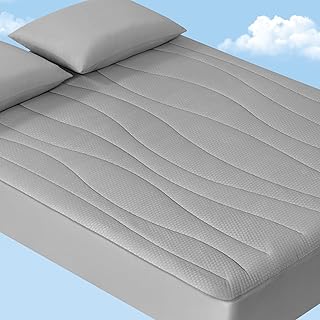
Cooling isn’t one technology — it’s three, and they solve different problems. Conductive cooling pulls heat out of your skin on contact; this is what phase-change materials (PCM) do, absorbing thermal energy as they shift state. The Elegear pad with Arc-Chill 3.0 is built around this approach, and it’s why it registers cool the instant you lie down. Moisture management is the second mechanism: fibers that wick sweat away so evaporation can do its work. Rayon derived from bamboo, as used in the Niagara Sleep Solution topper, excels here — it moves humidity rather than temperature. Airflow is the third: open quilting patterns and breathable fills that let warm air escape instead of pooling. The OLANLY quilted pad and the SLEEP ZONE topper both rely on this, using down-alternative fill in a construction loose enough to breathe. Identify which mechanism you need before you shop.
Diagnose Your Overheating Pattern First
Pay attention to when you overheat, because it tells you what to buy. If you feel roasted the moment you get into bed but settle after twenty minutes, you want conductive contact cooling — a PCM surface. If you wake damp in the small hours, that’s a moisture problem, and a wicking, breathable fiber will serve you better than an instantly-cool surface that has already equalized with your body temperature. If you overheat only in summer or only in a particular room, airflow and fill density matter most. Night sweats tied to menopause, medication, or illness usually respond best to a combination: a wicking top layer over a breathable, low-density fill.
Get the Fit Right — It Matters More Than You’d Think
A pad that shifts, bunches, or pops off a corner cannot cool you, because cooling depends on consistent skin contact and unobstructed airflow. Measure your mattress height from the seam at the bottom to the top of the surface, including any existing topper, then add an inch of clearance. Deep-pocket ranges like the 8–21 inch skirts on the SLEEP ZONE and ELVEN HOME pads accommodate most modern mattresses, while the Niagara topper’s 20-inch pocket and OLANLY’s 360-degree elastic skirt suit taller pillow-top builds. Under-buying on depth is the single most common mistake — the elastic strains, the corners lift, and you’ll be re-tucking the pad every few nights.
Decide Whether You Need Waterproofing
Waterproof membranes and maximum breathability pull in opposite directions, so treat waterproofing as a requirement, not a bonus. If you’re protecting against spills, incontinence, a child’s accidents, or a pet who shares the bed, choose a pad engineered for it — the ELVEN HOME waterproof pillow-top and comparable noiseless quilted waterproof protectors use films thin enough to still pass air, and modern versions avoid the crinkling sound that plagued earlier generations. If you have no moisture concern, skip the membrane entirely; you’ll get noticeably more airflow for the same money.
Weigh Loft Against Cooling Performance
Plush pillow-top pads feel wonderful and can relieve pressure at the hips and shoulders — genuinely useful if your mattress has gone firm or you wake with lower-back stiffness. But loft is insulation. Every additional inch of fill is another inch of material between your body heat and the open air. If your primary complaint is heat, choose the thinner option in a product line. If it’s comfort with heat as a secondary issue, a lofted pad in a wicking fiber is the reasonable compromise.
Tips
- Pair the pad with breathable bedding. A cooling pad under polyester microfiber sheets is a sealed system — percale cotton or linen lets the pad actually vent.
- Wash on cold and tumble dry low. Heat damages PCM coatings and permanently flattens down-alternative fill, which is why so many pads “stop working” after month three.
- Set your thermostat to 65–68°F. A pad manages the microclimate at your skin; it can’t overcome a warm room.
- Give any new pad two weeks before judging it. Sleep-onset temperature responses adjust gradually, and one bad night proves nothing.
Frequently Asked Questions
What’s the difference between a mattress pad and a mattress topper?
A pad is thinner and typically fits like a fitted sheet, primarily changing the surface feel and temperature. A topper is thicker and meaningfully alters firmness. Many products marketed as toppers — including several pillow-top styles — sit somewhere in between.
Do cooling pads stay cool all night?
Contact-cooling surfaces feel coldest in the first several minutes, then equalize; that’s physics, not a defect. Sustained overnight regulation comes from wicking and airflow rather than an instant cool touch, which is why the best pads combine both.
Will a cooling pad work on a memory foam mattress?
Yes, and it’s one of the highest-value applications, since traditional memory foam is dense and heat-retentive. Choose a pad with strong airflow rather than relying on the foam to breathe.
How long should a cooling mattress pad last?
Two to four years with regular washing. Watch for thinning at the center, flattened fill, and slackening elastic — all signs the pad is no longer sitting flush enough to regulate temperature.
Conclusion
The best cooling mattress pad is the one matched to your actual overheating pattern: a PCM surface like the Elegear for immediate contact cooling, a bamboo-derived rayon topper like the Niagara for night sweats and humidity, a breathable quilted pad like the OLANLY or SLEEP ZONE for general airflow and added comfort, or a purpose-built waterproof option like the ELVEN HOME when spill protection is non-negotiable. Measure your mattress depth carefully, pair the pad with breathable sheets and a cool room, and wash it gently — do those three things, and a modest purchase will buy you the temperature drop your body has been trying to achieve on its own.