Key takeaways
- Match the format to the movement. Handles and a door anchor make pressing and rowing feel natural. Continuous loops excel at squats, deadlifts, and anything you stand on. Mini loops are for hips and shoulders, not chest day.
- Insist on stackable tension if you want strength gains. A set where you clip two or three tubes onto one handle lets you add ten pounds at a time instead of jumping from “easy” to “impossible.”
- Check the anchor and the failure mode. Layered continuous loops fray slowly and visibly. Tubes should have an internal safety cord and metal clips, not glued plastic ends, so a snap doesn’t send a handle at your face.
- Consider latex sensitivity and skin pinch. Natural latex is stronger and stretchier; TPE and fabric bands suit allergies and bare-thigh comfort but wear out faster under heavy load.
- Buy for the length you have room for. Long bands need clearance behind you for a door anchor. In a small apartment, a 41-inch loop over a pull-up bar or under your feet is the more practical setup.
What's inside
No product list came through with the request, so I selected seven widely available band systems that cover the main categories (clip tubes, loop bands, therapy bands, mini bands). Swap in your own SKUs if you had specific ASINs in mind. Prices and current spec sheets should be verified before publishing since I can’t check live listings.
“`html
A resistance band costs less than a single month of gym access and fits in the side pocket of a carry-on, which is why it survives in the closet long after the ab roller and the vibrating plate get donated. The catch is that “resistance band” describes at least four unrelated products: thick continuous loops built for pull-up assistance, latex tubes with clip-on handles, flat therapy strips for shoulder rehab, and short mini loops for glute work. Buy the wrong category and you’ll conclude bands don’t build muscle, when really you bought a rehab tool and tried to row 80 pounds with it.
I sorted these picks by what they actually do well rather than by star rating. A stackable tube kit with a door anchor will get you closest to a barbell-style full-body session — chest press, row, overhead press, deadlift, squat, curl — because you can layer tubes to hit meaningful tension and change angles instantly. Heavy continuous loops win on durability and progressive overload but are clumsy for isolation work. Below you’ll find the comparison table first, a short buying framework, then the individual reviews.
As an Amazon Associate we earn from qualifying purchases.
Quick Comparison
| Pick | Type | Resistance Range | Best For |
|---|---|---|---|
| Bodylastics Stackable Tube Set | Clip tubes with handles | Roughly 5–96 lb stacked | Full-body strength training |
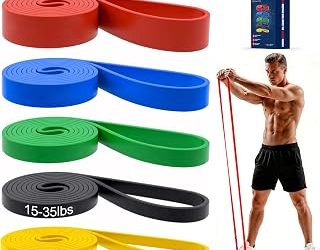
| Undersun Fitness Band Set | Continuous loops (5) | Light through extra heavy | Progressive overload, travel |
| WHATAFIT Resistance Band Kit | Clip tubes with accessories | Roughly 10–150 lb stacked | Budget all-in-one kits |
| Serious Steel Assisted Pull-Up Bands | Single continuous loops | Sold by width, light to monster | Pull-up assistance, bar work |
| TheraBand Professional Set | Flat latex sheets | Color-coded, very light to heavy | Rehab, shoulders, warm-ups |
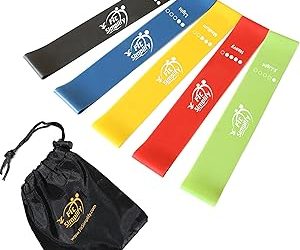
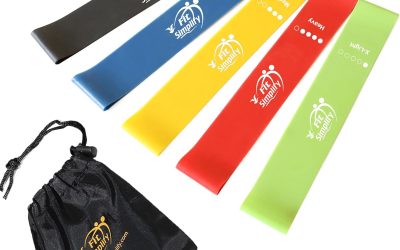
| Fit Simplify Loop Bands | Mini loops (5) | Extra light to extra heavy | Glutes, hips, activation |
| SPRI Xertube | Single tube with handles | One fixed level per tube | Simple grab-and-go sessions |
How to Choose
- Match the format to the movement. Handles and a door anchor make pressing and rowing feel natural. Continuous loops excel at squats, deadlifts, and anything you stand on. Mini loops are for hips and shoulders, not chest day.
- Insist on stackable tension if you want strength gains. A set where you clip two or three tubes onto one handle lets you add ten pounds at a time instead of jumping from “easy” to “impossible.”
- Check the anchor and the failure mode. Layered continuous loops fray slowly and visibly. Tubes should have an internal safety cord and metal clips, not glued plastic ends, so a snap doesn’t send a handle at your face.
- Consider latex sensitivity and skin pinch. Natural latex is stronger and stretchier; TPE and fabric bands suit allergies and bare-thigh comfort but wear out faster under heavy load.
- Buy for the length you have room for. Long bands need clearance behind you for a door anchor. In a small apartment, a 41-inch loop over a pull-up bar or under your feet is the more practical setup.
Top Picks Reviewed
Bodylastics Stackable Tube Set — Best Overall
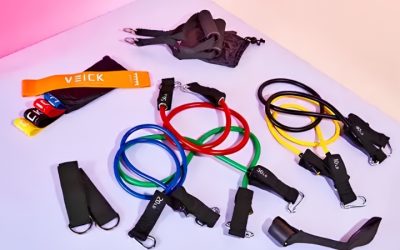
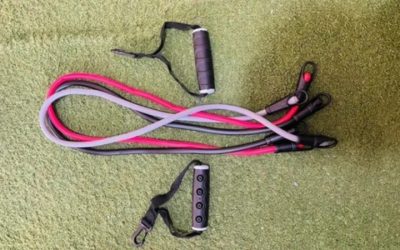
This is the closest a band kit gets to replicating a cable machine. Each tube carries an internal braided cord so a torn latex sleeve doesn’t turn into a projectile, and the snap clips let you stack tubes fast enough to run drop sets. The door anchor is thick and padded, which matters because that’s the component most kits cheap out on. Assume you’ll use the heavier tubes for legs and pulling and the light ones for triceps and rear delts.
Undersun Fitness Band Set — Best Continuous Loops
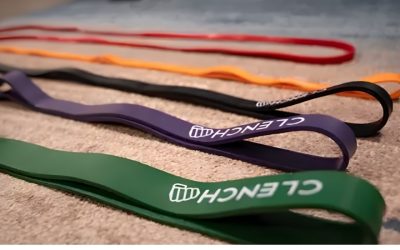
Five layered latex loops, no handles, no clips, nothing to break. That simplicity is the point: you loop them around your feet, a pull-up bar, or a rack post and they hold up to abuse for years. The heavier bands deliver serious tension at the top of a squat or press, which is exactly where free weights feel easiest. Downside is comfort — heavy loops bite into the palms and shoulders, so wrap a towel or wear thin gloves.
WHATAFIT Resistance Band Kit — Best Value Bundle
Five stackable tubes, foam handles, ankle straps, a door anchor, and a carry bag for roughly the price of two protein tubs. Build quality is a step below premium sets and the printed poundage runs optimistic, but the kit covers every basic lift and travels well. A sensible first purchase if you’re not yet sure bands will stick as part of your routine.
Serious Steel Assisted Pull-Up Bands — Best for Bar Work
Sold as individual loops graded by width rather than vague color names, so you can buy exactly the assistance level you need and step down as you get stronger. They’re long enough to hang from a bar and take a knee or foot without choking your stride. Also useful for banded bench press, sled-style sprints, and stretching. Buy two adjacent widths so you always have a smaller increment available.
TheraBand Professional Set — Best for Rehab and Warm-Ups
The flat latex sheets physical therapists hand out, and the reason they’ve stayed standard for decades is precise low-end resistance. Nothing else lets you load an external rotation or scapular retraction gently enough to actually feel the right muscle. Not a strength tool for legs, and the sheets tear if you snag them, but as prehab insurance before pressing they earn their spot.
Fit Simplify Loop Bands — Best Mini Loops
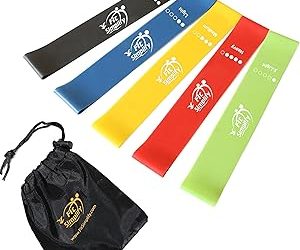
Five short loops for lateral walks, hip abduction, clamshells, and monster steps. The latex is thin enough to roll on bare skin, so wear leggings or run them over shorts. They cost almost nothing and add a real training stimulus to glute medius work that heavy compound lifts tend to miss. Replace them annually if you train hard; small loops stretch out faster than long ones.
SPRI Xertube — Best Single-Tube Option
One tube, one resistance level, molded handles, done. There’s a case for owning something with zero setup: you keep it by the desk and knock out rows and presses between meetings without hunting for clips. Pick a level slightly harder than you think you need, since bands feel light at the start of the range and you’ll adapt within weeks.
Frequently Asked Questions
Can resistance bands actually build muscle?
Yes, provided you reach genuine mechanical tension and keep adding it over time. Bands produce ascending resistance — hardest at full stretch — so pair them with tempo work and short rest to accumulate fatigue. What they struggle with is the extremely heavy, low-rep work that develops maximal strength; for that you eventually want a loaded bar.
How much resistance should a beginner buy?
Get a set that spans light to heavy rather than a single band. Most people can press and row far more than they can curl or externally rotate, and one band cannot serve both. A stackable kit topping out around 80 to 100 pounds combined covers years of training for general fitness.
How long do resistance bands last, and how do I keep them alive?
Quality latex bands last two to five years with regular use. Store them out of direct sunlight, keep them away from heat vents, wipe off sweat, and never stretch them over rough concrete or a splintered doorframe. Inspect for small nicks before each session and retire anything showing white stress lines.
Do I need a door anchor?
If you want horizontal pulls and presses, yes — it’s the accessory that converts a band into a cable station. Use a door that opens away from you, hinge side if possible, and keep the door latched. A sturdy rack post or a tree serves the same purpose outdoors.
Final Thoughts
If you’re buying one thing, buy a stackable tube set with a solid anchor and add a couple of heavy continuous loops later for squats and pull-up assistance. That combination handles push, pull, hinge, squat, and carry patterns in about six square feet of floor space, packs into a backpack, and doesn’t require a subscription. Bands aren’t a compromise version of training — they’re a different tension curve, and used deliberately, they’ll leave you sore in places barbells routinely skip.


Write Your Review
No reviews yet. Be the first to share your experience!