
Key takeaways
- Warranty Description: 2 Year Limited Warranty
- Sport Type: Exercise & Fitness
- Recommended Uses For Product: Workout
The door anchor is the single component that turns a bag of rubber tubes into something resembling a cable machine, and it is also the component nobody inspects before loading it with sixty pounds of tension aimed at their own face. The anchor works by trapping a foam or fabric stop on the far side of a closed door. That is fine on a solid slab door in a properly hung frame. On a hollow-core interior door, a door that opens toward you, or one with a loose latch, it is a genuinely bad idea.
Rented flats make this worse. You often have no idea what the doors are made of, you cannot fit a permanent wall anchor, and the frame trim may be soft enough to mark under repeated pressure. So the buying decision is partly about the bands and partly about what comes with them: how the anchor is built, whether it protects the frame, and whether the set gives you alternatives when no door is usable. Each option below is assessed accordingly.
Our top picks
 WHATAFIT Resistance Bands with Handles
- Warranty Description: 2 Year Limited Warranty
- Sport Type: Exercise & Fitness
- Recommended Uses For Product: Workout
 5-Level Resistance Bands for Working Out
- League Name: Formula 1
- Team Name: NO
- Sport Type: Exercise & Fitness
 HPYGN Resistance Bands
- 5-Level Resistance Bands for Full-Body Workouts: Achieve up…
- Premium Heavy-Duty Design for Safety & Durability: Crafted…
- Burn Fat & Build Muscle Effectively: These exercise…


As an Amazon Associate we earn from qualifying purchases at no extra cost to you.
Quick Comparison
| Product | Best For | Standout Feature | Watch Out For |
|---|---|---|---|
| HPYGN Resistance Bands with Handles | Anchored training in a rental | Door anchor and ankle straps in the box | Anchor stop must sit on the far side, always |
| Heavy Duty Bands with Handles, 300 lb | Loads that test the anchor | Included anchor built for heavy tension | Hollow doors are not rated for this pull |
| WHATAFIT Resistance Bands with Handles | Reducing load on the door | Light tubes let you anchor at low tension | Stacked tubes concentrate force on one point |
| 5-Level Bands, 5–125 lb | Anchor-free light work | Lightest tubes work fine underfoot | Heavier levels need a solid anchor point |
| Dapofajo Anti-Snap Silicone Bands | Peace of mind at the anchor | Construction that resists sudden failure | Still fails if the door itself gives way |
| Resistance Bands Set with Handles | Simple home setups | Straightforward kit with no surprises | Check whether an anchor is actually included |
How to Choose
- Door construction: Solid core doors handle anchored work. Hollow interior doors flex and can tear at the latch, so test with light tension first.
- Opening direction: Always anchor on a door that opens away from you. If the pull could swing the door open, the setup is unsafe regardless of the hardware.
- Anchor stop size: A larger foam or fabric stop spreads force across the door edge instead of concentrating it at one point in the frame.
- Frame protection: Repeated pressure marks paint and trim. A folded cloth at the contact point costs nothing and prevents a deposit dispute.
- Alternatives included: Ankle straps and underfoot use give you options when there is no suitable door at all, which is common in studio flats.
Top Picks Reviewed
Best Anchored Kit: HPYGN Resistance Bands with Handles
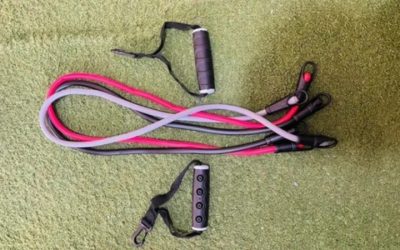
Bundling the door anchor and ankle straps with the tubes means you are not sourcing hardware separately from an unknown supplier, and it makes the full range of cable-style movements available immediately — pulldowns, face pulls, rows, chest flyes and standing leg work.
The rule that matters is placement: the stop always goes on the far side of a closed door that opens away from you. Anchoring on a door that swings toward you converts a slipped strap into a door in the face, and no amount of build quality prevents that.
Best for Heavy Anchored Work: Heavy Duty Bands with Handles, 300 lb
A set rated for a combined 300 lb ships with an anchor built to match, which matters because the anchor is usually the first thing to fail in a cheap kit. For heavy rowing and pressing, that hardware margin is the difference between confidence and caution.
Your door may not have the same margin. A hollow-core interior door was never engineered for a sustained hundred-pound pull at the latch edge, and the failure mode is the door splitting rather than the band. Reserve the heavy stacks for a solid door or an anchored beam.
Best Low-Tension Anchoring: WHATAFIT Resistance Bands with Handles
Tubes rated from 10 lb up to 50 lb let you do genuinely useful anchored work at modest tension, which keeps the load on the door well inside what any reasonable door will tolerate. For high-rep back and shoulder work, that is exactly the right range anyway.
Stacking several tubes into one anchor loop concentrates all of that force at a single point on the door edge. Spread the load across two anchor positions if you must go heavy, or step back to increase tension instead of adding tubes.
Best Without a Door: 5-Level Bands, 5 to 125 lb
Not every home offers a usable door. The lighter tubes in this range work perfectly well anchored under your own feet, which turns curls, presses, upright rows and lateral raises into a complete session with no hardware attached to the building at all.
Underfoot anchoring has a ceiling. Once tension gets high the band tries to pull out from under your shoe, and chasing it with a wider stance changes the movement. Above the middle of the range, you need a proper anchor point.
Frequently Asked Questions
Will a door anchor damage my door or frame?
It can mark paint and compress soft trim over time. A folded towel between the strap and the door edge prevents almost all of it, and keeping the anchor at the hinge side reduces stress on the latch.
Which side of the door should the anchor go?
The far side, on a door that opens away from you, with the door fully closed and latched. If the door opens toward you, do not use it — find another door or anchor underfoot.
Can I use a hollow-core door?
Only at light tension, and with caution. Hollow doors have thin skins over a cardboard core, and sustained pull at the edge can crush or split them. Test with the lightest tube and watch for flex.
What is the safest alternative to a door?
Standing on the band is the simplest and it fails harmlessly. A properly fitted pull-up bar or a wall anchor into a stud is better still, though both are usually out of the question in rented housing.
Final Thoughts
The bands are rarely the risk — the anchor point is. If you have a solid door that opens away from you, the HPYGN kit or the 300 lb heavy duty set give you cable-style training with hardware built for the job. If you do not, keep tension moderate with the WHATAFIT tubes or work underfoot with the lighter 5–125 lb levels. Check the door before the first heavy set, and put a cloth at the contact point while you are at it.
Write Your Review
No reviews yet. Be the first to share your experience!