
Key takeaways
- High End Exercise Bands
- Great With Any Workout
- Multiple Uses
Most people buy resistance bands the way they buy phone chargers — grab whatever’s cheapest, discover it’s the wrong shape for the job, buy another. The result is a drawer with a tangle of latex tubing, one orange loop of unknown strength, and a fabric band that rolls up behind the knee every single rep. The problem isn’t quality. It’s that “resistance band” describes at least six genuinely different tools, and a 41-inch continuous loop rated for 80 pounds of pull-up assistance is useless for the 5-pound lateral hip work a physical therapist actually prescribed.
Resistance behaves differently from iron, too. A dumbbell weighs the same at the bottom of a curl as at the top; a band gets harder the further you stretch it, which is why banded work feels easy off the floor and brutal at lockout. That property makes bands excellent for glute activation, shoulder rehab, and travel training, and mediocre for building raw strength at the bottom of a squat. Below is a breakdown of the six formats worth owning, what each one is genuinely good at, and how to avoid the two failure modes that ruin cheap bands: snapping and rolling.
Our top picks
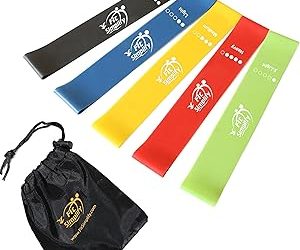
 Fit Simplify Resistance Loop Exercise Bands with
- High End Exercise Bands
- Great With Any Workout
- Multiple Uses
 WHATAFIT Resistance Bands with Handles
- Warranty Description: 2 Year Limited Warranty
- Sport Type: Exercise & Fitness
- Recommended Uses For Product: Workout
| Product | Key specs | |
|---|---|---|
| Fit Simplify Resistance Loop Exercise Bands with | High End Exercise Bands Great With Any Workout Multiple Uses | Check price |
| WHATAFIT Resistance Bands with Handles | Warranty Description: 2 Year Limited Warranty Sport Type: Exercise & Fitness Recommended Uses For Product: Workout | Check price |
 Resistance Bands for Working Out Resistance Bands for Working Out | Check price | |
 Resistance Bands for Working Out Resistance Bands for Working Out | Check price | |
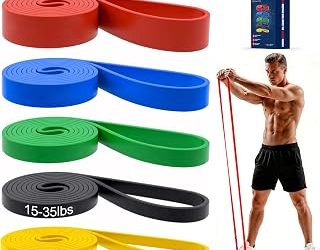
 Pull Up Bands Pull Up Bands | Warranty Description: 1 year Material Type: Natural Rubber Sport Type: Body Building | Check price |
 Resistance Bands Resistance Bands | Material Type: Natural Rubber Sport Type: Exercise & Fitness Recommended Uses For Product: Workout | Check price |
 Resistance Bands for Working Out Resistance Bands for Working Out | Check price | |
 Renoj Resistance Bands for Working Out Renoj Resistance Bands for Working Out | Check price |
As an Amazon Associate we earn from qualifying purchases at no extra cost to you.
As an Amazon Associate we earn from qualifying purchases.

Quick Comparison
| Type | Typical Resistance | Best Use | Main Drawback |
|---|---|---|---|
| Mini loop bands (fabric) | 10–60 lb | Glutes, hips, lateral walks, squat cueing | Limited to lower body and short ranges |
| Flat therapy bands | 2–20 lb | Rehab, rotator cuff, mobility, precise low loads | Tears once nicked; needs anchoring skill |
| Tube bands with handles | 10–50 lb per tube | Full-body circuits, rows, presses, travel | Clips and handles are the weak point |
| Superbands (long loops) | 15–200 lb | Pull-up assistance, deadlift/bench overload, stretching | Heavy tension is genuinely dangerous if it slips |
| Figure-8 and ring bands | 15–35 lb | Upper-body pulls, chest flyes, quick sets | Fixed short length caps exercise variety |
| Anchored cuff systems | 5–100 lb stacked | Cable-machine substitutes, kickbacks, chops | Requires a door anchor or wall mount |
How to Choose
- Match the format to the movement, not the number. If your program is hip-dominant — bridges, abductions, monster walks — a fabric mini loop set solves 90% of it. If it’s rows and presses, you need handles or a door anchor.
- Check whether resistance ratings are honest. Reputable brands publish force at a stated stretch (for example, 30 lb at 200% elongation). Vague “extra heavy” labeling with no numbers usually means the bands were never tested.
- Prefer continuous-layer latex over molded rubber for anything heavy. Layered natural latex delays cracking; single-piece molded rubber develops surface fissures within months, and a snapped band under 100 pounds of tension moves fast.
- Solve the rolling problem before it starts. Thin latex loops migrate up the thigh during walks and bridges. Fabric bands with an inner silicone grip strip stay put, which matters more than the resistance rating for glute work.
- Buy overlapping resistances, not a wide spread. A set jumping 10 → 30 → 60 pounds leaves gaps you can’t progress through. Closer increments — say 15, 25, 35, 50 — give you actual progressive overload.
Top Picks Reviewed
1. Fabric Mini Loop Bands — Best for Glutes and Hip Work
These are the wide, woven loops with a silicone grip printed inside. Because fabric doesn’t stretch as far as latex, resistance climbs steeply and predictably, and the band cannot roll into a rope behind your knee. Look for three-band sets with distinct widths rather than colors alone, and check the stitching where the loop closes — a straight bar tack outlasts a zigzag. Ideal for hip abductions, banded bridges, and cueing knees-out on squats. Not appropriate for upper-body work; the short circumference gives you nowhere to press or pull.
2. Flat Therapy Bands — Best for Rehab and Small Loads
Cut-to-length flat sheeting, roughly 0.15–0.35 mm thick, is what clinics hand out for a reason: it delivers lo
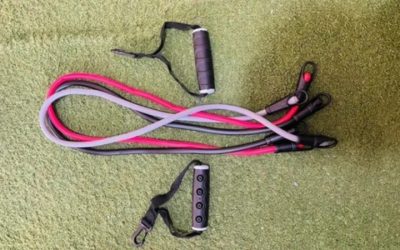
8 Best Pedal Resistance Bands: 6 Seated Training Picks Rated
Best pedal resistance bands shopping runs into an unusual problem: the category...
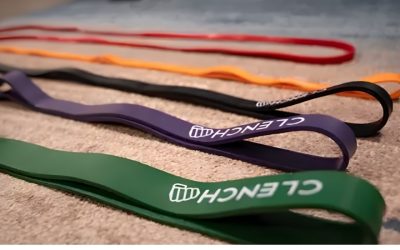
Best Resistance Bands Women Use: 6 Picks by Band Format
Best resistance bands women shop for tend to fall into three formats...
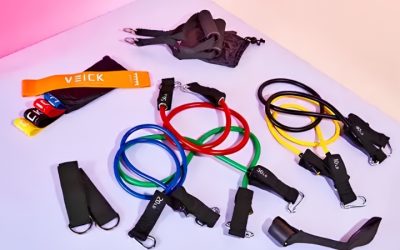
8 Best Resistance Bands for Men: 5 Sets by Strength Level
The door anchor is the single component that turns a bag of...
8 Best Resistance Bands Leggings: 6 Pairs for Home Training
Leggings that ship with a set of resistance bands sound like...
8 Best Resistance Bands Workout Gear for Full Body Strength
As an Amazon Associate we earn from qualifying purchases at no extra...
8 Best Resistance Training Bands: Build a Set That Progresses
Bands get dismissed as travel gear, which is a shame, because...
The Best Resistance Bands for a Full-Body Workout in 2026
No product list came through with the request, so I selected seven...
Write Your Review
No reviews yet. Be the first to share your experience!