
Key takeaways
- Warranty Description: 1 year
- Material Type: Natural Rubber
- Sport Type: Body Building
Bands get dismissed as travel gear, which is a shame, because they solve a problem dumbbells never will: they let you change resistance by two pounds instead of five, and they load the top of a movement where your leverage is best. The catch is that a single “medium” band is a dead end. Two weeks in, your glutes stop noticing it, and there’s nowhere to go. What actually produces results is a set with overlapping tension steps — light enough for the first rep of a lateral raise, heavy enough that a hip thrust still feels like work at rep twelve.
I’ve torn, stretched, and eventually retired more bands than I’d like to admit: a fabric loop that rolled up my thigh on every squat, a tube band whose handle clip failed mid-row, a latex loop that snapped at the seam because it had been left curled on a sunny windowsill. Those failures taught me what to look for — layered construction instead of molded, continuous loops instead of glued ends, and a tension ladder with small enough gaps that progression feels earned rather than jarring. Below are the five band types worth building a home setup around, plus how to combine them.
Our top picks
 Pull Up Bands
- Warranty Description: 1 year
- Material Type: Natural Rubber
- Sport Type: Body Building
 WHATAFIT Resistance Bands with Handles
- Warranty Description: 2 Year Limited Warranty
- Sport Type: Exercise & Fitness
- Recommended Uses For Product: Workout
 Resistance Bands
- Material Type: Natural Rubber
- Sport Type: Exercise & Fitness
- Recommended Uses For Product: Workout
| Product | Key specs | |
|---|---|---|
| Pull Up Bands | Warranty Description: 1 year Material Type: Natural Rubber Sport Type: Body Building | Check price |
| WHATAFIT Resistance Bands with Handles | Warranty Description: 2 Year Limited Warranty Sport Type: Exercise & Fitness Recommended Uses For Product: Workout | Check price |
| Resistance Bands | Material Type: Natural Rubber Sport Type: Exercise & Fitness Recommended Uses For Product: Workout | Check price |
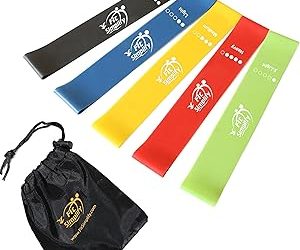
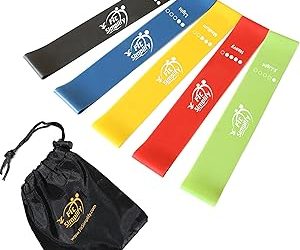
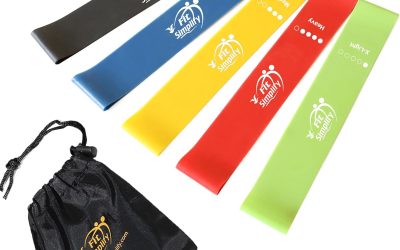
 Fit Simplify Resistance Loop Exercise Bands with Fit Simplify Resistance Loop Exercise Bands with | High End Exercise Bands Great With Any Workout Multiple Uses | Check price |
 5-Level Resistance Bands for Working Out 5-Level Resistance Bands for Working Out | League Name: Formula 1 Team Name: NO Sport Type: Exercise & Fitness | Check price |
 Renoj Resistance Bands for Working Out Renoj Resistance Bands for Working Out | Check price | |
 WIKDAY Resistance Bands WIKDAY Resistance Bands | Check price | |
 Resistance Bands for Working Out Resistance Bands for Working Out | Check price |
As an Amazon Associate we earn from qualifying purchases at no extra cost to you.
As an Amazon Associate we earn from qualifying purchases.

Quick Comparison
| Pick | Type | Typical Resistance | Best For | Anchoring |
|---|---|---|---|---|
| Layered-Latex Loop Set (5-band) | Continuous loop | ~5–50 lb per band | Full-body progression | Door anchor or under foot |
| Fabric Hip Circle Trio | Woven booty band | Light / medium / heavy | Glutes, hips, warm-ups | None needed |
| Clip-Handle Tube System | Stackable tubes | 10–150 lb stacked | Pressing, rows, curls | Door anchor, handles, ankle cuffs |
| Heavy Power Bands (¼”–2½”) | Thick continuous loop | ~15–200 lb | Pull-up assist, lift bands | Bar, rig, or squat rack |
| Flat Therapy Band Roll | Non-loop sheet latex | Very light to medium | Shoulders, rehab, cut-to-length | Tie-off or hand-wrapped |
How to Choose
- Check the construction, not the color. Layered latex — thin sheets bonded together — fails gradually and audibly. Molded or extruded rubber tends to fail all at once. Color coding is arbitrary between brands, so read the stated pound range instead.
- Look for overlapping tension steps. A set that jumps 10 lb → 30 lb → 60 lb leaves gaps you can’t train through. Better sets step in increments you can bridge by doubling a lighter band alongside a heavier one.
- Match the band to the joint. Fabric loops stay put on hips and thighs; latex loops pinch bare skin there but excel for anchored pulls and presses. Flat therapy bands are the only sane choice for rotator cuff work.
- Audit the hardware if it has any. Carabiners should be steel with a screw-gate or thick spring, handles should be stitched rather than glued, and the door anchor should have a foam-covered ball big enough not to slip through a jamb.
- Account for latex allergies and storage. TPE bands are hypoallergenic and odor-free but wear faster. Regardless of material, keep bands out of direct sun and away from radiators — UV and heat are what actually kill them, not reps.
Top Picks Reviewed
Layered-Latex Loop Set (5-Band) — Best Overall Foundation
This is the backbone of a progressive setup. Five continuous loops, roughly 41 inches around, covering about 5 lb up to 50 lb of peak tension. Because there are no seams or clips, the failure points that plague tube bands simply don’t exist. Loop one under your foot for a curl, thread it through a door anchor for a face pull, or stack the 15 lb and 30 lb together for a 45 lb press. If I could only buy one thing on this list, it would be this — the combinations get you further than the individual bands suggest.
Fabric Hip Circle Trio — Best for Lower Body
The single reason to own these: woven fabric with an internal silicone grip strip won’t roll or bunch when you’re doing banded squats, monster walks, or hip abductions. Latex will. The trade-off is that fabric has a shorter usable stretch range, so it’s specialist gear rather than general purpose. Three sizes are enough — light for warm-up activation, medium for volume work, heavy for glute bridges where you actually want the top of the rep to be hard.
Clip-Handle Tube System — Best for Barbell-Style Training
If you’re replacing a cable machine rather than supplementing free weights, this is the format. Individual tubes clip to a pair of handles, so you stack to whatever total you need — often up to 150 lb. Ankle cuffs and a door anchor turn it into a functional trainer for kickbacks, chest flyes, and lat pulldowns. Two cautions: always inspect the clips before a heavy set, and never let a stacked configuration snap back toward your face. Buy one with steel carabiners, not aluminum.
Heavy Power Bands — Best for Pull-Ups and Barbell Work
These are the thick loops you see hanging off squat racks, sold by width from about ¼ inch to 2½ inches. Their real value is assistance and accommodating resistance: loop one over a pull-up bar and step into it to shave 40 lb off your bodyweight, or anchor a pair to the platform for banded deadlifts that get heavier as you stand up. Overkill for a pure bodyweight routine, essential if you own a bar.
Flat Therapy Band Roll — Best for Shoulders and Rehab
Non-loop sheet latex, usually sold in a 25-yard roll or pre-cut 5-foot lengths, in tensions light enough that a physical therapist can prescribe them. Cut exactly the length you need, tie a loop in one end, and you have a tool for external rotations, scapular retractions, and finger extensions. Nothing else on this list goes light enough to rehab a cranky shoulder without irritating it further.
Frequently Asked Questions
How much resistance do bands actually provide?
Less than the label implies, most of the time. Stated pound ratings usually reflect peak tension near maximum stretch — roughly 2.5 times the band’s resting length. At a modest stretch you might be getting a third of that. This is why the same band can feel trivial at the bottom of a press and brutal at lockout, and why judging by feel beats trusting the number.
Can bands build real muscle, or only tone?
They build muscle. Hypertrophy responds to mechanical tension and training close to failure, not to the specific object creating the load. The genuine limitation is loading heavy compound lifts — squats and deadlifts outgrow band tension quickly. Upper body, glutes, and single-limb work can be trained productively with bands for years.
How do I progress when the heaviest band gets easy?
Four levers, in order of ease: stack two bands, shorten the band by choking up or standing farther from the anchor, slow the eccentric to four seconds, or switch to a single-limb variation. Shortening the effective length is the most underrated — halving the slack roughly doubles the tension at the same range of motion.
When should a band be replaced?
Retire it at the first sign of surface cracking, a whitish stress line, a nick along the edge, or a section that feels tackier and thinner than the rest. Bands fail toward your face, so this isn’t a place to squeeze out extra weeks. With sensible storage, expect one to two years of regular use.
Final Thoughts
Buy the five-band latex loop set first and train with it for a month before adding anything else — you’ll learn which movements you actually do, and that tells you whether your second purchase should be a fabric hip circle trio or a clip-handle tube system. Skip the giant bundle kits that include forty accessories and a mesh bag; they pad the count with duplicate mini bands and hardware you’ll never clip to anything. Bands reward a small, deliberate collection with clear tension steps, stored somewhere dark and cool, replaced without sentiment when they start to crack.
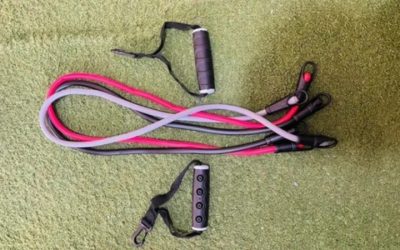
8 Best Pedal Resistance Bands: 6 Seated Training Picks Rated
Best pedal resistance bands shopping runs into an unusual problem: the category...
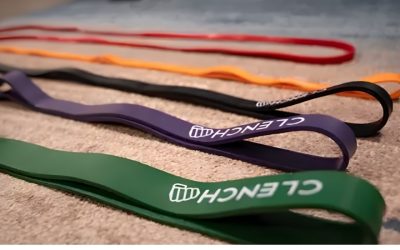
Best Resistance Bands Women Use: 6 Picks by Band Format
Best resistance bands women shop for tend to fall into three formats...
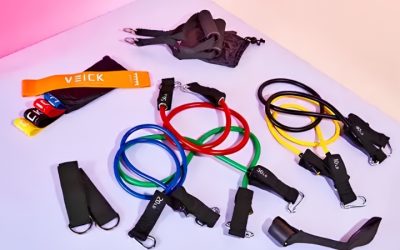
8 Best Resistance Bands for Men: 5 Sets by Strength Level
The door anchor is the single component that turns a bag of...
8 Best Resistance Bands Leggings: 6 Pairs for Home Training
Leggings that ship with a set of resistance bands sound like...
8 Best Resistance Bands Workout Gear for Full Body Strength
As an Amazon Associate we earn from qualifying purchases at no extra...
8 Best Resistance Exercise Bands: 6 Types and When to Use Each
Most people buy resistance bands the way they buy phone chargers...
The Best Resistance Bands for a Full-Body Workout in 2026
No product list came through with the request, so I selected seven...
Write Your Review
No reviews yet. Be the first to share your experience!