Key takeaways
- Drawer glides — cheaper beds use plastic rollers that wear out or stick within 2-3 years of daily use; metal ball-bearing glides last considerably longer and are worth the upgrade if you’re opening drawers daily.
- Gas struts on lift-up frames — rated for thousands of cycles, but consistently overloading them shortens that lifespan and can cause slow sinking instead of a firm hold.
- Headboard fabric — linen and performance-weave fabrics resist pilling better than basic polyester velvet, especially with pets around.
- Particleboard drawer bottoms — sag under heavy, dense loads (think folded sweaters packed tight) faster than plywood bottoms.
A queen size bed with storage underneath adds anywhere from 2 to 8 cubic feet of usable space per side, but the actual amount you can access depends entirely on the mechanism: drawers need floor clearance to slide out, lift-up frames need overhead clearance and arm strength, and open clearance beds just need a bin that fits. Here’s what the numbers actually look like for a standard 60×80-inch queen, so you can match the mechanism to your room instead of guessing from a product photo.
Our top picks



As an Amazon Associate we earn from qualifying purchases at no extra cost to you.
The three storage mechanisms, compared
Almost every queen size storage bed on the market in 2026 falls into one of three categories. They trade off differently on capacity, cost, and how much room you need around the bed to actually use them.
| Mechanism | Typical capacity | Floor clearance needed | Weight limit | Usual price range |
|---|---|---|---|---|
| Drawers underneath (2-6 drawers) | 4-8 cu ft total | 26-34 in in front of each drawer face | 25-35 lbs per drawer | $600-$1,400 |
| Hydraulic lift-up (gas-strut platform) | 18-24 cu ft (full cavity) | 0 in floor space, but 30-36 in overhead swing | 150-250 lbs distributed load | $500-$1,200 |
| Open clearance (bins/boxes slid under a raised frame) | Depends on bin size, usually 6-10 cu ft | Bed height only, no swing room | Limited by bin construction, often 20-30 lbs per bin | $150-$500 (frame only) |
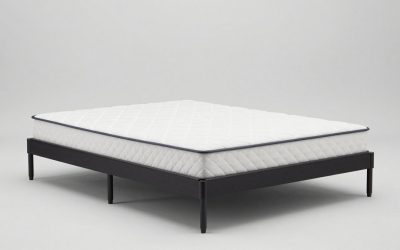
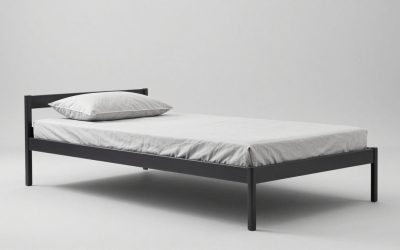
Drawer beds and lift-up beds get most of the attention because they’re sold as finished pieces, but a simple raised bed frame with under-bed clearance is still the cheapest way to get storage if you’re willing to buy your own bins.
Drawer beds: how much floor space you actually lose
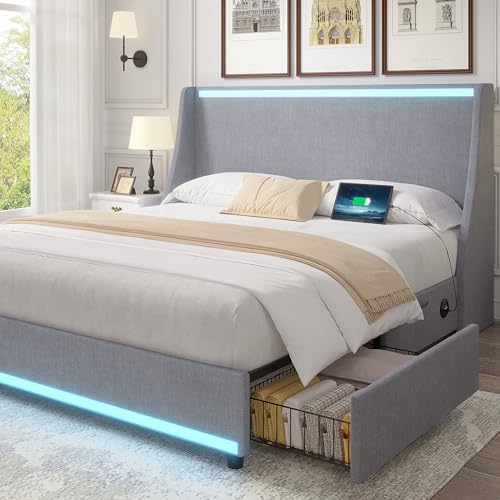
Drawer fronts on a queen storage bed typically sit flush with the footboard or one long side. To pull a drawer fully open, you need the drawer’s depth plus a few inches of hand clearance, which in practice means 26 to 34 inches of clear floor space along that side of the bed. If the bed is against a wall on the drawer side, you’re not opening those drawers at all, so orientation matters more than most buyers plan for.
A queen frame with drawers on both long sides needs at least 30 inches of clearance on each side to use everything, which pushes total room width past what a lot of 10×12 ft bedrooms can offer once you add a nightstand. If your layout only allows clearance on one side, buy a bed with drawers on that side only, or footboard-only drawers, which need clearance at the foot of the bed instead (usually the same 30-36 inches you’d want for walking space anyway).
Lift-up storage: capacity and the weight limit that matters
Hydraulic or gas-strut lift-up beds use struts to raise the entire mattress platform, exposing one open cavity instead of separate drawers. This is where the volume numbers get big: a queen lift-up frame typically holds 18 to 24 cubic feet, several times what a drawer bed offers, because there’s no divider structure eating into the space.
The tradeoff is overhead clearance and weight limits. The platform swings up 30 to 36 inches at the head or foot, so you need a completely clear ceiling and wall on the lifting side, not just floor space. Most gas struts are rated to lift 150 to 250 lbs of distributed load smoothly; loading it past that rating either stalls the lift or strains the struts over time, which is the main failure point on these frames after a few years. Concentrated weight matters too: stacking heavy boxes in one corner instead of spreading them across the platform puts uneven stress on the strut nearest that corner.
Practically, that weight limit is generous for folded linens, seasonal clothing, and empty luggage, but it’s not built for storing weight-bearing furniture or dense items like books in bulk. If you’re storing genuinely heavy items, check the strut count and rating on the specific model rather than assuming all lift-up beds handle the same load.
Matching the mechanism to your situation
| Your situation | Best fit | Why |
|---|---|---|
| Small apartment, tight room | Lift-up platform | No side clearance needed, maximizes volume in a footprint you already have |
| Renters who move often | Drawer bed with removable drawers, or open clearance with bins | Drawers detach for moving; lift-up frames are heavier and harder to disassemble |
| Back pain or limited lifting strength | Drawer bed | Sliding a drawer is far less strain than lifting a mattress platform, even with gas assist |
| Kids and pets in the house | Drawer bed with soft-close hardware | Closed drawers keep dust and pet hair out; open clearance under a raised frame invites both |
| Maximum storage volume, ceiling height available | Hydraulic lift-up | Roughly triple the cubic footage of a drawer configuration in the same bed footprint |
| Budget-focused, DIY-friendly | Raised bed frame + storage bins | A basic frame with 10-14 inches of clearance plus off-the-shelf bins costs a fraction of a built-in system |
Frame construction and what wears first
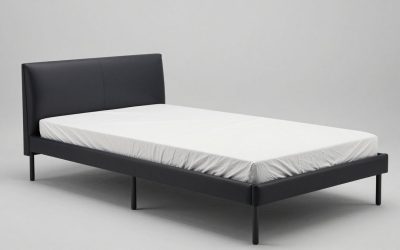
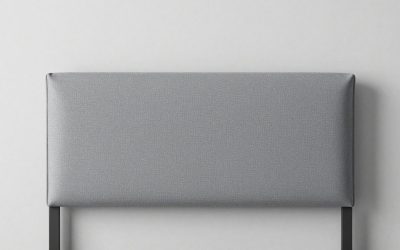
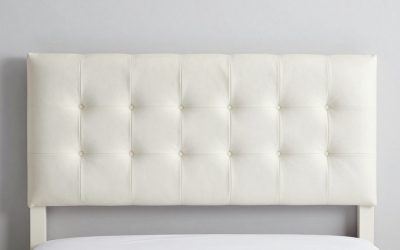
A queen size upholstered bed with storage typically pairs a wood or metal drawer base with a fabric-wrapped headboard, and the storage mechanism’s durability usually outlasts the upholstery. What actually wears down first, in order:
- Drawer glides — cheaper beds use plastic rollers that wear out or stick within 2-3 years of daily use; metal ball-bearing glides last considerably longer and are worth the upgrade if you’re opening drawers daily.
- Gas struts on lift-up frames — rated for thousands of cycles, but consistently overloading them shortens that lifespan and can cause slow sinking instead of a firm hold.
- Headboard fabric — linen and performance-weave fabrics resist pilling better than basic polyester velvet, especially with pets around.
- Particleboard drawer bottoms — sag under heavy, dense loads (think folded sweaters packed tight) faster than plywood bottoms.
Queen size headboards with storage (open cubbies or a flip-up compartment built into the headboard itself) add a modest amount of shallow storage, usually good for books or a tablet, but shouldn’t be counted as part of your main storage capacity since depth is limited to 6-10 inches in most designs.
Room size and doorway math
For a queen frame with storage, plan the room around three numbers: the 60×80-inch mattress footprint, at least 24 inches of walking clearance on the non-storage sides, and whichever clearance number applies to your mechanism (26-34 inches for drawers, 30-36 inches overhead for lift-up). A 10×12 ft room fits a queen storage bed comfortably against one wall, with drawer or lift-up access on the remaining open side, plus a nightstand, but adding a dresser on top will crowd drawer access unless the room is closer to 11×13 ft.
Doorway width rarely blocks a queen frame delivery since most ship flat-packed, but fully assembled lift-up platforms can be bulky and heavy (often 100+ lbs for the platform alone), so check whether the model ships in sections if you’re navigating narrow stairwells or hallways.
Storage beds beyond queen size
The same tradeoffs scale up for king size beds with storage drawers underneath: more surface area means either more drawers (often 4-6 instead of 2-4) or a larger single lift-up cavity, but clearance requirements per side stay roughly the same since drawer depth doesn’t change with mattress width. If you’re deciding between queen and king for storage purposes alone, the jump in usable volume is meaningful, but only if your room already has the extra 16 inches of width to spare on top of the queen clearance numbers above.