Key takeaways
- Recessed drawer boxes: Drawers set 2 to 3 inches back from the outer edge of the side rails so the tapered legs remain visible from the front and side.
- Center support rail: A true mid century bed frame with storage should have a center rail with at least one support leg to handle drawer weight. Without it, a particleboard slat system will sag when drawers are loaded.
- Low-profile glides: Side-mounted ball-bearing glides that are only 1.5 inches tall allow for a drawer interior depth of 5 to 6 inches, enough for folded linens, off-season clothes, and bedding, but not for bulky comforters.
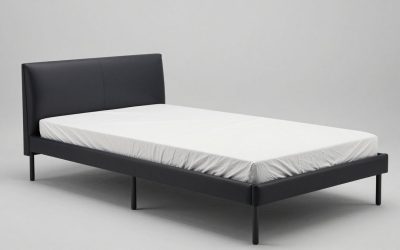
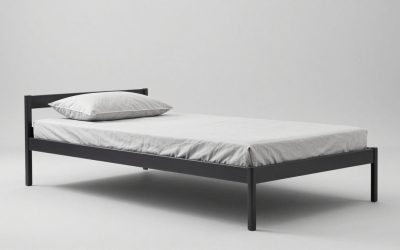
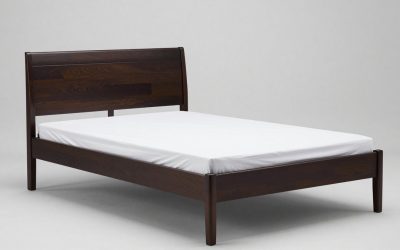
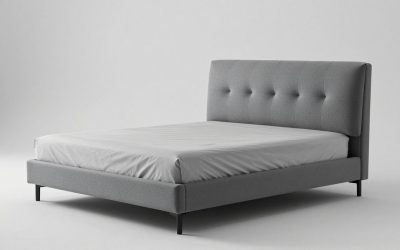
A mid century modern bed with storage works best when it uses hidden under-bed drawers or a hollow footboard chest to add storage without raising the low profile or hiding the tapered legs that define the style.
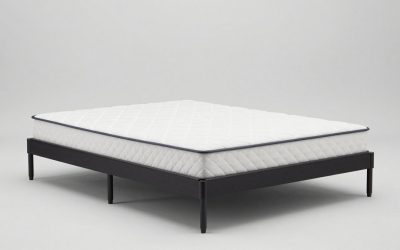
That low, airy silhouette is exactly why storage is tricky. A true mid century modern platform bed with storage typically sits 12 to 15 inches off the floor at the platform, with 5 to 7 inch tapered legs underneath. That leaves very little vertical space for drawers compared to a standard storage bed that sits 18 to 22 inches high. The best designs solve this by integrating storage into the frame itself rather than just rolling bins underneath.
Our top picks


As an Amazon Associate we earn from qualifying purchases at no extra cost to you.
Why Tapered Legs and Low Profiles Limit Storage
Authentic mid century proportions prioritize negative space. The legs splay outward at a 10 to 15 degree angle and lift the entire frame to show floor underneath, which makes a room feel larger but cuts usable storage height to 6 to 9 inches of clearance. Any drawer system deeper than that will either drag on carpet, require the frame to be lifted on a riser, or force the manufacturer to shorten the legs and lose the signature look.
To keep the silhouette intact, look for these construction details:
- Recessed drawer boxes: Drawers set 2 to 3 inches back from the outer edge of the side rails so the tapered legs remain visible from the front and side.
- Center support rail: A true mid century bed frame with storage should have a center rail with at least one support leg to handle drawer weight. Without it, a particleboard slat system will sag when drawers are loaded.
- Low-profile glides: Side-mounted ball-bearing glides that are only 1.5 inches tall allow for a drawer interior depth of 5 to 6 inches, enough for folded linens, off-season clothes, and bedding, but not for bulky comforters.
If you see a mid century modern bed frame with storage that claims 12-inch deep drawers and still shows thin tapered legs, check the overall height. It is likely a 20-inch high platform with faux mid-century legs attached, which will look top-heavy in a small bedroom.
The 3 Layouts That Keep The Silhouette Intact
1. Side-by-Side Hidden Drawers
This is the most common and most practical layout for a mid century bed frame with storage. Two to four drawers are built into one or both side rails, flush with the frame. The drawer fronts are finished in the same wood or veneer as the frame with simple recessed pulls or push-to-open hardware to avoid visual clutter. Ideal when you need everyday clothing storage and want to replace a dresser.
2. Footboard Chest Storage
A hollow footboard that lifts on hinges to reveal a deep storage bench. It preserves the clean side view and keeps all four tapered legs fully exposed. The trade-off is access: you need 30 to 36 inches of clearance at the foot of the bed to fully open it, which does not work if your bed faces a wall or sits in a 10×12 ft room where the foot of the bed is less than 24 inches from a dresser or closet door.
3. Headboard Storage
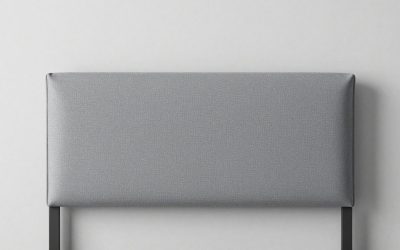
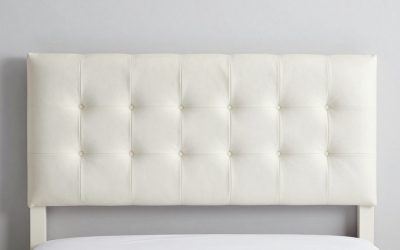
A mid century modern headboard with storage or mid century headboard with storage typically means a bookcase-style headboard with open niches, sliding doors, or a small cabinet behind the slatted or upholstered panel. Unlike side drawers, this does not add clothing storage. It is best for books, clocks, and nightstand replacement in rooms too small for two side tables. Look for a headboard depth of 8 to 10 inches; anything deeper will push the mattress forward and require a deeper room layout. A standard mid century modern bed headboard without storage is only 2 to 4 inches deep.
Room Fit and Clearance: Real Measurements Before You Buy
Storage changes the footprint you need to live with the bed comfortably. Use these numbers to plan:
- Drawer extension: Side drawers need 20 to 24 inches of clear floor space on the opening side to pull fully out. Leave at least 26 inches between the side of the bed and the nearest wall or dresser.
- California King vs. Standard: A mid century modern california king bed frame is 72 inches wide x 84 inches long, which is 4 inches narrower but 4 inches longer than a standard king. With side drawers that extend 24 inches, the total functional width becomes nearly 96 inches on one side. In a 10×12 ft room, a California King with storage on both sides will leave less than 18 inches of walkway, which violates the 24-inch minimum for comfortable passage.
- Height for robots and cleaning: The space under the remaining exposed leg area is usually 5.5 to 6.5 inches. Most robot vacuums need 3.75 inches, so they will fit, but a mop head will not.
- Weight limits: A well-built queen platform supports 600 to 800 lbs total including mattress and sleepers. Each under-bed drawer is typically rated for 40 to 60 lbs. Overloading drawers with books or heavy denim will warp the drawer bottoms first, especially on veneer-over-MDF drawers.
| Bed Size | Frame Footprint (W x L) | With One Side of Drawers Open | Minimum Room Size Recommended |
|---|---|---|---|
| Twin | 40″ x 78″ | 64″ wide | 9 x 10 ft |
| Full | 56″ x 78″ | 80″ wide | 10 x 10 ft |
| Queen | 62″ x 82″ | 86″ wide | 10 x 12 ft |
| King | 76″ x 80″ | 100″ wide | 11 x 12 ft |
| California King | 72″ x 84″ | 96″ wide | 11 x 12 ft |
Walnut vs. Oak vs. Veneer: What Affects Cost and Durability
The finish defines both price and how the bed ages. Most mid century designs are offered in walnut, white oak, or a walnut/oak veneer.
| Material | Typical Price Range (Queen) | Durability and Finish Reality | Best For |
|---|---|---|---|
| Solid Walnut | usually $1,400–$2,600 | Rich, dark brown tone with natural variation. Very stable, resists dents better than oak. Can be sanded and refinished 3-4 times. | Buy-it-for-life purchase, homes where you want the authentic dark mid-century look. |
| Solid White Oak | usually $1,200–$2,200 | Lighter, visible grain. Harder than walnut (1360 vs 1010 on Janka scale), so it resists scratches from pets. Takes stain evenly. | Scandinavian-leaning mid-century rooms, kids and pets, lighter color palettes. |
| Walnut or Oak Veneer over Engineered Wood (MDF/Plywood) | usually $600–$1,200 | Real wood veneer (0.6mm) over stable core. Looks identical at first, but cannot be deeply sanded. Edge chipping at drawer corners is the first failure point. Avoid if drawers will be opened daily by kids. | Small apartments, renters, tight budgets where look matters more than 10+ year durability. |
| Solid Wood Frame + Veneered Drawer Fronts | usually $900–$1,600 | Hybrid approach. Structural rails and legs are solid wood, drawer fronts are veneered to save cost and weight. Good compromise on durability. | Most buyers who want tapered-leg durability with hidden-drawer function without paying full solid-wood price. |
Avoid thick laminate or printed vinyl that imitates wood grain; it peels at heat points and cannot be spot-repaired. If pricing seems unusually low for a walnut claim, confirm it is walnut veneer, not walnut-tinted rubberwood.
Which Storage Layout Is Right For Your Situation?
| Your Situation | Best Choice | Why |
|---|---|---|
| Small apartment / need to eliminate a dresser | Mid century modern platform bed with storage with 4 side drawers (2 per side) | Replaces a 36-inch wide dresser. Choose push-to-open drawers to keep aisles clear. |
| Renter who moves often | Mid century bed frame with storage using removable rolling drawers, not built-in boxes | Lighter disassembly, drawers can move separately. Built-in units often exceed 150 lbs per side. |
| Kids and pets | Solid white oak with 2 large drawers, rounded drawer fronts | Oak hides scratches, fewer drawers means fewer pinch points and less hardware to break. |
| No room for nightstands | Mid century modern headboard with storage | Provides shelf and concealed storage without adding floor footprint. Pair with wall-mounted sconces. |
| Tight bedroom where bed must go against wall | Footboard chest or drawers on one side only | You cannot open drawers that face a wall. A one-sided layout saves cost and clearance. |
| Back pain / need higher sleep surface | Not a true low-profile mid century platform | Storage mid-century beds are 14-16″ high total. If you need a 20″+ sleep height, add a thicker mattress (10-12″) rather than raising the frame and breaking proportions. |
Assembly, Moving and What Wears Out First
Storage beds ship in 3 to 5 boxes with a combined weight of 180 to 280 lbs for a queen. The headboard box alone can be 60 to 80 lbs and over 65 inches long, so measure doorway width (standard interior door is 28 to 30 inches) and hallway turns before delivery. Most designs require two people and 60 to 90 minutes for assembly; drawer glides come pre-installed but need alignment after the frame is leveled.
Durability issues appear in a predictable order: drawer bottoms sagging, glide screws loosening in MDF, and veneer chipping on the top edge of drawer fronts where hands pull daily. To extend life, choose drawers with plywood bottoms over hardboard, metal glides rated for 75 lbs or more, and dovetail or dowel joints instead of staples. If you plan to move within 2 years, keep the original hardware bag and add felt pads under tapered legs; dragging a loaded storage bed will splay or crack the leg joints, which are the hardest part to repair.
What to Check Before You Order
- Confirm drawer interior dimensions, not just exterior. A 22″ wide x 18″ deep x 5″ tall interior is usable; 3.5″ tall is too shallow for folded sweaters.
- Ask if the slat system is solid wood slats with less than 3 inches of gap. Wider gaps void many foam mattress warranties and cause sagging between slats.
- For a mid century modern california king bed frame, verify slat count: you need at least 14-16 slats and a center support beam with two legs for that length.
- Choose a finish sample in person if possible. Walnut veneer can photograph much redder than solid walnut, and the mismatch between a solid oak frame and a veneered drawer is obvious in daylight.